Full moon shines in May: check out all the phases of the month and which moon is today
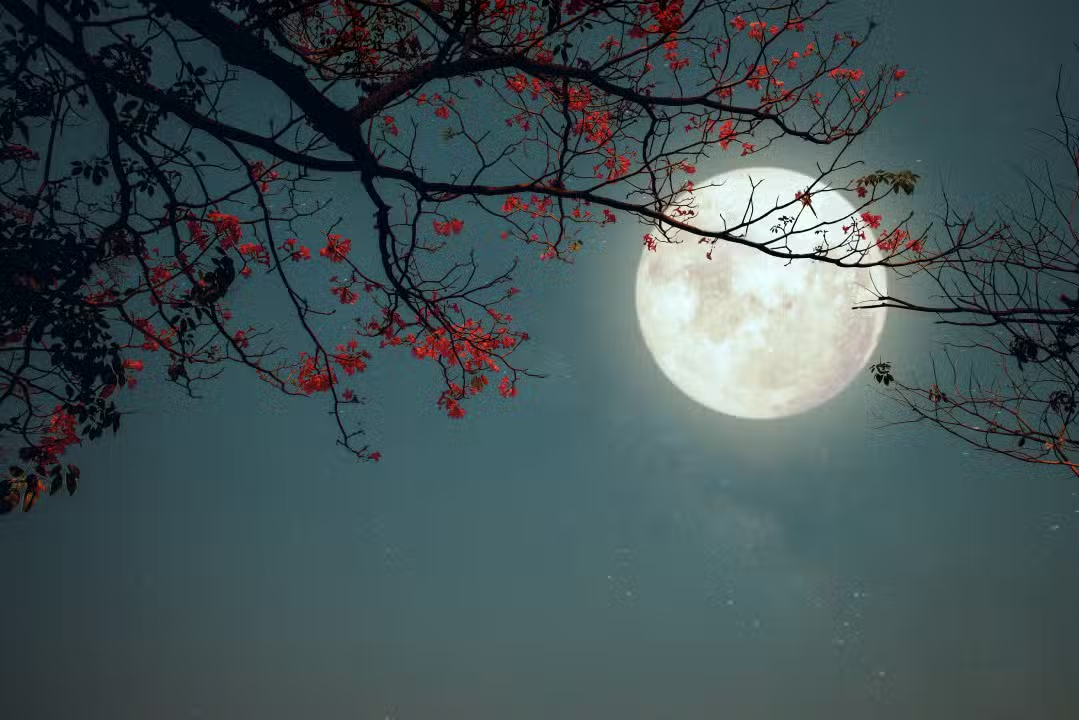
Nesta Friday, May 1, 2026, Lua presents its full phase at 2:24 pm, fully visible and illuminated in the night sky. The satellite remains at its maximum luminous intensity until the 9th, when it begins the transition to the waning phase. Maio reserves a special highlight: two full moons illuminate the month, with the second occurring on the 31st at 5:46 am.
Instituto Nacional data from Meteorologia (Inmet) maps the complete lunar calendar for May, indicating that the month concentrates five distinct phases in its 31 days. Essa concentration happens because the first lunar phase of the month coincides with its beginning, allowing the cycle to almost be completed and a second full moon to emerge in the last few days.
Calendário complete phases in May
The month follows a well-defined sequence of lunar transformations that guide observers and astronomy enthusiasts:
- Lua Cheia: May 1st at 2:24 pm
- Lua Minguante: May 9th at 6:13 pm
- Lua Nova: May 16th at 5:03 pm
- Lua Crescente: May 23rd at 8:12 am
- Lua Cheia: May 31st at 05:46
Cada transition marks a specific point in the lunar cycle, offering different visibility and brightness conditions in the sky. Entre these four main phases exist the interphases, intermediate periods that include the waxing crescent, the gibbous waxing, the gibbous gibbous and the waning quarter, extending the complexity of the cycle to approximately seven days each.
The lunar cycle and its average duration
A lunation, also known as a lunar cycle, corresponds to the temporal interval between two consecutive new moons. Esse period varies subtly, but its established average is 29.5 days. Durante this entire time, the satellite goes through its four main phases: new, growing, full and waning. The duration of each phase lasts approximately seven days, creating a predictable pattern that allows entire months to be mapped with astronomical precision.
Cycle variability occurs because the lunar orbit is not perfectly circular. Quando to Lua is closer to Terra (perigee), its orbital speed increases, shortening the cycle. Quando moves away (apogee), speed decreases, extending the range. Essa subtlety explains why some lunar months have five phases and others only four.
Entenda to Lua full today
Na Lua Cheia, Terra is positioned between Sol and Lua, allowing the lunar face facing us to receive full illumination. Essa geometric configuration results in maximum visibility and intense brightness in the night sky. The phenomenon always occurs when Lua rises on the horizon precisely at the moment Sol sets, creating the brightest night of the lunar cycle.


The full phase is traditionally associated with plenitude, representing the peak of processes and the peak of energy. Astronomicamente, marks the period of greatest luminous intensity, lasting a few days until the gradual transition to waning. Observadores note that the full Lua appears significantly brighter than in any other phase, dominating the early morning sky and influencing the visual perception of the nighttime environment.
Lua waning and new: the coming transformations
Após today’s maximum brightness, Lua will begin its waning transition from the 9th. Durante this phase, the luminosity gradually decreases night after night, progressively reducing the visible surface. Quarto Minguante marks the midpoint when only half of Lua remains illuminated, directly opposite to Quarto Crescente that occurs between the new and full phases.
Lua Nova arrives on the 16th at 5:03 pm, when the satellite is positioned between Terra and Sol. Nesse moment, the light side faces entirely towards the Sol while the dark side points towards us, making it invisible in the night sky. Essa phase symbolically marks the beginning, representing new cycles and possibilities. Astronomicamente, it marks the beginning of a new lunation and serves as a reference for lunar calendars in various cultures.
Lua growing and returning to fullness
From May 23rd, Lua Crescente appears again, beginning the journey back to maximum luminosity. Aos few, a small illuminated band appears in the sky, gradually increasing night after night. At first, only a thin arc of light is visible, evolving until half of Lua is illuminated during Quarto Crescente. Essa phase symbolizes growth, development and the construction of new paths.
The progression of Lua Crescente inevitably leads to the second Lua Cheia of May on the 31st. Esse The rare phenomenon of two full moons in the same month occurs because the lunar cycle does not perfectly align with the months of the Gregorian calendar. Quando a full lunation unfolds within a period of 31 days, and the first full phase coincides with the first day, the possibility of a second full arises before the month ends.
See Also em Latest News (EN)

Palmeiras negotiates the signing of Nino with optimism and a ceiling of 15 million euros
01/05/2026
Take-Two releases results in May and raises expectations for third GTA 6 trailer
01/05/2026
Classic strategy returns to Steam with new Heroes of Might and Magic
01/05/2026
Netflix brings miniseries A Escad about true crime that shocked the US with Colin Firth
01/05/2026
Zverev defeats Blockx and advances to the Masters 1000 final against Sinner in Madrid
01/05/2026
X360 Mobile app runs classic Xbox 360 games on high-performance Android phones
01/05/2026
Chery reveals seven-seater sports utility vehicle with modular cabin convertible into a pickup truck
01/05/2026
Oppo launches cell phone in Brazil with 7000 mAh battery and military resistance certification
01/05/2026
Ubisoft transfers Assassin’s Creed Hexe team and changes mechanics for release in 2027
01/05/2026
Assassin’s Creed Black Flag remake debuts on PlayStation 5 with advanced graphics in July
01/05/2026
Studio responsible for the Alien Isolation franchise publishes unprecedented video about the progress in the production of the new game
01/05/2026