Freezing on early Earth may have driven the origin of life
Pesquisadores of Instituto of Ciências of Terra and Vida of Tóquio discovered that repeated cycles of freezing and thawing in ancient Terra may have been crucial to the emergence of the first cellular structures. The study, based on experiments with lipid vesicles, demonstrates that variations in membrane composition directly affect the growth and fusion of primitive protocells, offering a new perspective on how life may have begun.
The simulations revealed that fluctuating temperatures caused distinct behaviors in the tested molecular structures. Vesículas containing lipids with higher unsaturation tended to merge into larger compartments after successive thermal cycles, while those with more rigid composition remained grouped without completely integrating.
Membranas primitives respond differently to thermal stress
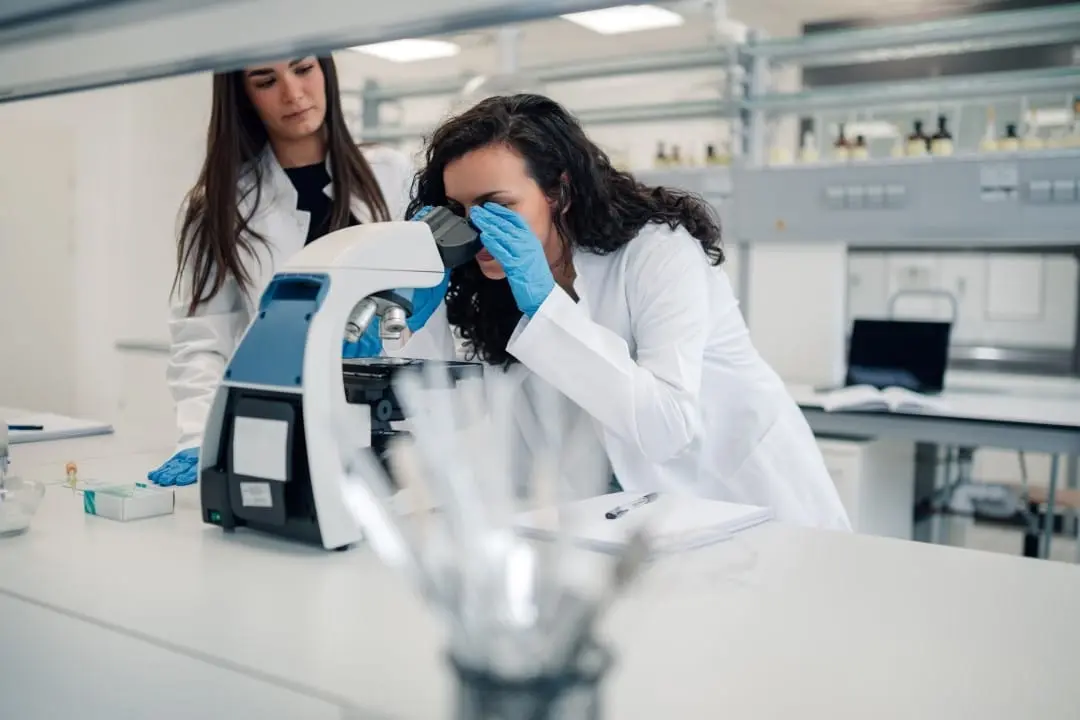
Scientists constructed small spherical compartments called large unilamellar vesicles using three types of phospholipids with distinct structural properties. POPC forms more rigid membranes, while PLPC and DOPC produce significantly more fluid membranes due to the additional chemical bonds present in their molecules.
The team subjected these structures to three consecutive cycles of freezing and thawing, reproducing environmental conditions that would have existed in the primitive Terra. The results showed drastic differences in the behavior of the vesicles.
- POPC-rich Vesículas: clustering without full fusion
- Vesículas with PLPC or DOPC: fusion into larger compartments
- Correlação observed: greater amount of PLPC resulted in more intense fusion and growth
- Mecanismo identified: unsaturated lipids reduce membrane compactness
The role of chemical instability in protocellular evolution
Quando ice crystals form during freezing, membranes undergo fragmentation and structural reorganization when thawing. Lipídios with greater unsaturation exposes more hydrophobic regions during this reconstruction process, facilitating interactions with adjacent vesicles and making fusion energetically favorable.
Esse mechanism may have been fundamental to complex processes. Fusion of primitive compartments allowed for more efficient capture and retention of key molecules, including DNA, that would be essential for more advanced biological systems. Successive fusion events would have mixed different molecules together, setting the stage for the more sophisticated chemical reactions that characterize modern life.
Tatsuya Shinoda, a doctoral student who led the work, emphasized the importance of choosing lipids for the experiments. The team selected phosphatidylcholine because it maintains structural continuity with modern cells, could have been available under prebiotic conditions, and demonstrates the ability to retain essential contents during thermal cycling.
Leia Também

Parachuting plane crash leaves eleven dead in northeastern France this Sunday

Financial analysis indicates that GTA 6 generated US$1 billion in the first hour of pre-sales

George Russell secures second Formula 1 triumph and leads Austrian GP after controlling Verstappen and Antonelli
Molecular Diferenças determines fate of primitive structures
The three molecules tested share a basic structure, but differ in crucial aspects. POPC contains an unsaturated acyl chain with a single double bond. PLPC also has an unsaturated acyl chain, but with two double bonds, significantly altering its fluidity. DOPC includes two unsaturated acyl chains, each with a double bond, producing the most fluid lipid of the three.
Essas subtle differences determine how molecules organize themselves in three-dimensional space. Stiffer Membranas, such as those formed by POPC, resist deformation and integration with other structures. More fluid Membranas present greater molecular flexibility, allowing reorganization when subjected to thermal stress. The less compact lateral organization characteristic of lipids with high unsaturation more efficiently exposes the surfaces that promote fusion.
Implicações for understanding the origin of life
The findings challenge previous understanding of environments for the emergence of life. Até Recently, researchers emphasized underwater geothermal environments or warm tropical lagoons. Este work suggests that frigid, seemingly hostile environments offered ideal conditions for the development of the most primitive structures.
The complexity of modern cells includes internal supporting structures, tightly controlled chemical processes, and genetic instructions that guide virtually every function. In contrast, primitive protocells were essentially small bubbles where lipid membranes surrounded basic organic molecules. Compreender How these extremely simple structures evolved into such sophisticated systems remains central to research into abiogenesis.
ELSI experiments indicate that variations in membrane composition have a determining influence on the ability to grow, fuse and retain critical molecules during extreme weather events. Essa discovery opens new lines of investigation into which lipids would have been predominant in early Terra and how their availability in different environments may have guided the early chemical evolution of life.