Rare comet from the Oort Cloud passes by Earth with observation possible
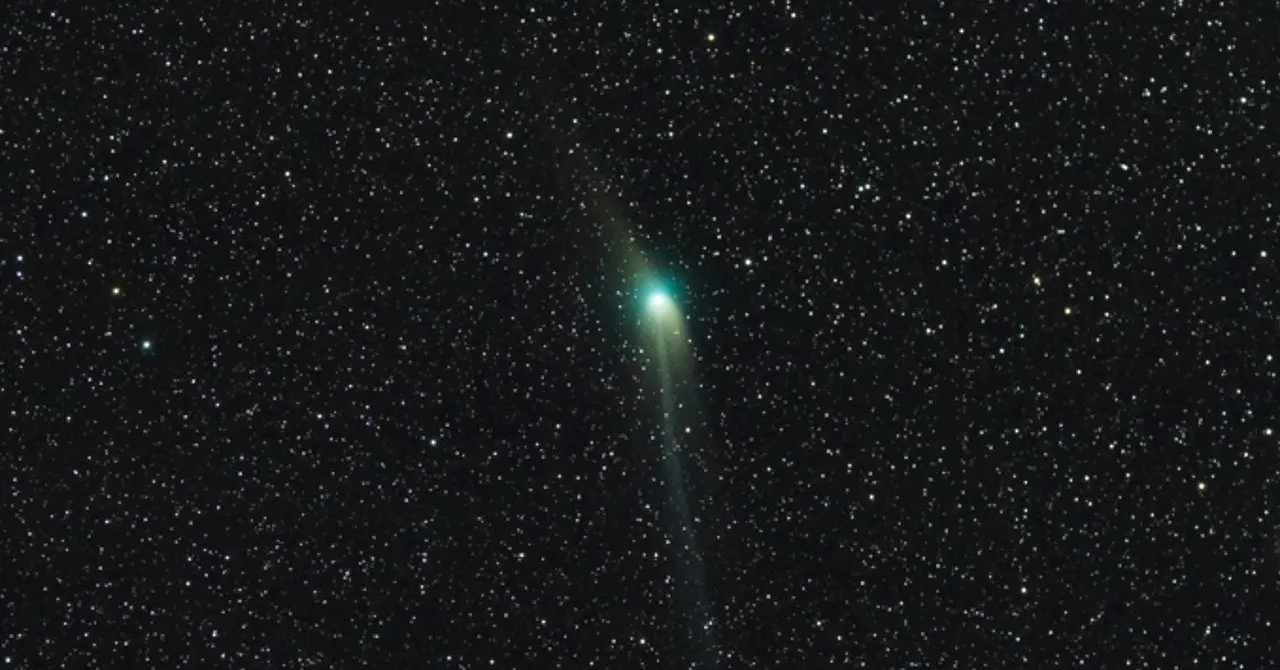
A newly discovered comet originating from Nuvem of Oort, the most distant region of Sistema Solar, is crossing the vicinity of Terra these weeks and can be observed with simple binoculars under suitable conditions. The celestial object, designated C/2024 E1 (Wierzchoś), was identified in March 2024 by Polish astronomer Kacper Wierzchoś during analysis of astronomical images and represents a rare observation opportunity for a visitor from the most remote layers of space.
Confirmation of the discovery included observations from the James Webb telescope, which validated the presence of the body and allowed its original trajectory to be determined. Orbital tracking established that the comet comes from an extremely distant region, located approximately 70 times further from Sol than the planet Netuno.
Origem in the icy reservoir of space

Nuvem of Oort functions as a gigantic deposit of objects composed of ice and rock on the banks of Sistema Solar. The environment in this region is characterized by extremely low temperatures and permanent darkness, creating conditions that have preserved these blocks practically since the formation of the planetary system.
More on this story: Rare Oort comet approaches Earth and promises naked-eye observation
Perturbações gravitational forces caused by stars passing nearby can change the orbits of these objects, initiating slow displacements towards the interior regions of Sistema Solar. Esses events occur sporadically, making each passage of a comet from Nuvem to Oort an astronomically significant occurrence.
Estratégia observation and ideal conditions
Para To observe comet C/2024 E1, it is necessary to choose locations away from urban lighting, where light pollution does not impair visibility. The quality of observation depends on atmospheric factors such as:
- Ausência of clouds and nebulosity
- Noites with completely clear sky
- Distância of artificial light sources
- Períodos without interference from bright Lua
- Condições favorable relative humidity
Using binoculars offers sufficient magnification to detect the object, although more powerful telescopes allow for greater detail. Planejamento prior observation sessions significantly increases the chances of success.
Contexto Scientific Discovery
Kacper Wierzchoś’s identification illustrates how modern celestial monitoring technologies can detect low-light objects that pass close to Terra. The Polish astronomer recognized a subtle shift in the analyzed images, identifying a pattern consistent with the movement of a celestial body.
See Also



Learn more: Icy planet from the outer reaches of the Solar System reveals unexpected atmosphere
Follow-up observations using James Webb provided accurate data on the comet’s composition, luminosity and trajectory. The space telescope has allowed unambiguous confirmation and characterization that would not be possible with conventional terrestrial instrumentation in many cases.
Significado astronomical event
The passage of a comet originating from Nuvem to Oort represents a phenomenon of relevant scientific interest. Esses objects bring information about the primitive conditions of Sistema Solar and about the structure of the most remote regions not yet directly explored by space probes.
Cada A visitor’s analysis of Nuvem contributes to understanding planetary formation, long-term orbital dynamics, and the evolution of the cosmic environment. The official designation C/2024 E1 (Wierzchoś) permanently marks this discovery in international astronomical records.
The opportunity to observe with accessible equipment highlights how significant astronomical phenomena do not necessarily require cutting-edge instrumentation for appreciation. Binóculos with appropriate magnification already provides sufficient perspective to identify and follow the comet during its transit close to Terra during this period.