Interstellar object 3I/ATLAS has trajectory altered by Jupiter’s gravity
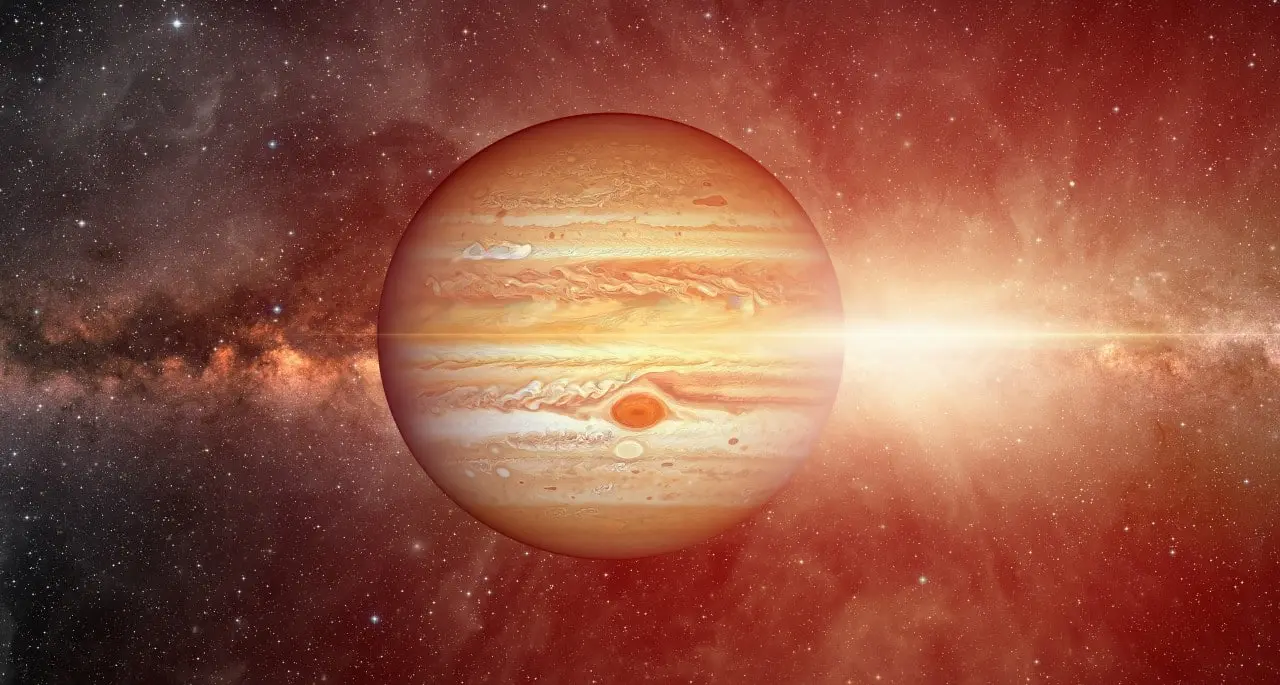
The celestial body cataloged as 3I/ATLAS continues at high speed through the hyperbolic orbit and approaches a decisive moment in its passage through the solar system. Viajando at 58 kilometers per second, the object has enough kinetic energy to avoid any permanent gravitational capture by Sol. Nas In the coming weeks, the visitor will reach the point of maximum proximity to Júpiter, an event of great relevance to the international scientific community. Interaction with the gas giant will cause measurable changes in the body’s route before resuming its definitive journey out of Earth’s cosmic neighborhood.
Identificação and interstellar visitor history
The initial detection of the object occurred through complex monitoring systems installed in observatories on Chile. The finding inserted 3I/ATLAS into a restricted list of external visitors confirmed by science, succeeding bodies 1I/Oumuamua and 2I/Borisov. Esses findings would redefine the parameters for studying the formation of other stellar systems and the dynamics of matter ejection in the universe. Atualmente, various terrestrial and space equipment are mobilized to record each phase of this unprecedented transit, ensuring the collection of the largest possible volume of data before the object moves away definitively.
Gravitational Dinâmica and approach of the gas giant
The most recent astronomical calculations indicate that the peak of the interaction between the celestial body and Júpiter will occur in mid-March. Durante this period, the object will cross a specific gravitational boundary known as the radius of Hill. Essa spherical region around the planet delimits the space where Jovian gravity overcomes the attraction exerted by Sol. The estimated limit for this zone of influence is approximately 0.355 astronomical units from the center of the planet.
More on this story: Astronomical phenomenon dyes the Moon red in the skies of Brazil in August 2026
Simulações mathematics developed by experts in celestial mechanics demonstrate that the minimum distance between the visitor and Júpiter will be 0.358 astronomical units. Essa extreme proximity turns the encounter into the most significant planetary disturbance of the object’s entire passage through the solar system. The deviation resulting from gravitational attraction, although subtle in absolute terms, irreversibly changes the celestial body’s exit coordinates towards the interstellar medium. Continuous monitoring of this change in route requires the use of supercomputers to calculate the new orbital variables with millimeter precision.
Direct interaction with a gravitational field of such magnitude offers practical opportunities to test and refine current physical models. Quando an object on a hyperbolic trajectory crosses the zone of influence of a massive planet, an exchange of orbital energy occurs that can accelerate or decelerate the smaller body, depending on the exact angle of approach. Data collected during this observation window will serve as the basis for future projections involving wandering bodies.
Monitoramento by telescopes and space probes
Equipamentos of high-resolution telescopes, such as Hubble and James Webb, were targeted to capture structural details of the 3I/ATLAS core during moments of maximum approach to Earth orbit. The processed images revealed intense activity on the object’s surface, characterized by the formation of a bright coma and a very pronounced dust tail, typical of bodies rich in volatile substances that react to solar heat.
The JUICE probe, operated by the European space agency, also recorded the phenomenon using its precision navigation camera, known as JANUS. The records confirmed the active nature of the celestial body, which expelled large amounts of material shortly after reaching the point of maximum proximity to Sol. Multi-platform observation capability ensures complete coverage of the core’s chemical and physical reactions.
The presence of the Juno probe, which has been orbiting Júpiter since 2016, creates a highly favorable scenario for closely monitoring the gravitational interaction. Instruments aboard the spacecraft are scheduled to take precise measurements during the critical approach window in March. The privileged position of the probe allows the collection of information about variations in the magnetic field and possible interactions of the ejected material with the local plasma.
See Also

Anonymous fan funds Thimbleweed Park 2 and frees creator from publishers

Consortium led by Jeff Bezos and Eduardo Saverin buys 30% of Liverpool

Cristiano Ronaldo and Georgina’s agreement shields fortunes in official union
Learn more: Observing Comet PanSTARRS Requires Predawn Hurry in April
Galactic Origem and core chemical composition
Análises spectroscopy performed using light reflected from the object indicates that it was formed in the thick disc of Via Láctea. Essa region of the galaxy is characterized by the presence of older stars and has movement dynamics very different from the thin disk, where the solar system is currently positioned. The 3I/ATLAS entry trajectory corroborates the mathematical models about the origin of bodies in this specific region.
The chemical signature detected in the celestial body’s coma serves as a fossil record of stellar environments located thousands of light years away. The elements identified by the spectrographs help paint a clearer picture of the chemical diversity that exists in the oldest regions of Via Láctea. Modelos of stellar evolution suggests that the object was ejected from its original system billions of years ago, wandering in the interstellar void ever since.
The detailed study of the released gases allows researchers to test theories about galactic evolution through different fronts of structural and chemical analysis:
- Avaliação of the proportion of isotopes present in the volatile material ejected by the nucleus during heating.
- Mapeamento of the distribution of primordial elements formed in other eras of galactic history.
- Estimativa of the population density of wandering bodies traveling through deep space with no connection to stars.
Efeitos thermal and non-gravitational acceleration
The extreme heating suffered by the celestial body during its passage through perihelion generated physical phenomena that impacted its trajectory independently of gravity. The rapid sublimation of surface ices created jets of gas that acted as small natural thrusters, applying continuous force to the rotating core. Esse mass release process changes the angular momentum of the object asymmetrically. The jets cause microaccelerations that add a layer of complexity to mathematical simulations run by supercomputers. The pressure exerted by solar radiation on the ejected dust particles also contributes to moving material away from the star, forming the visible tail.
On the same topic: Passage of celestial body Tempel 2 reveals historic trail of space dust
Partida and target trajectory in the constellation of Gêmeos
The recorded speed of 58 kilometers per second vastly exceeds the threshold necessary to escape Sol’s gravitational pull. Esse data mathematically confirms that the object does not belong to the Oort cloud or any other local comet reservoir. The eccentricity of its orbit is one of the highest values ever measured on celestial bodies, attesting to its status as a mere visitor who merely crosses our system without the possibility of returning. Antes approaching the gas giant, the celestial body had already suffered small influences when crossing Marte’s orbit, with marginal effects on its overall speed. The current planetary interaction with Júpiter represents the last major dynamic hurdle in the journey. Após surpasses the zone of influence, the object will follow a straight trajectory projected towards the constellation of Gêmeos, where observations will continue until its brightness decreases beyond the detection capacity of modern telescopes.