New method reduces trip to Mars by 153 days using asteroids as a guide
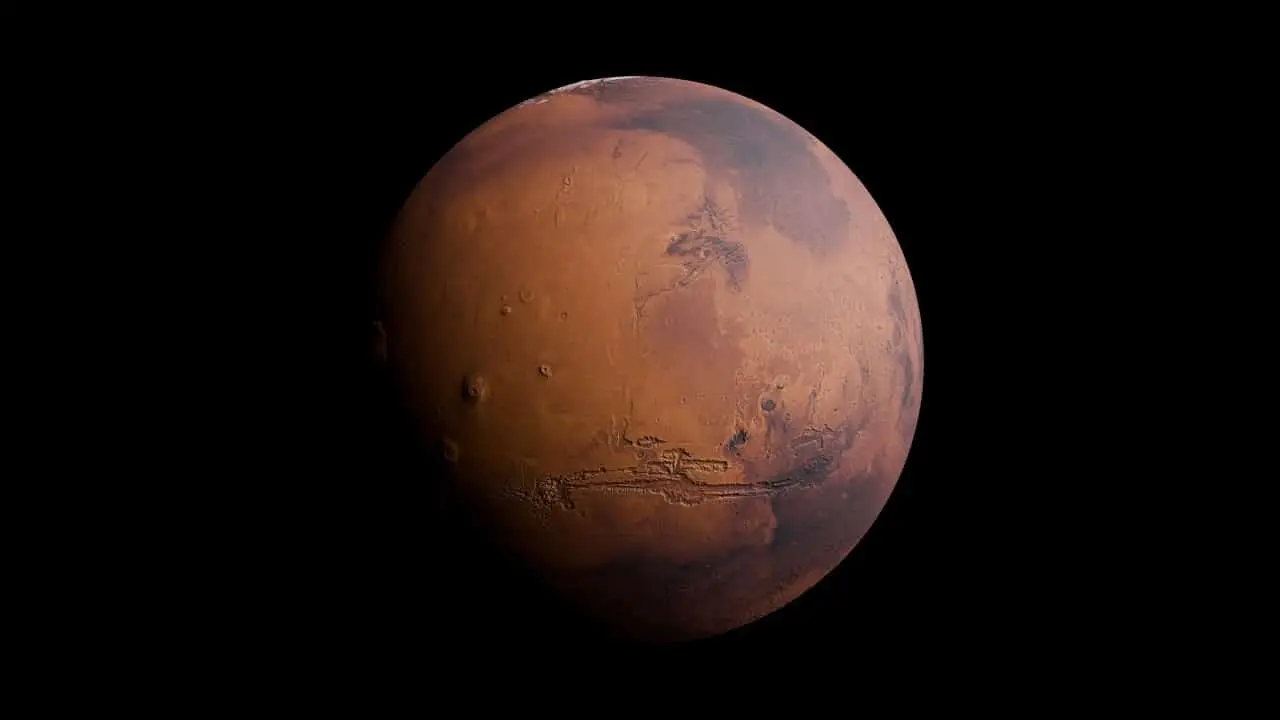
Pesquisadores have developed an innovative approach to significantly shorten the travel time to Marte. Publicado in the scientific journal Acta Astronautica, the study presents a method that reduces mission duration by approximately 153 days compared to traditional routes. The technique uses precise orbital data from small asteroids as navigation references, allowing for more direct and efficient trajectories for spacecraft.
The new system represents a paradigmatic shift in aerospace engineering. Enquanto conventional missions rely on ideal asteroid configurations and maximum fuel efficiency, this research questions this traditional approach. Scientists propose repositioning specific asteroids at the center of interplanetary navigation plans, transforming potential obstacles into strategic tools for exploration.
On the same topic: Preparation for asteroid impact: NASA expert highlights the urgency of planetary defense
Mudança in the orbital dynamics paradigm
Aerospace engineering has historically faced significant challenges when planning journeys for Marte. Ground teams calculate trajectories based on the maximum propulsion power available, considering distances of hundreds of millions of kilometers. The new study questions whether such long travel periods are really necessary, proposing robust mathematical alternatives.
The innovation focuses on identifying specific geometric configurations in deep space. Essas Unique intersections occur between Terra, Marte and several rocky celestial bodies, creating unprecedented navigation opportunities. The asteroid 2001 CA21 served as a central concept in the development of the research. Sua predictable orbital trajectory offers a viable method to optimally cross planetary orbits, taking advantage of the natural proximity between celestial bodies to reduce energy consumption.
Optimal launch Janela scheduled for 2031
The researchers analyzed future Marte opportunities to validate the practical feasibility of the method. Simulações accurate computations were performed for the years 2027, 2029 and 2031. Dentre of these dates only one presents the exact geometry required to implement the spatial shortcut successfully. The physical distance between Terra and Marte naturally aligns at this specific period, simplifying the orbital transfer process.
Segundo Marcelo of Oliveira Souza, researcher of Universidade Estadual of Norte Fluminense (UENF), the results of the trajectory analysis completely coincide with data from the asteroid CA21. The ship can maintain a maximum inclination of just 5 degrees in relation to the specified plane, minimizing the energy consumption of the main engine. Essa operational precision also maximizes planned trajectory accuracy. Dentro over a 12-month period, two full missions for Marte become feasible.
Cenários of accelerated travel in the next ten years
The scientific paper maps out high-speed scenarios for the next decade in this specific launch window. In the best scenario calculated by the authors, a one-way trip can be completed in just 33 days. Para alternative routes, the ship requires approximately 90 days of continuous propulsion. More conservative Estimativas indicates 56 days for the outward trajectory and 135 days for the return. Qualquer whatever the scenario, the total mission time is drastically reduced compared to previous standards, when operations took several years.
See Also



More on this story: Observatory in Chile discovers 11,000 new asteroids and rules out risk of collision with Earth
Essa transformation from months to weeks fundamentally alters the planning of future human expeditions. Anteriormente, critical tasks required years of preparation; now they only require five months. The research demonstrates that cutting-edge trajectory analysis technology, combined with favorable orbital geometry, produces extraordinary results in reducing travel time.
Pequenos asteroids as geometric marks of space navigation
In space exploration, smaller celestial bodies have been used for decades in routine operations. Historicamente, its use mainly included gravity assistance maneuvers and preemptive trajectory corrections. Current research turns these rocks into high-precision landmarks for interplanetary navigation. Através’s detailed analysis of orbital data, scientists identify ideal space planes for crossings between planets.
Este method works as a quick screening tool for new mission architectures. The system allows spacecraft to traverse orbital geometries without the need for complex gravitational maneuvers, analyzing unique characteristics of each asteroid. The technique uncovers spatial opportunities hidden in massive sets of astronomical data, revealing chances that would remain invisible through conventional methods. Orbital Dinâmica gains unprecedented precision and predictability. Antigas assumptions about travel limits lose strength in the face of the new numbers presented.
Impacto directly on the safety of future manned missions
The drastic reduction in travel time solves critical issues for future human expeditions into deep space. In extraplanetary environments, human organisms face extreme conditions incompatible with prolonged survival. Durante short journeys, life support systems within the module become less critical. The new route calculation ensures that logistics supplies are transported with unprecedented efficiency. Carga usefulness reduces significantly when travel time decreases.
Learn more: Giant SpaceX capsule survives impact and floats in Indian Ocean
- Redução substantial exposure to cosmic radiation during interplanetary crossing.
- Diminuição of the psychological stress of crew members confined for prolonged periods in hermetically sealed modules.
- Otimização of water, food and oxygen resources stored on board the ship.
- Redução of operating costs through lower fuel consumption on optimized trajectories.
- Aumento of the number of viable launch windows for future Mars expeditions.
- Aceleração of developing advanced propulsion systems and autonomous navigation based on artificial intelligence.
Quando the payload decreases, the fuel required to reach the surface also reduces proportionally. Essa weight savings fundamentally transforms the design of future spacecraft. The research provides a solid conceptual foundation for application to upcoming aerospace projects. Implementar this theory in practice opens definitive paths for humanity to persist in space continuously. Para future generations of astronauts, interplanetary travel becomes faster, more affordable and significantly safer.