Psyche probe uses Martian gravity to reach billion-dollar metallic asteroid
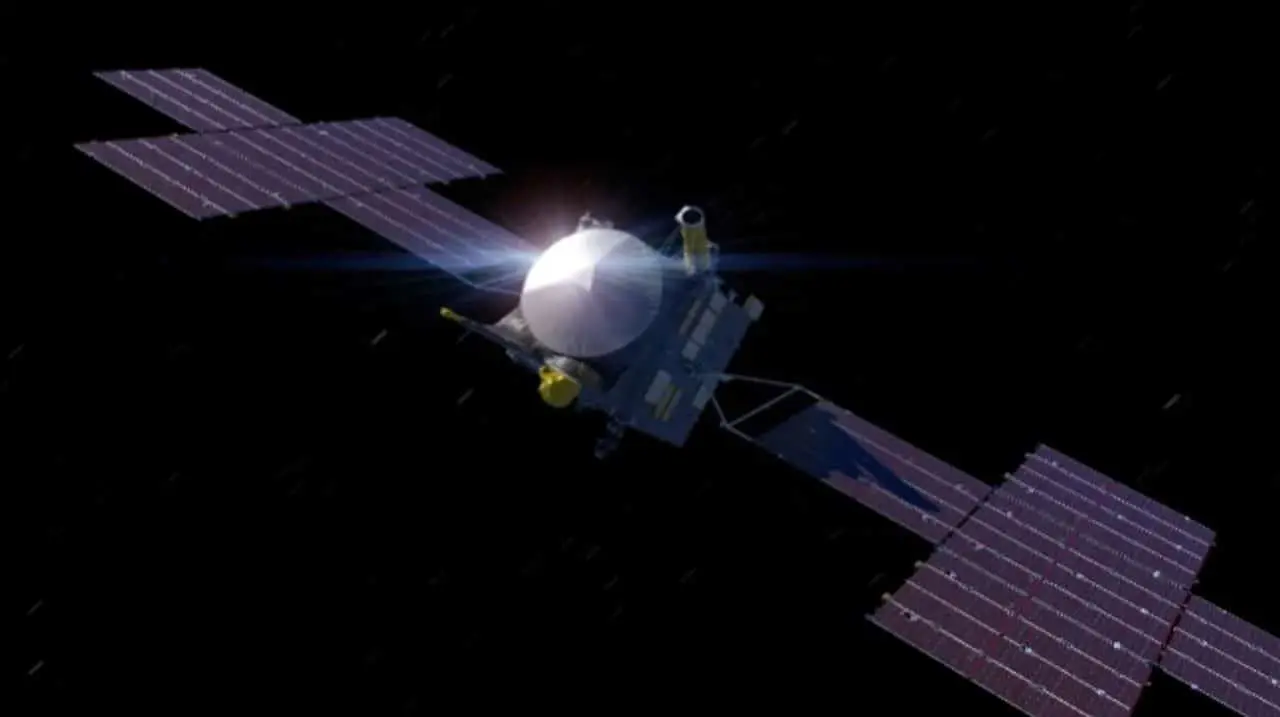
The Psyche probe took advantage of Marte’s gravity to gain speed and change its trajectory towards one of the most enigmatic asteroids in astronomy, without consuming additional fuel. The maneuver took place on Friday (15) and marks a crucial step in the 3 billion kilometer journey that the ship must travel to its final destination.
The target asteroid, named after the probe, is a celestial body composed mainly of metal, hypothetically valued at US$10 quintillion, approximately R$50 quintillion. Sua’s unusual composition sparks global scientific interest as it offers clues about the internal structure of planets and the origin of the solar system.
Martian Gravity Aproveitamento Reduces Operating Costs
The passage through Marte’s orbit worked as a gravitational “boost”, a technique known as swing-by or gravitational assistance. The procedure allows the spacecraft to gain speed without burning propellant, saving critical resources for a long-duration mission.
The maneuver is widely used in space exploration due to its energy efficiency. When passing close to a celestial body of great mass, the ship is attracted and accelerated by the gravitational force, leaving the orbit with a speed greater than that at entry. Neste case, Marte worked as a natural accelerator.
Psyche was launched in 2023 and is expected to take approximately seven years to complete its journey to the asteroid, located in the region of the asteroid belt between the orbits of Marte and Júpiter.
Características and scientific importance of the asteroid Psyche
The asteroid Psyche has unique characteristics that differentiate it from other celestial bodies already studied. Diferentemente of typical rocky asteroids, this one is mainly composed of iron and nickel, noble metals that arouse both scientific and economic curiosity.
The metallic composition suggests that the asteroid is the exposed core of a planetesimal, a precursor body to the planets that formed in the early days of the solar system. Compreender’s structure allows scientists to infer processes of planetary formation and evolution of the early solar system.
The data collected by Psyche will provide unprecedented insights into:
Leia Também

Where to watch South Africa vs Canada live at the 2026 FIFA World Cup

Saudi Aramco aircraft crash results in 14 deaths near oil terminal in Saudi Arabia

Portuguese newspaper criticizes Cristiano Ronaldo’s performance in Portugal’s draw; Diogo Costa is elected highlight
- Estrutura internal metallic celestial bodies
- Processos of planetary differentiation occurring billions of years ago
- Composição mineralogy and asteroid density
- Possíveis magnetic fields associated with the body
- História of the formation of the solar system
Trajetória complex and mission duration
The journey of the Psyche probe is one of the most ambitious planned by the North American space agency. The spacecraft is expected to cover a distance of more than 3 billion kilometers on its journey to the asteroid.
The route does not follow a direct route. The ship requires multiple gravitational maneuvers and trajectory adjustments to optimize fuel and reach the correct speed and direction upon arrival. The passage through Marte was the first of these strategic intermediate maneuvers.
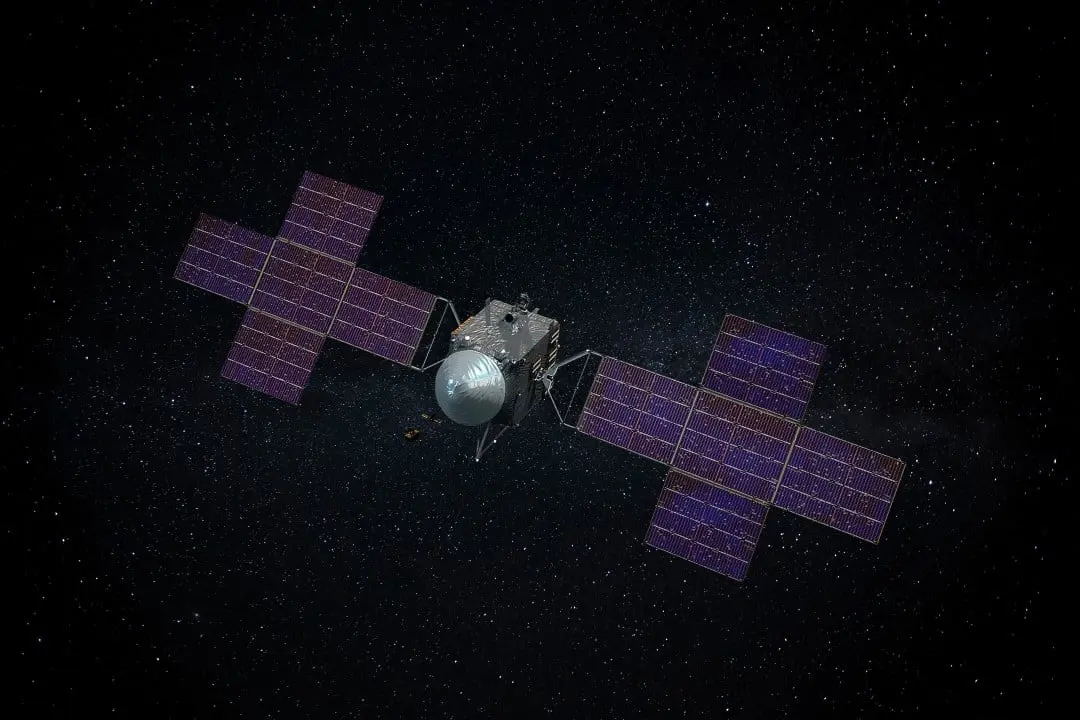
The estimated seven years for arrival include periods of relative hibernation, where the ship’s non-essential systems are deactivated to save energy. The Psyche relies on solar panels for power, which makes energy efficiency critical in regions further away from the Sol.
Contexto from asteroid belt exploration
The Psyche mission is part of a broader Nasa effort to explore the asteroid belt, a region that contains millions of celestial bodies and offers opportunities for scientific research and, potentially, resource exploration.
Metallic Asteroides such as Psyche attract attention from researchers due to their unique properties and the possibility of future use in space mining. A detailed understanding of these bodies contributes to knowledge about the economic viability of future operations in space.
Outras space missions have already used similar gravitational assistance techniques. Efficient space exploration increasingly depends on intelligent maneuvers that minimize waste of energy and resources.
The close passage of Marte will also be used to obtain additional scientific data about the red planet, increasing the added value of the operation.