Recent adaptations of Mortal Kombat modify the origin of powers and profiles of classic characters By Carolina Costa
5 min read
 |
The production of new feature films in the Mortal Kombat franchise establishes a clear technical and narrative division in relation to the works released in the 1990s. The adaptations of the universe created by developer NetherRealm adopt different guidelines for the construction of the tournament and its participants. Current development focuses on new combat rules and restructuring the basic mythology. The change in tone reflects the demands of the modern film market.
The gap between the two generations of films directly affects the profile of classic fighters and the graphic representation of battles. The 1995 version served as a fundamental milestone for the game adaptation industry in Hollywood. The 2021 project, in turn, aligns the visual aesthetics with contemporary elements of video games. The transition alters the public’s perception of the physical capabilities of each individual on screen.
Modificações in the protagonist and arc of the combatants
The main structure of the story underwent a substantial shift in focus with the introduction of Cole Young. The new character took center stage in the 2021 film, guiding the discovery of the hidden universe. Productions in the 90s concentrated narrative development almost exclusively on the figure of Liu Kang. The change in perspective generated mixed reactions among the franchise’s oldest viewers. The modern script has fragmented the importance of the Shaolin monk to accommodate the new hero’s journey.
The Shokan warrior known as Goro presents completely different threat levels in each cinematic version. The original film established the four-armed creature as an almost insurmountable obstacle in the tournament. The monster accumulated overwhelming victories until it was defeated by Johnny Cage through intelligence tactics and use of the scenario. The recent adaptation placed the antagonist in a direct clash against Cole Young in the first act. The result of the fight reduced the perception of invincibility that had accompanied the fighter since the first games.
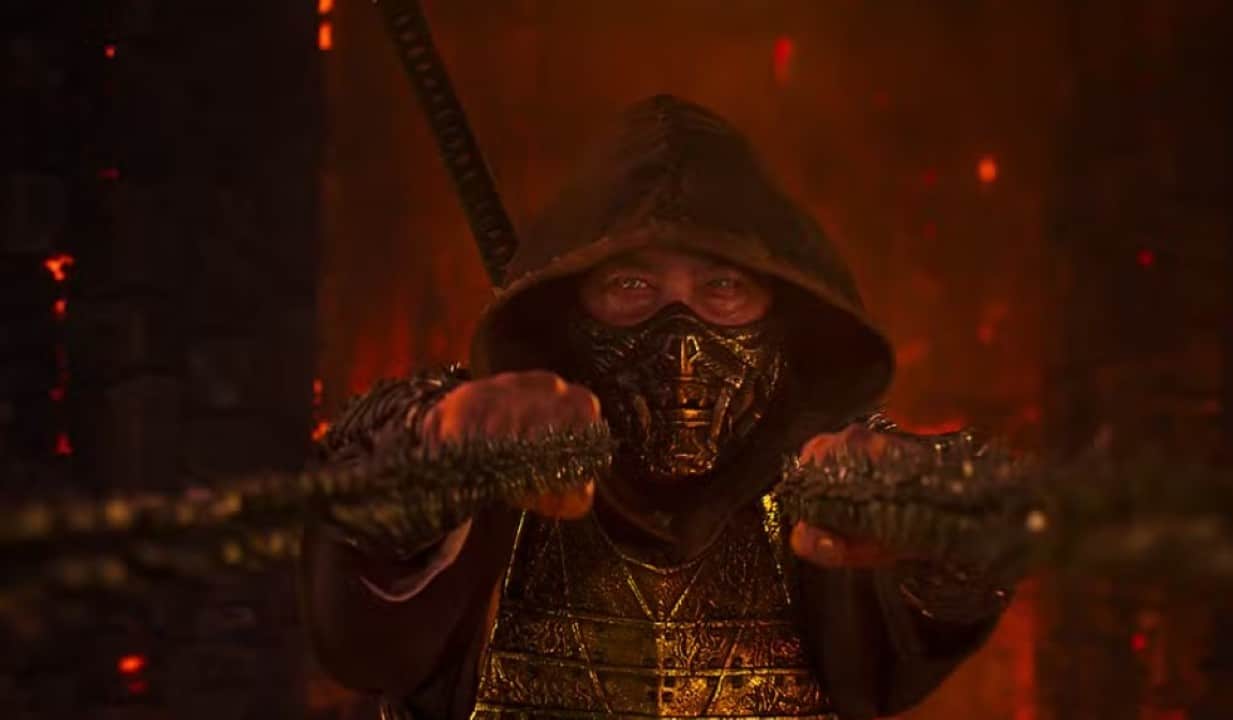
The construction of Scorpion was given considerably more drama in the new timeline. The warrior Hanzo Hasashi acted in a secondary role under the command of the main villain in the first films. The current script devotes a significant amount of time to exploring the yellow ninja’s family tragedy. Hiroyuki Sanada’s performance materialized the character’s quest for revenge with unprecedented depth. The dramatic arc brings the cinematic figure closer to the complexity found on consoles.
The Reptile fighter has also undergone extreme revisions in the creature design department. The 1995 version alternated between an invisible form and a humanoid appearance during combat against Liu Kang. The modern project fixed the character in a strictly monstrous and animalistic structure. Attacks based on instinct and brute force have replaced the classic martial arts stance of the green ninja.
Origem of powers and participation of higher forces
The justification for the special abilities of Terra’s defenders constitutes one of the biggest departures from the current script. Ancient scriptwriters based strikes on physical abilities, Eastern mysticism, and extreme athletic training. The new franchise introduced the formal concept of Arcana to explain the phenomena. The resource works as a hidden power that awakens superhuman characteristics in individuals who have the dragon’s mark. Magical standardization alters the nature of each combatant’s individual effort.
The implementation of Arcana changed the origin of the series’ iconic equipment. The metallic arms of Major Jax arise from this internal energy system in the new universe. Supernatural mechanics replace the purely technological, medical or cybernetic explanations used in previous decades. The ability’s awakening occurs in moments of extreme physical stress during survival struggles.
Deuses Anciões’s interference has been drastically reduced on screen. The film Mortal Kombat: Aniquilação showed the entities acting directly in the decisive confrontation between Liu Kang and the emperor Shao Kahn. The current universe restricts Elder Gods to mere mentions in the antagonists’ dialogues. Shang Tsung’s speech directed to Mileena confirms the existence of the deities behind the scenes of the plot. The superior forces remain hidden, without visual manifestation or physical intervention on the earthly plane until now.
Reversão of deaths and new stance of the antagonists
The impact of fatalities has different weights depending on the time of production. The death of a combatant carried a definitive and irreversible status in the 90s. The quick execution of Johnny Cage by Shao Kahn exemplifies the permanence of death in the classic narrative. The loss of an ally meant a real reduction in the defense forces of the earthly plane.
The contemporary setting incorporates the logic of frequent resurrections and multiple timelines from recent games. The mercenary Kano returns to the plot after being violently eliminated in the first clash. The monk Kung Lao also records a return under a new physical and spiritual condition. The fluidity between life and death weakens the weight of casualties during the tournament, allowing the main cast to be recycled.
The sorcerer Shang Tsung exhibits contrasting methods of acting in the two eras. Cary-Hiroyuki Tagawa’s performance delivered a villain focused on physical intimidation, stage presence and absolute mastery of martial arts. Actor Chin Han builds a strictly cerebral and calculating antagonist. The new version prioritizes the manipulation of events, the use of arcane magic at a distance and the articulation of ambushes outside the official rules.
Classificação indicative and fidelity to the original combats
The indicative rating determined the visual limit of choreography and bodily damage. The PG-13 label of the 1990s forced directors to hide extreme injuries. The fatal blows occurred outside the main frame or through camera tricks and shadows. The restriction distanced the films from the bloody identity that popularized the brand in arcades.
The approval of the +18 censorship allowed the unrestricted execution of traditional coups de grace. The filmmakers reproduced the dismemberment of vampire Nitara by Kung Lao’s spinning hat in precise anatomical detail. The explicit violence meets a historic demand from the franchise’s consumers. Digital blood and practical effects work together to elevate the visual impact.
- Liu Kang’s protagonism gave way to Cole Young’s journey of discovery.
- The introduction of Arcana replaced traditional physical training as a source of power.
- The level of violence rose from the PG-13 standard to the uncut +18 rating.
- The deaths lost their finality with the confirmed returns of Kano and Kung Lao.
- Shang Tsung’s stance changed from hand-to-hand combat to stealth strategy.
- The warrior Goro lost his status as an unbeatable threat in the first film of the new phase.
The graphic execution of the battles ends the commercial concessions made in the past. Developers remain focused on accurately reproducing the physical damage seen on NetherRealm consoles. The visceral approach consolidates the definitive distance from the limitations imposed in the first adaptation, establishing a new standard of brutality for the next chapters of the saga in cinemas.