Street Fighter 6 passes 7 million copies sold worldwide by June 2026By Luís Henrique Costa
6 min read
 |
Capcom’s Street Fighter 6 sold more than 7 million copies worldwide through June 2026, a result that comes as the franchise completes its move from arcade cabinets to competitive eSports. The sixth numbered game in the series is the main reason the fighting-game line is back in focus. A live-action film was also scheduled to open in cinemas on October 16, 2026.
The Osaka-based developer had worried internally about the future of the brand. Shuhei Matsumoto, producer of Street Fighter 6 at Capcom, said in October 2026 that the company feared the series could disappear within a decade, because its community was ageing and the technical problems at the launch of the previous game had hurt its reputation. “When the two of us were talking during development of Street Fighter 5, we realized that if we didn’t do something about Street Fighter, the franchise would probably die in 10 years. It was a critical issue. So we had to create a game that made people rediscover it and start playing again,” Matsumoto said.
How Street Fighter 6 pursued younger players and eSports
Matsumoto said the structural overhaul, carried out alongside Takayuki Nakayama, director of Street Fighter V and Street Fighter 6, was designed to attract younger consumers. The producer described the age gap in the community. “Back then, the player base of Street Fighter 5 averaged between 35 and 45 years old. In 10 years, those people will be 60. It is hard to keep the franchise going if we rely only on that group,” he said.

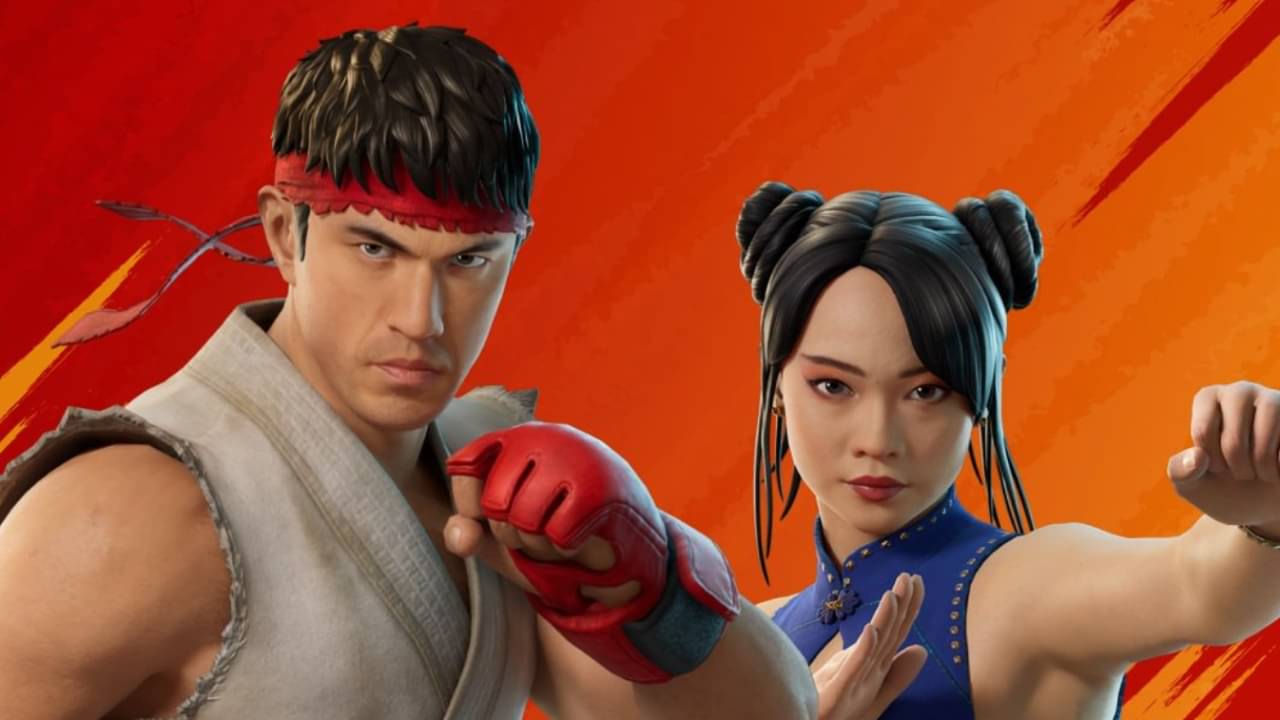
To widen that reach, Street Fighter 6 debuted with a visual style inspired by hip-hop, 18 starting characters, six of them new, and the World Tour story mode, in which players create their own avatar to learn classic moves. The combat introduced the Drive System, a gauge that controls armored attacks, precise defenses called parries, dashes and enhanced special moves. When the gauge empties, the fighter enters a burnout state and becomes vulnerable. Haruhiro Tsujimoto, president and chief operating officer (COO) of Capcom, set a target of 10 million copies sold for the game and highlighted its competitive design. “Street Fighter 6 was developed from the start with the development of e-sports in mind, so I hope it will be very exciting,” Tsujimoto said, in a free translation.
Capcom’s milestones for the current phase of the franchise are summarized below. The list covers launch dates, platforms, sales and content updates.
Check out: Resident Evil Veronica debut shifts to late 2027 at Capcom
- June 2, 2023: worldwide launch on PlayStation 4, PlayStation 5, Xbox Series X/S and PC
- June 5, 2025: release on the Nintendo Switch 2 console
- June 9, 2026: Capcom officially confirms 7 million copies sold worldwide
- Guest characters Terry Bogard and Mai Shiranui, from SNK, join in Year 2; Crimson Viper returns in Year 3; Year 4 (Season 4) is confirmed at Summer Game Fest 2026
The 1987 arcade debut that led to Street Fighter II’s success
The series began on August 30, 1987, when the first Street Fighter, created by Takashi Nishiyama and Hiroshi Matsumoto, reached arcades in Japan. It introduced specific command inputs for special attacks and cabinets with six action buttons, plus a Deluxe version with two pneumatic buttons sensitive to the strength of the punch. Players controlled Ryu, or Ken with the second controller, against ten opponents across five countries, including Adon, Gen and the final boss Sagat. The game was later adapted for home computers, including MS-DOS, ZX Spectrum, Amiga, Amstrad CPC, Atari ST and Commodore 64, and for the TurboGrafx-CD console as Fighting Street in December 1988.
The genre took shape on March 7, 1991, with the arcade debut of Street Fighter II: The World Warrior, which offered precise controls, eight selectable fighters and four bosses. Its commercial success led to four direct updates during the 1990s. Champion Edition (March 1992) unlocked control of the four bosses, Turbo: Hyper Fighting (December 1992) sped up matches, and Super Street Fighter II: The New Challengers (September 1993) added Cammy, Fei Long, Dee Jay and T. Hawk. The final update, Super Street Fighter II Turbo (February 1994), added super-attack gauges and debuted Akuma (Gouki in Japan) as a secret boss, who could be chosen with a button code on the character select screen.
Prequels, a famous 2004 parry and the shift to 3D
Street Fighter Alpha, launched on June 22, 1995, as Street Fighter Zero in Asian markets, served as a narrative prequel to Street Fighter II. Across three titles released through 1998, the line used a visual style close to Japanese animation, a three-level super gauge, fighters from the Final Fight series and the debut of Karin in the third game. In parallel, Capcom released Street Fighter III: New Generation on February 28, 1997, initially keeping only Ryu and Ken from the classic roster. Its updates 2nd Impact (October 1997) and 3rd Strike (1999 in arcades and 2000 on the Dreamcast console) brought back Akuma and Chun-Li.
Follow: Zach Cregger rules out comedic cut for $100M Resident Evil
The most famous play in fighting-game tournaments happened on August 1, 2004, during the semifinal of the Evolution Championship Series (EVO), using Street Fighter III: 3rd Strike. With only one health point left while controlling Ken, professional player Daigo Umehara blocked 15 consecutive hits of Chun-Li’s Super Art, controlled by opponent Justin Wong, using precise manual parries, and turned the match around. The play became known as Evo Moment #37. In the following years, the franchise moved to three-dimensional models with two-dimensional gameplay, known as 2.5D, in Street Fighter IV (2008), which introduced recurring names such as Juri, Crimson Viper and the boss Seth. It then adopted seasonal updates with Street Fighter V, released in February 2016 for PlayStation 4 and PC with 16 starting fighters, and 30 more added through downloadable expansion packs, or DLC.
Side games and a film set for cinemas in October
Outside the numbered line, the brand spawned spin-offs such as the competitive puzzle game Super Puzzle Fighter II Turbo, the simplified three-button fighting game Super Gem Fighter Mini Mix (Pocket Fighter in Japan) and the three-dimensional Street Fighter EX trilogy. Developed by the studio Arika, the EX series created original fighters such as Skullomania, Allen, Kairi, Hokuto and Garuda, who returned in 2018 in the independent game Fighting EX Layer.
In other media, the live-action film, with real actors, was scheduled to open in cinemas on October 16, 2026, directed by Kitao Sakurai. It is a co-production of Legendary Pictures and Capcom, distributed by Paramount Pictures. The cast includes Andrew Koji as Ryu, Noah Centineo as Ken, Callina Liang as Chun-Li, Jason Momoa as Blanka, David Dastmalchian as M. Bison, Roman Reigns as Akuma and 50 Cent as Balrog. On consoles, the next step confirmed by the developer is the start of Year 4 content for Street Fighter 6 in early 2027.