

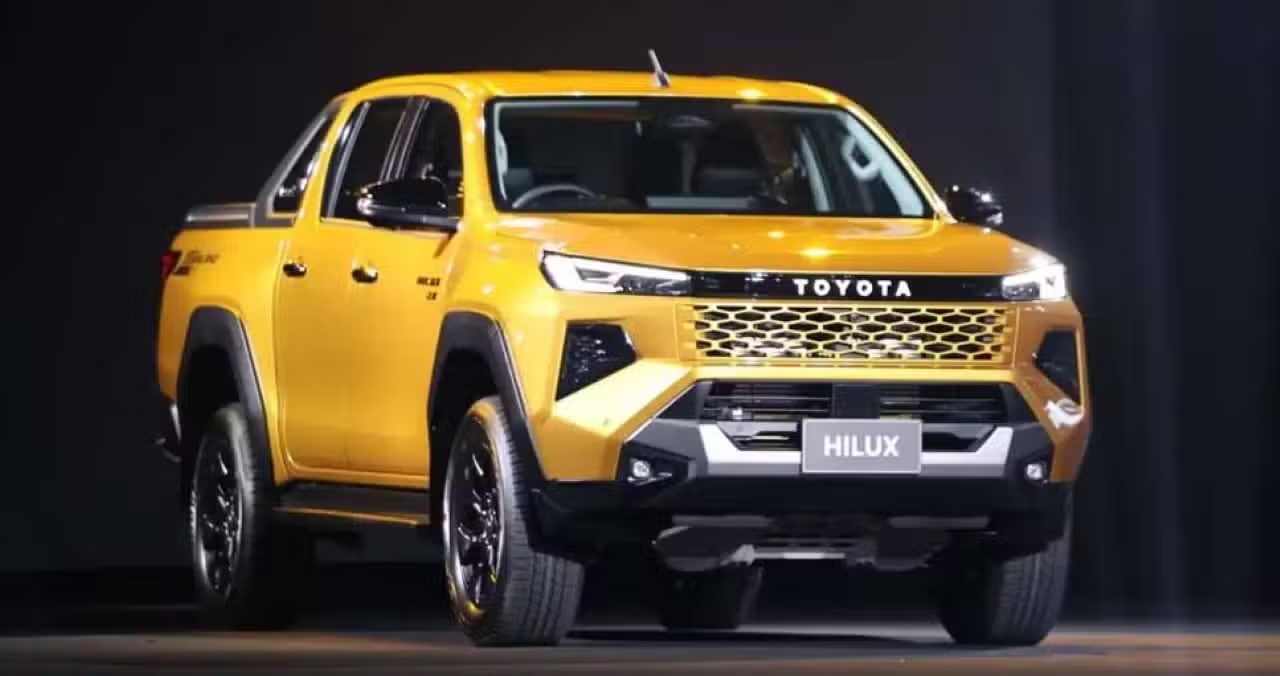
The Japanese automaker Toyota has set December 2026 as the starting date for the production of the new generation of the Hilux pickup truck at the Zárate industrial unit, located at Argentina. The manufacturing schedule covers both traditional versions equipped with a diesel combustion engine and a fully electric variant. The official presentation of the upgrade project took place during the brand’s annual dealer convention, held in the city of Termas, where commercial partners were introduced to the prototypes.
The strategic move aims to strengthen the company’s presence in the América Sul market and accompany the global transition to zero-emission vehicles. The company’s Executivos detailed that the commercial launch of the utility will take place in a staggered manner throughout 2027. The Argentine factory is already undergoing rigorous technical adjustments to support the new vehicle platform without interrupting the current assembly volume, guaranteeing the flow of exports to neighboring countries.
Zárate industrial complex Modernização
The Zárate manufacturing unit currently operates on an uninterrupted three-shift basis. The complex’s management seeks to reach a new record of production volume in the coming months to meet the high regional demand for light commercial vehicles. The transition to the new platform requires the replacement of heavy tooling and stamping dies in several sections of the assembly line. Engenheiros works on detailed logistical planning to avoid any interruption in the manufacturing of the current model.
The process of modernizing tooling occurs in parallel with the daily routine of workers on the factory floor. Essa simultaneous engineering strategy guarantees continuity in the supply of pickup trucks for the domestic market and for export quotas. Structural adaptation allows the same production base to accommodate conventional versions and the unprecedented electrical architecture. Mechanical robustness, a historical characteristic of the vehicle in the agribusiness segment, remains the central focus of the development of the new generation.
Funcionários from the manufacturing sector already participate in advanced technical qualification cycles. Specific training covers the handling of new electronic components and the safety protocols required for assembling high voltage batteries. Preliminary Testes with pre-series parts take place in isolated areas of the industrial plant. The rapid advancement of these stages signals that the industrialization project is progressing strictly within the deadline stipulated by the corporate matrix at Japão.
Inserção of the electric variant in the South American market
The introduction of a locally manufactured 100% electric Hilux represents a milestone in the diversification of the automaker’s portfolio into the América from the Sul. The variant classified as a battery electric vehicle was shown in functional concept format to distributors. The arrival of this model in showrooms in 2027 aligns the South American operation with the global decarbonization guidelines established by the company for the next decade.
The decision to nationalize the production of the electric utility takes into account the tariff dynamics of the regional economic bloc. Manufacturing on the continent reduces Ásia’s dependence on imports and mitigates the impact of taxes on electrified vehicles. The Zárate plant increases its relevance in the company’s global organization chart, consolidating itself as a hub specialized in the development and export of commercial vehicles designed for harsh terrains and intense commercial use.
Especialistas from the automotive sector point out that the electrification of medium-sized pickup trucks meets a growing demand from corporate fleet owners. The initial focus of the electric version should cover operations in urban centers and short-distance logistics routes, where the charging infrastructure has greater capillarity. The diesel version will continue to meet the needs of customers traveling long distances in remote areas without access to high-power power grids.
Atualização programmed for the SW4 sport utility vehicle
The automaker’s industrial planning also includes the complete renewal of the Toyota SW4, a sports utility vehicle derived from the same platform as the pickup truck. The new generation of the SUV is expected to enter the assembly line between March and April 2027. The Zárate complex will concentrate the manufacturing of both models simultaneously, maintaining the productive synergy that characterizes the current operation and guarantees the economic viability of the plant.
Schedule coordination between Hilux and SW4 allows for significant optimization in the South American supply chain. Fornecedores of auto parts installed on Argentina and Brasil already receive preliminary technical specifications to adapt their own production lines. The joint strategy dilutes research and development costs, in addition to facilitating the logistics of distributing spare parts to the dealer network spread across the continent.
Diretrizes operational and commercial expectations
The distribution network received clear guidance on the phasing of launches during the executive meeting at Termas from Río Hondo. Transparency in sharing industrial information prepares sales teams and the after-sales sector for the arrival of new propulsion technologies. Maintaining the combustion engine alongside the electric option guarantees a gradual market transition, respecting the particularities of the road infrastructure of each América and Sul country.
The details of the manufacturing project reveal crucial points for the brand’s operation in the region over the next few years. The portfolio update strategy encompasses the following work fronts at Argentine facilities:
- Manutenção of load capacity and torsional strength in the new chassis architecture.
- Oferta simultaneous use of diesel engines and 100% electric systems for different usage profiles.
- Sincronização of the SW4 SUV manufacturing calendar with the mid-size pickup truck life cycle.
- Capacitação continuous workforce in Zárate unit to handle high voltage systems.
- Distribuição commercial staggered in 2027 to ensure uniform supply of import markets.
The injection of capital in the modernization of the factory ensures the competitiveness of the product in a segment that is undergoing intense technological transformations and the entry of new competitors. The pickup maintains its reference status in the mid-size category, and the company’s management plans to maintain its leadership in registrations after the generation transition. The diversified engine offering acts as a commercial protection tool against fluctuations in local government emissions policies.
The fine-tuning of the stamping, automated welding and final assembly processes follows the global quality standards stipulated by the matrix. Auditores interns monitor each step of industrial adaptation to ensure compliance rates remain rigorous. The evolution of the line of commercial vehicles manufactured at Argentina reflects the maturation of the continent’s industrial park in the face of the challenges posed by the new era of global electric mobility.