

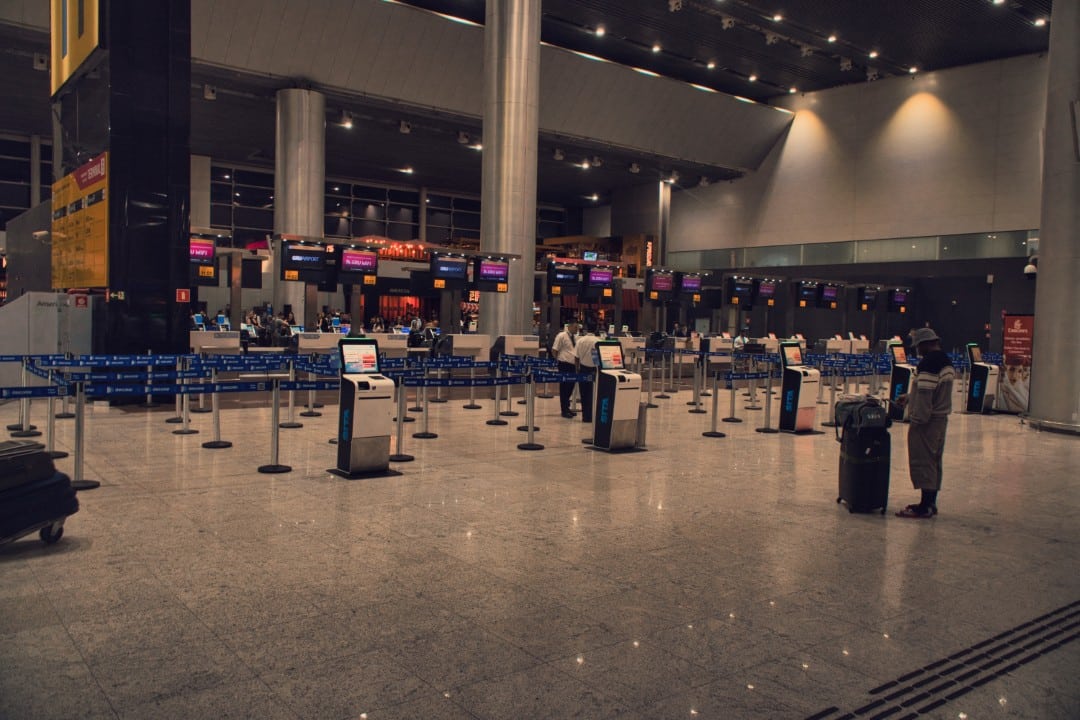
A breakdown in the communication system paralyzed operations at Congonhas and Guarulhos airports this Tuesday morning (2). The problem affected Controle of Aproximação of São Paulo, the body responsible for air traffic in the region. The failure caused delays and temporary suspension of landings and takeoffs at both terminals. Passageiros faced disruptions early in the day. GRU Airport confirmed the impact at the international airport.
The incident occurred in the same location that caused similar problems in the past. Equipes techniques worked to restore the system. Voos who were already on air needed alternative guidance during the critical period.
Falha reaches control center responsible for the metropolitan region
Controle of Aproximação of São Paulo (APP-SP) coordinates air traffic in one of the busiest areas in the country. The breakdown interrupted communication between the tower and the aircraft. Isso forced a preventive shutdown of operations to ensure safety.
Congonhas, focusing on regional flights, felt the immediate effect. Guarulhos, the largest of Brasil in passenger movement, also stopped for a while. The suspension did not last hours, but it had a ripple effect on the airline network. Companhias airlines needed to relocate aircraft and adjust routes.
- APP-SP manages approaches to Congonhas, Guarulhos and other nearby airfields.
- The failure compromised the normal flow of landing and takeoff authorizations.
- Técnicos of Aeronáutica worked on fixing the issue.
- Passageiros reported waiting at terminals during the outage.
- International Voos also had indirect impacts.
Aeroportos resume activities after technical correction
Operations gradually returned once the system was back to normal. Aena, responsible for Congonhas, and GRU Airport monitored the restoration. Controladores has resumed normal traffic flow. Mesmo thus, accumulated delays persisted throughout the morning.
Muitos passengers exchanged information in real time in the lounges. Algumas companies offered markdowns and support. The incident reinforced the dependence of São Paulo’s air network on a single main control center.
The partial shutdown lasted less than an hour in each terminal. However, the accumulation of delayed flights required adjustments until the end of the day. Ground Equipes worked to speed up aircraft processing.
Histórico of similar failures in the region of São Paulo
In April, a general breakdown in air traffic control had already caused a temporary suspension of flights in the same region. The previous episode also involved technical problems with the communication system. Investigadores analyzed causes such as electrical failures and operational issues.
Especialistas point to the high density of flights as a factor that amplifies any interruption. São Paulo concentrates a large part of the country’s domestic and international traffic. Qualquer problem in APP-SP quickly impacts other states.
Força Aérea Brasileira, through DECEA, usually opens investigations after these events. The objective is to identify failures and prevent repetitions. Melhorias in systems redundancy appears as a recurring priority in technical reports.
Medidas safety and impact on passengers
Authorities prioritized safety when suspending operations. Nenhum risk to aircraft integrity was recorded. Passageiros with connections missed flights or had to wait for new allocations.
Companhias like LATAM, Gol and Azul issued statements about the adjustments. Algumas offered a refund or rebooking at no additional cost. The episode generated queues at service counters and increased movement on flight tracking applications.
Técnicos checked equipment after reset. Normalization occurred progressively to avoid new congestion in the airspace. Voos that surrounded the region waited for clearance before proceeding.
Investigações in progress to identify exact cause
Órgãos, as well as ANAC and DECEA, are monitoring the investigation into the breakdown. Preliminary Relatórios indicates a technical problem in the communication system. Detalhes’s specific origin has not yet been publicly disclosed.
Ministério of Portos and Aeroportos follows the developments. Concessionárias from the airports collaborates with the investigations. The focus is on ensuring that the infrastructure supports the growing volume of flights in the region.
Especialistas defend investments in more robust technologies. Redundâncias and automatic backups could minimize the impact of one-off failures. This Tuesday’s case serves as a warning about the need for continuous modernization.
Air traffic in the São Paulo region returned to normal throughout the morning. Passageiros managed to board, although with accumulated delays. Concessionaires reinforced their commitment to operational safety.