

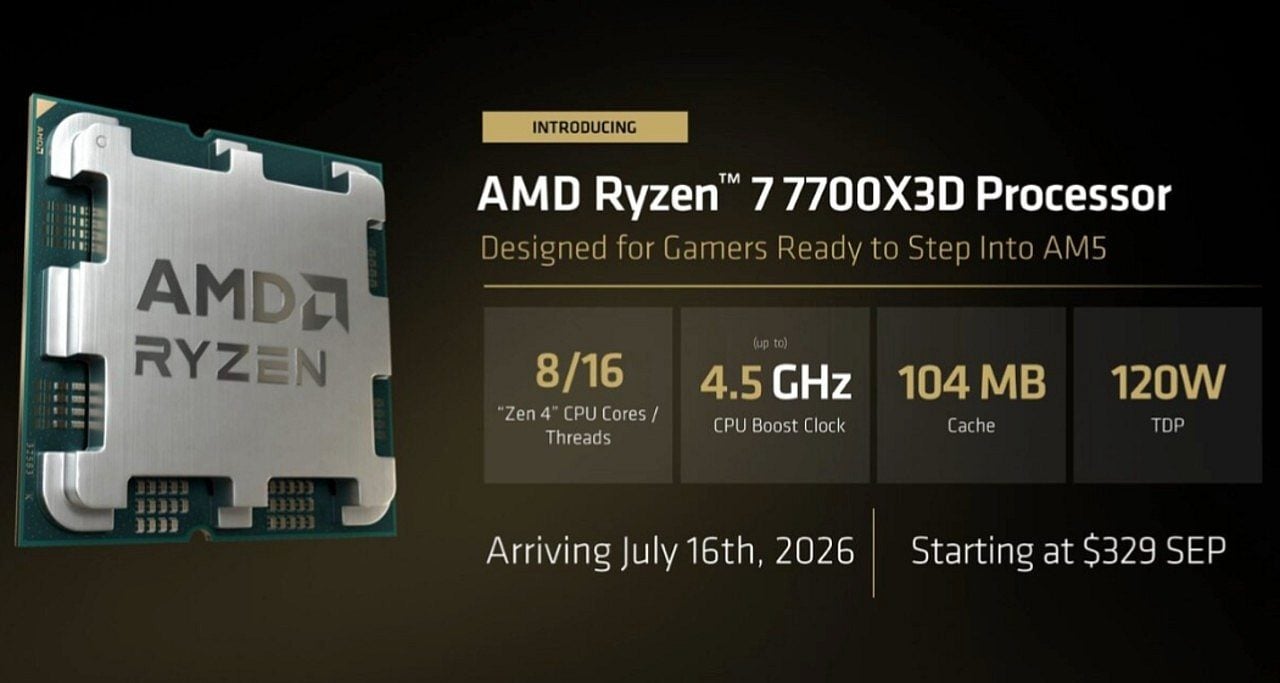
AMD officially launched the Ryzen 7 7700X3D processor during presentations at the Computex 2026 technology fair. The component integrates V-Cache 3D memory stacking technology and focuses on consumers seeking high frame rates in electronic games. The manufacturer took advantage of the event to confirm an important change in the life cycle of its products. Official support for the AM5 platform has received a strategic extension and now covers hardware releases through the year 2029.
Essa corporate decision directly affects the financial planning of desktop computer users. Maintaining the same socket for an extended period allows isolated replacement of the central processing unit without the need to change the motherboard or RAM memory modules. The hardware market faces constant fluctuations in the prices of essential components such as SSD storage drives. The predictability offered by the company reduces the long-term total cost of ownership for technology enthusiasts and system builders.
Especificações techniques highlight focus on cost-benefit for the gaming public
The new member of the processor family uses the Zen 4 architecture in its internal construction. The technical sheet reveals the presence of eight physical cores operating together with sixteen simultaneous processing flows. The chip’s biggest difference lies in its temporary data storage capacity. The total cache reaches the 104 MB mark. Essa massive amount of memory close to the processing cores accelerates access to crucial information when rendering complex scenarios.
Operating frequencies define the component’s work rhythm in different usage scenarios. The device’s base clock runs at 4.0 GHz during routine operating system tasks. The system automatically activates boost mode when it detects a demand for greater computing power. Speed peaks at up to 4.5 GHz under controlled thermal and electrical stress. The thermal design project, known by the acronym TDP, establishes an energy consumption limit of around 120 W.
The implementation of 3D V-Cache technology transforms processor behavior in interactive applications. Modern electronic games rely on low latency communication between memory and the main processing unit. Vertically stacking cache chips significantly decreases system response time. Gamers realize this technical advantage through greater stability at minimum frame rates. The phenomenon prevents visual choking during moments of intense action on the monitor screen.
Performance Diferenças compared to the superior model in the same line
The market positioning of the Ryzen 7 7700X3D places it a step below the already established Ryzen 7 7800X3D. The two processing units share fundamental structural characteristics. The number of cores, number of threads, total cache volume and energy consumption limit remain identical between versions. The technical distinction between the products focuses exclusively on the operating frequencies configured by the manufacturer at the factory.
The top model features a base clock of 4.2 GHz and reaches up to 5.0 GHz in full throttle mode. The reduction in speeds of the new chip marginally impacts performance in productivity software that requires extreme processing frequencies. However, the stacked memory architecture acts as an equalizer in digital entertainment scenarios. The presence of 104 MB of cache compensates for the clock difference in most titles available on the current market.
The company structured this segmentation to capture a specific segment of consumers. The product functions as a gateway to the X3D line within the current generation of components. Computer assemblers gain a viable alternative to balance the machine’s final budget. The savings generated in choosing the processor allow the redirection of financial resources towards the purchase of more powerful video cards.
Extensão of motherboard life cycle changes update dynamics
The introduction of the AM5 socket took place in 2022 along with the arrival of the Ryzen 7000 series. The platform required a profound technological transition on the part of consumers. The adoption of the new standard forced the mandatory migration to DDR5 type memories and introduced support for the PCIe 5.0 bus. The ecosystem has received constant updates since its commercial launch. The manufacturer made APUs from the Ryzen 8000G line and CPUs from the Ryzen 9000 family available for the same physical fit.
Confirmation of extended support until 2029 changes the perspective of anyone planning to build a computer at this time. The expanded compatibility window ensures that current motherboards will support future generations of processors through simple BIOS updates. Users eliminate the risk of early obsolescence of their high-cost equipment. Changing platforms historically represents the biggest expense in the life of a personal computer.
The technical characteristics of the platform guarantee the longevity promised by the semiconductor company.
- Native Suporte for high-frequency DDR5 standard RAM memory modules.
- Compatibilidade with the PCIe 5.0 high-speed bus for graphics cards.
- Arquitetura prepared to receive future generations of processors with smaller lithography.
- Conexões upgraded to ultra-fast solid-state storage drives.
- Sistemas power supply sized for high thermal performance chips.
The long-term strategy repeats a formula tested and approved by the company itself in previous years. Consumer trust in the brand grows when the initial investment in a quality motherboard is justified over multiple generations of processing components.
Edição commemorative marks a decade of presence of the previous socket on the market
The presentation at the Asian fair also reserved space to pay homage to the company’s past generation of hardware. The AM4 platform completed ten years of existence with a massive installed base around the world. The manufacturer decided to celebrate the historic milestone with the announcement of the Ryzen 7 5800X3D 10th Anniversary Edition. The commemorative processor arrives to serve users who still use systems based on DDR4 memories and are looking for a final update.
The special product package includes an accessory aimed at efficient thermal dissipation. The component comes with an Carbice Ice Pad in the original factory box. The thermal interface replaces traditional thermal paste and promises to make the computer assembly process easier for less experienced users. Upgrading the processor on an old machine provides a significant leap in performance in electronic games. The user avoids the costs associated with purchasing a new motherboard and new RAM memory sticks.
Maintaining support for two simultaneous platforms demonstrates a careful reading of the global economic scenario. Muitos consumers postpone migration to the DDR5 standard due to the costs involved in the complete transition of the processing system. Offering updated products for the old socket keeps these customers within the brand’s ecosystem. Loyalty occurs through the delivery of viable options for continuous hardware improvement.
Suggested Preços and Global Component Availability Schedule
The launch calendar established by the manufacturer sets the arrival of new products for the beginning of the second half of the year. The Ryzen 7 5800X3D 10th Anniversary Edition opens the sales round on June 25th. The commemorative processor has a suggested price of US$349 on the international market. The price reflects the special edition status and the inclusion of the advanced thermal interface in the product package.
The Ryzen 7 7700X3D has its global debut scheduled for July 16th. The cost-benefit-focused component will hit shelves with an official price of US$329. The difference in values between models from different generations creates a complex choice scenario for consumers in the upgrade phase. Hardware experts are awaiting the release of independent performance tests. Detailed technical analyzes will provide the necessary data to evaluate the relationship between the cost and real benefit of each option against Intel’s competitors.
The company’s regional branches have not yet released information on the sale of processors in the national territory. Brazilian consumers are awaiting the definition of prices in local currency and confirmation of availability dates in the country’s specialized stores. The tax burden and exchange rate fluctuations tend to significantly impact the final value of imported IT components. The national hardware market follows international movements to project the sales scenario for the second half of 2026.