

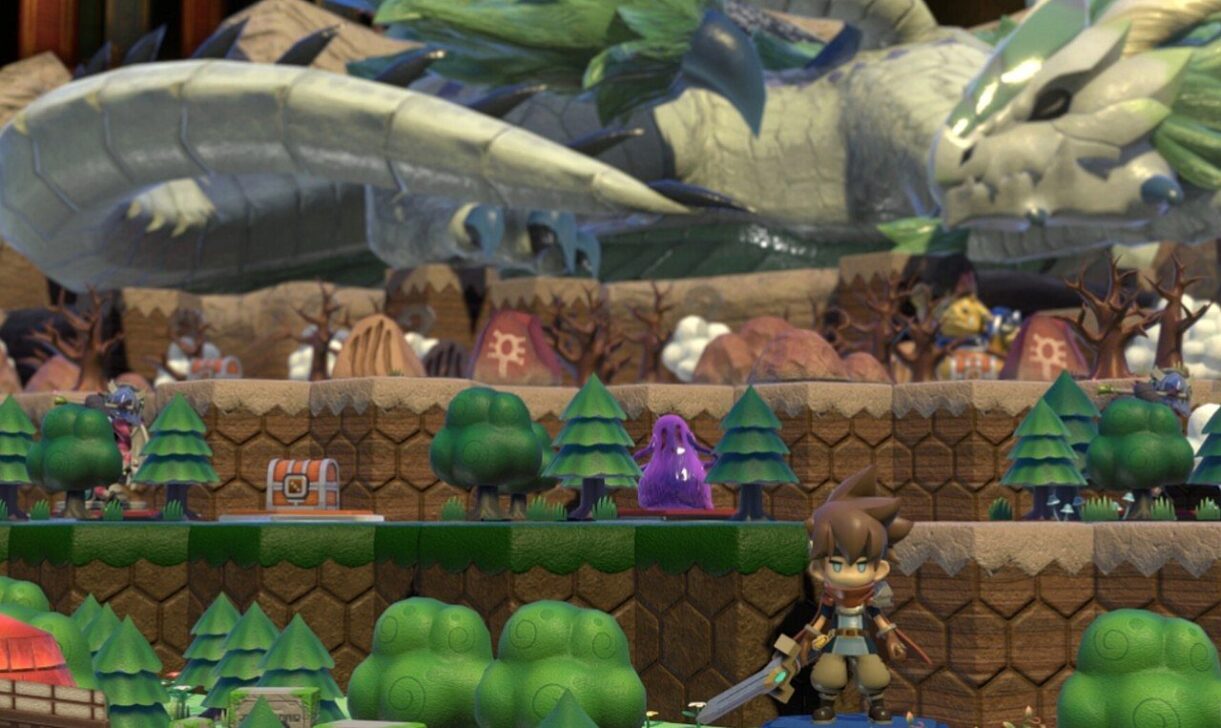
Developer Sting announced the arrival of the game Viractal on the Japanese brand’s consoles. The tabletop RPG title with deck-building elements will be available for Nintendo Switch and Nintendo Switch 2 from October 1, 2026. The adaptation transfers the original experience from computers to the portable and desktop environment of the devices. Players take control of characters in a miniature world with support for solo play or online co-op.
The announcement responds to a demand from the community of players who have followed the project since the early stages of development. The transition to consoles occurs after a period of testing and updates on the Steam platform. The programming team adjusted the controls and visual interface for the shape of the Joy-Con controls and for display on device screens. The independent games market finds great acceptance in the Nintendo ecosystem, and the arrival of the work reinforces the catalog of titles focused on strategy and cards.
Transição of computers for the console market from Nintendo
The title’s trajectory began in the computer environment before being confirmed for Nintendo video games. The early access period began in September 2025. The final version reached PC users in January 2026. Public reception on the Steam platform shows a high approval rating. The system records eighty-eight percent positive reviews based on around three hundred and seventy buyer comments. The overall rating remains in the very positive category in the online store.
Commercial and critical performance on the computer drove planning for the software conversion. Jogos that mix board elements with digital mechanics tend to attract a loyal audience. The portability of the Nintendo consoles provides a form factor suitable for shorter gaming sessions or play on the go. The technical team needed to adapt text reading and card selection to smaller screens. The optimization process ensures that the frame rate and resolution work stably on the two different hardware.
Mecânicas board and exploration in the universe of Viractaria
The core structure of Viractal simulates the experience of a traditional tabletop role-playing game. Participants explore a miniature world called Viractaria. The virtual environment works like a large digital board where characters move through different houses and paths. The look refers to physical pieces and sets assembled by hand. Exploration occurs in a rhythmic manner. Cada movement across the map can trigger unforeseen situations or encounters programmed by the game system.
Random events represent a fundamental part of the journey through the Viractaria scenario. Players encounter chests with items, hidden traps, or uncontrollable characters that offer side quests. Procedural generation ensures that each new campaign presents a different arrangement of challenges and rewards. The format avoids excessive repetition during multiple game sessions. Progression requires tactical planning before each step on the board. Resource management during exploration determines the group’s ability to survive in the face of dangers on the map.
The work allows consumption alone or through network connections. Online cooperative mode supports up to three simultaneous players in the same session. Group dynamics change the approach to situations encountered along the way. Participants need to coordinate movements and divide the resources found in the chests. The difficulty of enemies and the amount of rewards are automatically adjusted based on the number of people active in the match. Communication between squad members makes it easier to overcome the most complex obstacles on the board.
Sistema card-based combat and deckbuilding
Confrontations against enemies abandon free movement in favor of a tactical card system. Combat takes place in alternating turns between characters and hostile creatures. The player uses a personalized deck to define attack, defense, healing and attribute improvement actions. Cada turn allows the use of up to three cards from the current hand. The turn limit requires precise choices to maximize damage dealt or ensure survival against imminent attacks. Cards have specific energy costs that limit the possible combinations in a single round.
Victory in a battle grants direct rewards for evolving the character’s arsenal. The system presents three random options for new cards after the opponents are defeated. The player chooses just one to add to their permanent deck. The deck building mechanic forces the user to think about the synergy between the acquired skills. Adding very heavy cards can impede the flow of future turns. Removing weak cards in campfires or shops is also part of the skill set optimization strategy.
Long-term progression involves collecting souls during expeditions across the map. The resource works as a bargaining chip in the game’s main camp. Players use souls to unlock new playable characters with unique characteristics. The formation of diverse groups completely changes the approach to combat. A character focused on heavy defense complements another who specializes in ranged magic damage. Experimenting with different team compositions increases the replayability of the work over the months.
Diferenças content across available platforms and modes
The arrival of the title on Nintendo consoles presents technical and content distinctions between the two generations of devices. Developer Sting has prepared specific packages to take advantage of the capabilities of each hardware. The edition intended for Nintendo Switch 2 includes additional elements that are not present in the other versions. The new console receives an improved visual treatment and extra exclusive content. The version for the current device maintains exact parity with the original edition released for computers at the beginning of the year.
- The official launch takes place simultaneously on October 1, 2026.
- The edition for Nintendo Switch 2 contains exclusive additional content and graphical improvements.
- The version for the standard Nintendo Switch has the same content as the PC edition.
- Online multiplayer works on all platforms with support for up to three people.
- Progress and core gameplay remain focused on deckbuilding and tactical exploration.
The company confirmed details about how the different versions work for consumers. Nintendo Switch 2 owners who choose to play the previous console version will not have access to the extra content. The system disables exclusive functions when previous generation software runs on the new device. The online cooperative mode, however, operates without restrictions in all editions available on the market. The network infrastructure allows fluid connections between users regardless of the platform chosen for the adventure.