

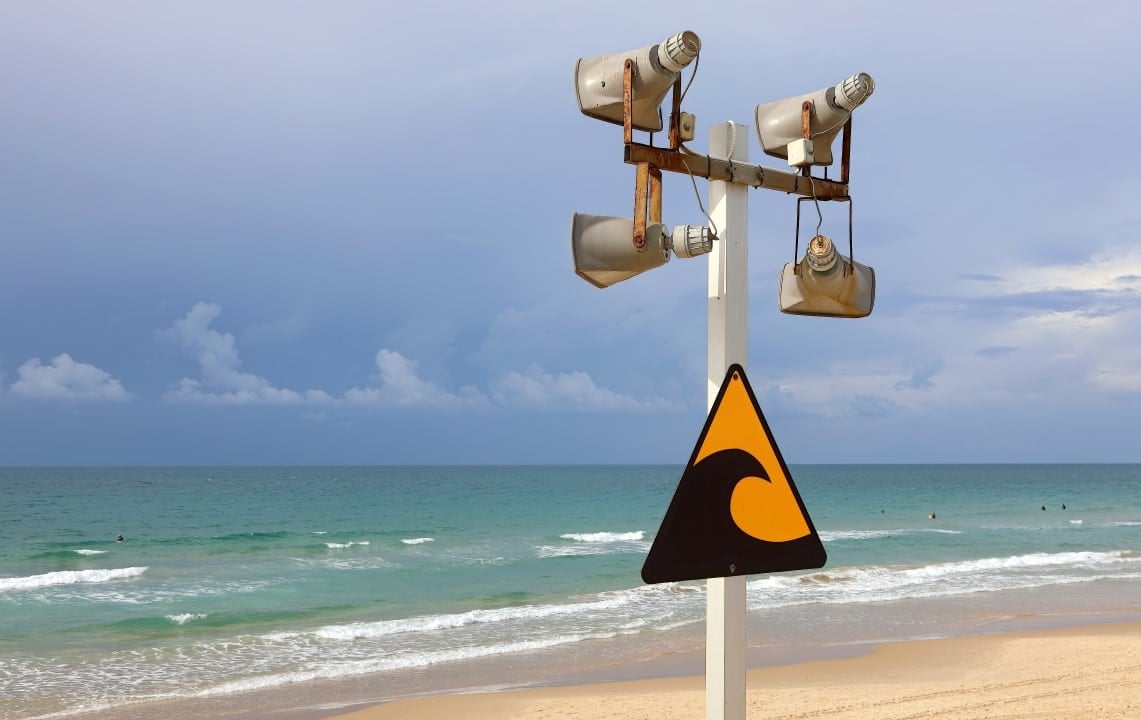
A tsunami alert issued this Monday, June 8, 2026, forced the immediate cancellation of classes and the evacuation of students in several Japão provinces. The educational authorities of Ibaraki, Kanagawa and Kochi activated emergency protocols in the early hours of the morning to ensure the safety of students, teachers and staff. The preventive measure emptied school buildings located in high-risk coastal areas and changed the routine of thousands of Japanese families. The rapid displacement to elevated areas reflects the rigorous training of the local population to face natural disasters.
The decision to suspend academic activities was coordinated between regional governments and municipal education councils. The country’s early warning system allowed school management to make quick decisions before any changes in sea levels could reach the coast. The emptying of educational institutions followed the escape routes mapped annually by the Japanese government’s civil defense agencies.
Suspensão activities and evacuation in Ibaraki province
In the city of Takahagi, located in the province of Ibaraki, the giant wave warning resulted in the immediate interruption of the school schedule. Três primary and secondary education institutions, located in perimeters considered vulnerable to oceanic flooding, had to be hastily evacuated. The management teams activated security procedures even before the start of the first shift of classes, prioritizing the physical integrity of the school community. The geographic location of these units requires constant attention from local authorities.
The Escola Secundária of Takahagi, the Escola Primária of Higashi and the Escola Primária of Takahagi were the main focuses of the emptying operation. The access routes to these buildings are very close to the coastline, which substantially increases the risk of isolation in the event of sea advance. Teachers organized the departure of students and coordinated the safe delivery of children to their parents or legal guardians. The process occurred in an orderly manner, following the guidelines established by Ministério of Educação of Japão.
Além of the three most exposed units, four other schools in the municipality of Takahagi decided to release their students at around 11 am. The preparation of school meals had to be completely suspended by the nutrition teams. The dining halls and kitchens of these facilities operate on the ground floor, at elevations that could easily be reached by water in a severe flooding scenario. Early release prevented students from remaining in risk areas during the period of heightened alert.
Protocolos security applied in Kanagawa
The education board of the city of Yugawara, in the province of Kanagawa, also adopted severe restrictive measures shortly after the official risk statement was issued. Escola Secundária of Yugawara, built on a coastal strip, had all its academic and sporting activities canceled indefinitely. The teaching staff took on the responsibility of accompanying students during the journey home, ensuring that no teenager was left helpless on the streets during the alert.
Para managed the situation of students who were unable to immediately return to their homes, the school activated a specific contingency plan. Local authorities have established clear guidelines for the temporary shelter of affected classes.
- Identificação of students whose parents work in other cities or could not be contacted.
- Deslocamento supervised by teachers for secure facilities located on high ground.
- Manutenção of constant communication with the provincial government crisis management centers.
The transfer of these young people to temporary shelters within the municipality itself avoided disorganization scenarios. Refuge facilities have basic supplies and adequate infrastructure to keep evacuees safe until the tsunami threat is officially downgraded. The joint action between the school management and the civil defense of Kanagawa demonstrated the effectiveness of the annual evacuation training carried out throughout Japanese territory.
Coastal Impacto and preventive measures in Kochi
The province of Kochi, known for its extensive and vulnerable coastline, felt the direct impacts of the tsunami warning, with a special focus on the city of Kuroshio. The municipal Conselho of Educação ordered the immediate suspension of classes at Escola Primária of Nango in the morning. The educational institution is just 600 meters from the beach, a distance considered critical by experts in natural disaster management. The proximity to the sea required an extremely agile operational response.
Seguindo crisis manuals, the school management advised all students to return to family life as quickly as possible. The logistics of releasing young children require extra care from educators. Alguns students were unable to be picked up in time by their guardians due to professional commitments or travel difficulties generated by the alert itself. Nesses cases, the pedagogical team assumed temporary custody of the minors.
Teachers took the remaining children to a community center in the town of Kuroshio. The building chosen to serve as a temporary shelter was strategically constructed in a high-altitude area, outside the flood zone projected by seismologists. The local community provided logistical support to educators, providing water and structural support to younger students. Civil organization was fundamental in maintaining order during times of uncertainty.
Fechamento from public installations on Ogasawara
The consequences of the tsunami warning of June 8, 2026 were not limited to the school environment, but also affected the operation of tourist and cultural facilities. Centro of Visitantes of Ogasawara, an important complex managed by Governo Metropolitano of Tóquio, has closed its doors preventively. The facility is located in Ilha Chichijima, belonging to Vila of Ogasawara, a remote archipelago that requires even more stringent security protocols due to its isolated geographic position in the ocean.
The visitor center is a popular hub dedicated to showcasing the island’s unique biodiversity and natural history. The local administration chose to evacuate all tourists and employees present at the time of the alert, directing them to the escape routes marked on public roads in Chichijima. The preservation of human life was placed above any tourism schedule or research activity taking place at the public facility.
The reopening of Centro of Visitantes of Ogasawara will depend on a thorough technical assessment of local conditions. Tóquio metropolitan authorities reported that the space will remain closed until the competent bodies definitively cancel the tsunami warning for the coastal region. Após official release, engineers and maintenance teams will carry out inspections of coastal structures to ensure that there was no structural damage caused by tidal movements.