

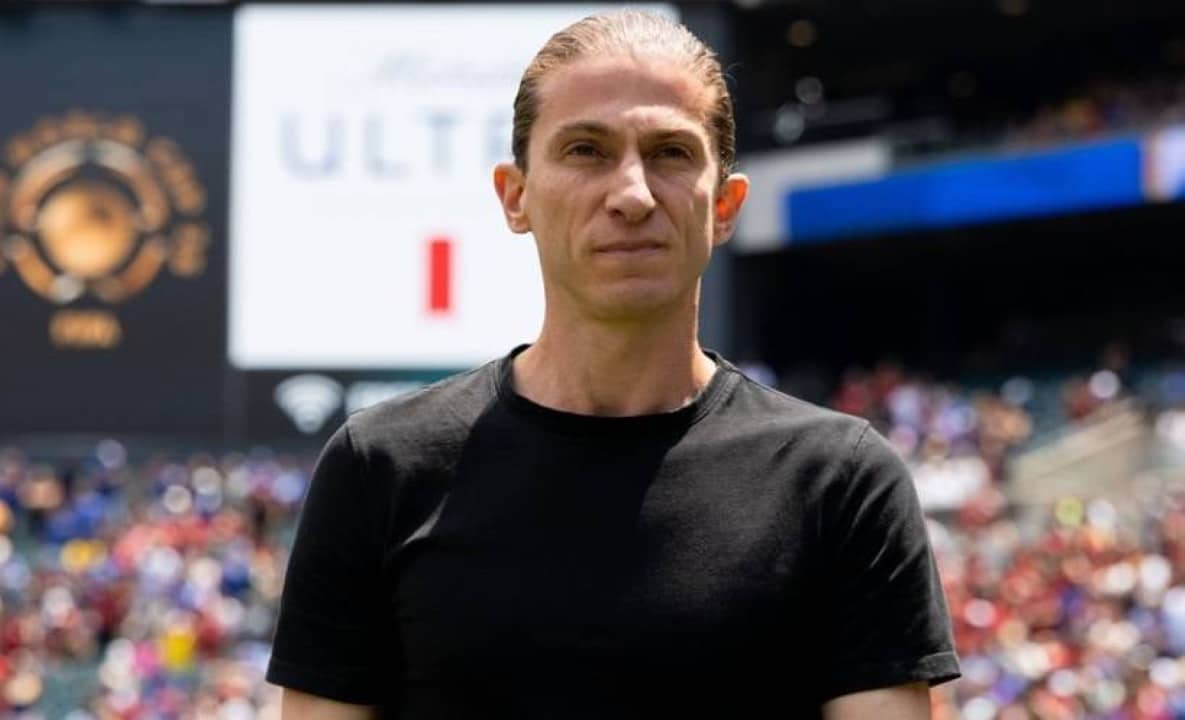
The Monaco board of directors officially signed Brazilian coach Filipe Luís to lead the main team with a contractual relationship valid until the 2028 season. The negotiation involves atypical financial planning, as the principality’s club will need to pay constant fines due to the absence of the UEFA Pro license on the former player’s CV. The document represents a mandatory certification required by the continental federation so that professionals can work on the edge of the pitch during official competitions at Europa.
Information about the extra costs was initially revealed by German broadcaster Sky Sport and confirmed behind the scenes in the sports market. The French association’s football department demonstrated awareness of the bureaucratic obstacle from the first conversations with the coach’s staff. The top management assessed that the former lateral’s tactical profile and leadership compensate for the provisional financial losses that will affect the institution’s coffers during the period of academic regularization.
Impacto financial and requirements of the European confederation
The financial sanctions applied to clubs that use coaches without the maximum Europa title have high values and recurring charges. Monaco will pay approximately R$160,000 for each official match played under the Brazilian’s guidance while the training process is not completed. The accumulation of these fines over a semester of national and continental competitions can reach millions of dollars. The scenario required an immediate readjustment in the budget allocated to the football department.
The requirement for the UEFA Pro license aims to standardize the level of technical, tactical and group management knowledge among commanders of the continent’s main leagues. The course involves face-to-face modules, rigorous theoretical assessments and hours of supervised practice. The speed with which the professional will be able to complete the mandatory steps will determine the final amount paid by the French team to the federation’s disciplinary committees.
The European federation’s rigidity in relation to the document is intended to protect the local job market and guarantee a standard of excellence in competitions. The certification process requires hundreds of hours of exclusive dedication. The curriculum ranges from sports physiology to crisis management with the press. Clubes who try to circumvent the rule by using registered professionals as assistants also suffer severe punishments, which forced Monaco to publicly admit the temporary irregular status of their new hire.
Para To mitigate the financial impact, the club’s lawyers work on drafting a legal and educational plan. The strategy consists of seeking to enroll Brazilians in special intensive training classes, offered by national federations that partner with UEFA. The objective of the maneuver is to speed up obtaining the provisional or definitive certificate, drastically reducing the number of rounds in which the team will act under administrative sanctions.
Recuo from Bayer Leverkusen in the face of documentary barriers
Antes signed the agreement with the French, the Brazilian’s name circulated heavily in the corridors of other traditional institutions on the continent. Bayer Leverkusen analyzed the profile of the former athlete to take command of the main team at Alemanha. The performance analysis department approved the tactical ideas presented. The negotiation, however, definitively clashed with the report issued by the German club’s legal sector.
The Bayer Leverkusen board considered the lack of the UEFA Pro license to be too complex an obstacle to season planning. The budget established for the technical committee did not have the financial margin to absorb the payment of weekly fines to the European federation. The conservative stance of German management highlights how documentary requirements function as a strict filter in the high-level market, immediately closing doors for professionals in the career transition phase.
The Alemanha team’s withdrawal paved the way for Monaco to intensify negotiations. The principality’s association presented a long-term project structured precisely to offer support during the period of adaptation to standards. The difference in stance between the two clubs reflects different sports management philosophies, with the French taking on a calculated financial risk in exchange for a technical project considered promising.
Transição quickly from the lawns to the technical command
Arriving in the French league marks the culmination of the new professional phase of Filipe Luís, who recently chose to end his career as a football player. The former full-back began preparing for his new role in his last years on the pitch, taking initial courses and following training methodologies. The first practical experience took place in the youth categories of Flamengo, where he implemented modern concepts and achieved significant results in a short period of time.
Performance on the lower teams caught the attention of Rio’s club board, resulting in a quick promotion to the main roster. His time in charge of the professional team consolidated the image of a coach with clear game ideas, focused on ball possession and defensive aggressiveness. Ele had been free in the sports market since March, when the employment relationship with the Rio institution came to an end.
The direct transition of Brazilian football to a top league at Europa represents a rare move in the current coaching market. Most South American professionals face difficulties in breaking the barrier of tactical prejudice and documentary requirements. The fact that the former full-back had built a solid reputation as a high-performance athlete on the continent made it easier for the French team’s investors to accept his name.
The return to the European scene follows a personal plan drawn up by the professional himself. The Brazilian built most of his career in the sport living on the continent, with emphasis on the years in which he defended Atlético from Madrid. Daily interaction with coach Diego Simeone at Espanha shaped much of the tactical and locker room management vision that he now seeks to apply in his new role.
Planejamento of Monaco and details of the agreement signed
The signing reflects a change of direction in Monaco’s sporting planning, which seeks to restructure the squad to return to competing for major titles in the coming seasons. The board is betting on the Brazilian’s in-depth knowledge of the dynamics of European football and his ability to adapt to different competitive scenarios. The long contract offers the necessary stability to implement a new work philosophy at the training center.
- Assinatura of a contractual relationship valid until the middle of 2028.
- Pagamento fine estimated at R$160,000 for each official match played.
- Aprovação of an extra budget to cover the sanctions of the European confederation.
- Desistência preview of Bayer Leverkusen due to bureaucratic obstacles.
- Primeiro professional work outside the Brazilian football club environment.
Monaco has a recent history of betting on young and rising profiles to lead the institution’s sports project. The team competes in the first division of França. The board is constantly looking for alternatives to compete with opponents with greater financial power on the national stage. The arrival of a technical committee with new ideas is seen as the first step in a broad reformulation that will affect all categories of the club.
The expectation of top management is that the presence of the new commander will facilitate the attraction of reinforcements in the transfer market, using the former player’s international prestige as an asset in negotiations. The football department has already started mapping athletes who fit the intended game model, aiming to assemble a competitive group for national tournaments. The technical committee will have weeks of intensive preparation before the official debut, a period that will also be used to advance the academic issues required by the federation.