

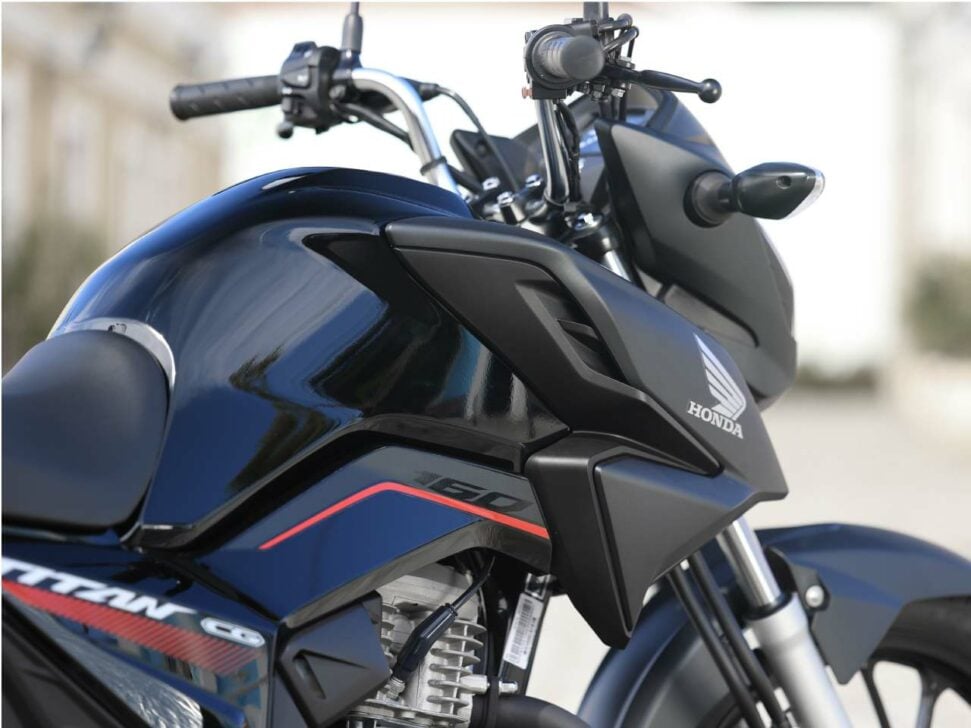
The Honda automaker confirmed the arrival of the new CG Titan 2025 at Brazilian dealerships for the period between October and November. The model receives deep structural updates to the fairing and mechanical adjustments focused on drastically reducing polluting gases. The Japanese manufacturer changes the original design of the country’s best-selling motorcycle before the turn of the calendar year. The brand’s Engenheiros worked on developing technological solutions capable of balancing daily urban performance with legal requirements for environmental sustainability. The distribution schedule foresees the gradual supply of stores in all regions of the national territory.
The vehicle redesign occurs as a direct and mandatory response to Programa of Controle of Poluição of Ar by Motociclos and Veículos Similares (Promot). Government guidelines establish much stricter limits for the emission of pollutants from January 2025 onwards. The company brought forward the modifications to the propellant to guarantee the approval of the product on the national market without commercial delays. The secrecy surrounding secondary specifications generates intense movement in the two-wheel sector, while the company prepares the logistics for delivering the first batches to the retail network. The strategic move aims to shield the brand’s historical leadership in the low-displacement segment.
Inspiração visual and braking system updates
The Honda design department sought direct aesthetic references in the CB 300 to design the new generation of the urban motorcycle. The front fairing underwent a complete redesign in its plastic injection molds. The side lines feature pointed cutouts that alter aerodynamics and increase the visual volume of the fuel tank. The optical assembly receives an unprecedented headlight with defined contours, modifying the motorcycle’s light signature during night commutes. The visual proposal moves the model away from the basic utilitarian aspect and brings the aesthetics closer to the medium-displacement motorcycles offered by the same manufacturer.
The safety project followed changes to the vehicle’s external structure in an integrated manner. The manufacturer installed disc brakes on both wheels of the top-of-the-line version to maximize stopping power. The equipment replaces traditional drum systems at the rear and increases braking capacity in emergency situations or traffic on wet roads. Especialistas in mechanics point out that the technical change significantly reduces the space required to completely immobilize the motorcycle on expressways. The adoption of the rear disc meets a long-standing demand from consumers who use the vehicle on highways and fast-traffic avenues.
Recalibração engine to meet emission targets
The 162 cc mechanical block required precise interventions from the engineering team to fully adapt to the environmental standards in force next year. The calibration of the electronic injection system underwent profound changes in the mapping of fuel burning within the combustion chamber. The exhaust has new internal filtering components using noble metals. The Honda managed to maintain maximum power of 14.3 horsepower and torque of 1.45 kgfm even with the more severe emission restrictions imposed by the new phase of the Promot. The engine’s thermal balance has been preserved through redesigned cooling fins on the main cylinder.
Maintaining performance numbers accurately represents a technical challenge the automaker overcame during dynamometer testing. The powertrain delivers enough power for agile starts at traffic lights and safe overtaking in daily traffic in large cities. Modifications applied to the mechanical system to ensure legal compliance include:
- Ajuste slim electronic control unit to optimize gasoline and ethanol consumption at different speeds.
- Implementação of resized catalysts in the main exhaust system to trap harmful particles.
- Manutenção of air-cooled single-cylinder architecture to preserve low maintenance cost.
The result of mechanical interventions delivers a vehicle capable of daily driving with low operating costs and less impact on air quality. Early compliance with federal rules avoids heavy fines for the manufacturer and guarantees immediate issuance of licensing for new owners. The engineering strategy consolidates the brand’s presence in the entry-level segment without sacrificing the mechanical reliability recognized by independent mechanics.
Modificações extended to the transport line
The component update was not restricted to just the main model of the urban motorcycle family. Honda applied important structural improvements to the CG Cargo, a version developed specifically for fleet owners, logistics companies and delivery professionals. The main change involves replacing the traditional spoked wheels with light alloy parts with a modern and reinforced design. The new material withstands daily impacts on potholed streets with greater structural resistance and facilitates the maintenance of tubeless tires in the event of punctures. The change reduces machine downtime in mechanical workshops.
The entry-level configurations of the commercial line also receive the new side fairings originally designed for the passenger version. The precise fit of the plastic parts protects vital electrical components from water infiltration and dust accumulation during harsh use in the rain. Visual standardization between models reduces production costs on the factory’s assembly line and facilitates the continuous supply of spare parts at authorized dealers throughout the country. The work-focused model gains commercial survival with chassis updates.
Projeção of retail financing values and strategies
The official price list for the CG Titan 2025 remains under strict embargo from the automaker until the official press launch event takes place. Consultores in the automotive market project marginal adjustments in the amounts charged in store windows. The company has historically adopted an aggressive pricing policy to maintain the volume of monthly registrations at high levels. The current macroeconomic scenario, marked by high interest rates, requires caution in transferring industrial costs to the final consumer’s pocket. Maintaining the profit margin depends on massive sales volume.
The recent sales history of the CG 160 line serves as a solid basis for financial analysts’ market estimates. The CG Start version from the previous year arrived in stores with a suggested price of R$14,650, while the top-of-the-line CG Titan 2024 variant reached the R$17,440 mark at dealerships. The dealer network prepares financing packages with extended terms and interest rates subsidized by the automaker’s own financial arm. The offer of easy credit and quick approval represents the main sales tool to attract self-employed workers who depend on the vehicle to generate daily income.
The product’s life cycle demonstrates the manufacturer’s industrial capacity to update its main commercial asset without losing its original mechanical identity. The transition to the 2025 line marks a moment of technological adaptation forced by environmental legislation, but strategically used to modernize the aesthetics of the portfolio. The physical arrival of the units in store yards in the coming weeks will define the public’s real reception of the changes implemented in the engineering project. The retail chain is awaiting invoicing of factory invoices to begin deliveries to customers who have already made reservations.