

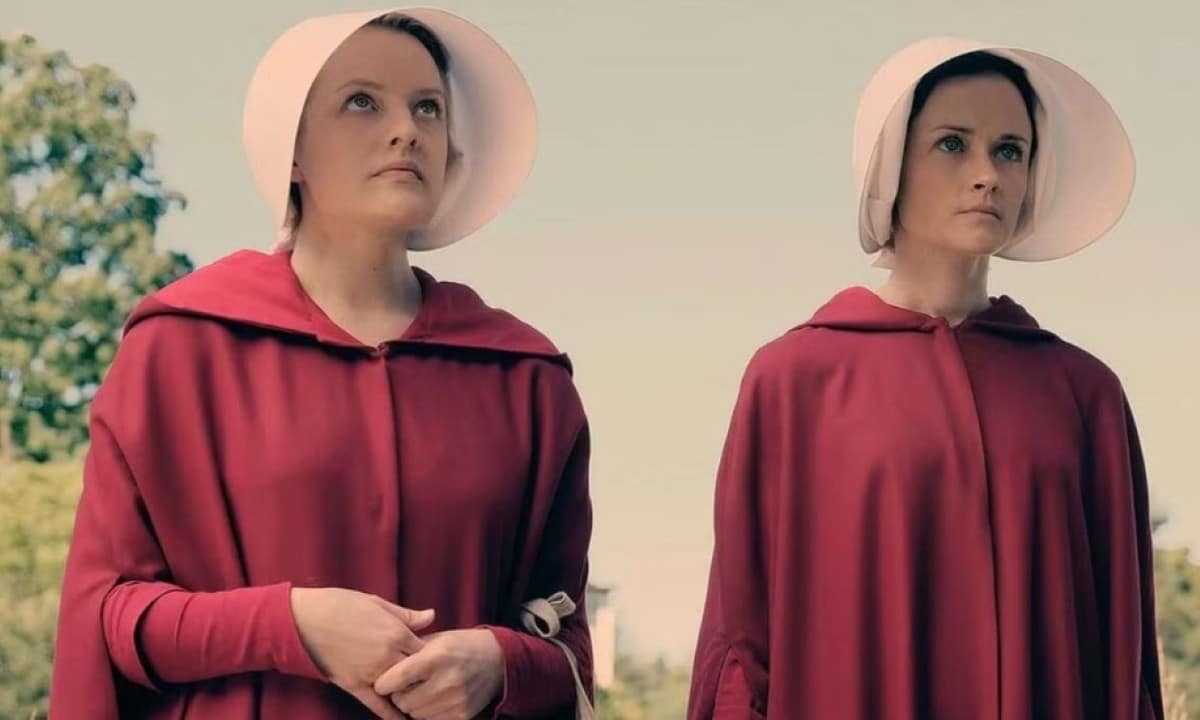
The uniform consisting of red capes and white hats has become an unmistakable visual symbol in contemporary pop culture. The clothing represents the oppression experienced by the characters in one of the most talked about productions of the last decade on global television. Agora, the Brazilian public has the opportunity to follow this trajectory from start to finish on a single video on demand service, without the need to wait for weekly releases.
The Conto series by Aia, known internationally by the original title The Handmaid’s Tale, joined the Netflix catalog on Brasil this Wednesday. The streaming platform made the six complete seasons of Hulu’s original production available. Subscribers will find the 66 episodes gathered in the application interface, which allows continuous viewing of the story that reached its official and definitive conclusion in the year 2025.
Transição platforming and marathon format
The arrival of the complete work at Netflix marks a significant change in the distribution of the title on the national market. Production was fragmented across different services over the years, which made it difficult for new viewers to follow. Consolidating all seasons in one place eliminates the need for multiple subscriptions to understand the full narrative. The movement reflects the licensing strategies adopted by large technology companies in 2026.
The full availability format directly favors marathon consumption. Espectadores who didn’t follow the original releases can now dictate their own viewing rhythm. The platform’s strategy aims to attract both new audiences and old fans who want to revisit the crucial moments of the plot. The service interface organizes the episodes sequentially, facilitating immersion in the complex universe presented on the screen.
Ease of access occurs shortly after the definitive conclusion of the story. The sixth and final season concluded the narrative arcs last year, delivering answers to the conflicts established since the pilot episode. The absence of loose ends or abrupt cancellations provides extra attraction for those who hesitate in starting long productions. The public is assured that the journey of resistance has an end point planned by the screenwriters.
The universe of Gilead and the literary basis
The premise of the series is based on the novel of the same name written by Canadian author Margaret Atwood in 1985. The narrative presents the Estados Unidos transformed into the República of Gilead, a totalitarian and theocratic regime. A global fertility crisis serves as justification for implementing a strict caste system. Women lose their civil rights, properties and identities, being divided by specific roles within the new militarized society.
The main focus is on the handmaids, fertile women forced to bear children for government leaders. Protagonist June Osborne, played by actress Elisabeth Moss, is captured during an escape attempt and assigned to the home of Comandante Waterford and his wife, Serena Joy. From this point on, the story details the psychological and physical gears of state control over individuals. The routine at the residence exposes the hypocrisies and structural violence of the new country.
The creators of the television adaptation expanded on Margaret Atwood’s source material substantially. The book essentially covers the events of the first season, while subsequent years explore new territories with the advice of the writer herself. The worldbuilding details the functioning of forced labor colonies, the clandestine escape routes for Canadá, and the complex international diplomacy in the face of human rights violations documented in Gilead.
Evolução of the characters and award-winning performances
The development of the central characters sustains the dramatic tension throughout the 66 available episodes. June Osborne’s journey transitions from forced submission to articulating active resistance against the oppressive system. Elisabeth Moss received critical acclaim for its ability to convey complex emotions through restrained facial expressions. Esse’s acting feature has become a hallmark of the series’ direction in quiet moments.
The antagonists also receive in-depth narrative treatment by the screenwriters. The dynamic between June and Serena Joy, experienced by Yvonne Strahovski, establishes one of the fundamental pillars of production. Comandante’s wife moves between absolute complicity with the regime and frustration with her own limitations imposed by the society she helped create. Actor Joseph Fiennes and actress Ann Dowd complete the main core with precise performances.
- The production won Emmy from Melhor Série Dramática in its debut year on television.
- Elisabeth Moss won Melhor Atriz awards at several important ceremonies in the audiovisual sector.
- Ann Dowd received constant recognition for her performance as the relentless Tia Lydia.
- The art direction and costumes gained technical prominence at international awards.
- Bruce Miller’s adapted script set a new standard for dystopias in serialized format.
The evolution of the plot requires the characters to face the direct consequences of their actions. The middle seasons shift some of the action outside of Gilead’s borders, showing the impact of trauma on refugees who manage to cross the border. Essa change of scenery oxygenates the narrative and allows debates about justice, processes in international courts and the moral limits in the fight against authoritarian governments.
Impacto cultural and the conclusion of the narrative
Aia’s Conto surpassed entertainment barriers to influence public debate in several countries. The handmaids’ costume was adopted in real protests around the world as a symbol of defense of civil and reproductive rights. The oppressive visual aesthetic, marked by cold tones, low lighting and symmetrical geometric compositions, created a unique identity. Essa visual language directly influenced other productions in the dystopian genre in the following years.
The team led by creator Bruce Miller maintained technical consistency until the last chapter shown. The episodes, with an average duration of 45 to 60 minutes, use the soundtrack and silence strategically to amplify the protagonists’ feeling of isolation. The photography prioritizes close-up close-ups, placing the viewer in the intimate perspective of the characters during moments of extreme vulnerability or crucial decisions for survival.
The arrival of the complete catalog at Netflix consolidates the production’s legacy in the streaming market. The outcome presented in the sixth season offers resolutions to the political and personal conflicts built over almost a decade of airing. Full availability ensures that the work, reimagined for television with high production value, remains accessible to new audiences interested in narratives about power, resilience and the human capacity to adapt.