

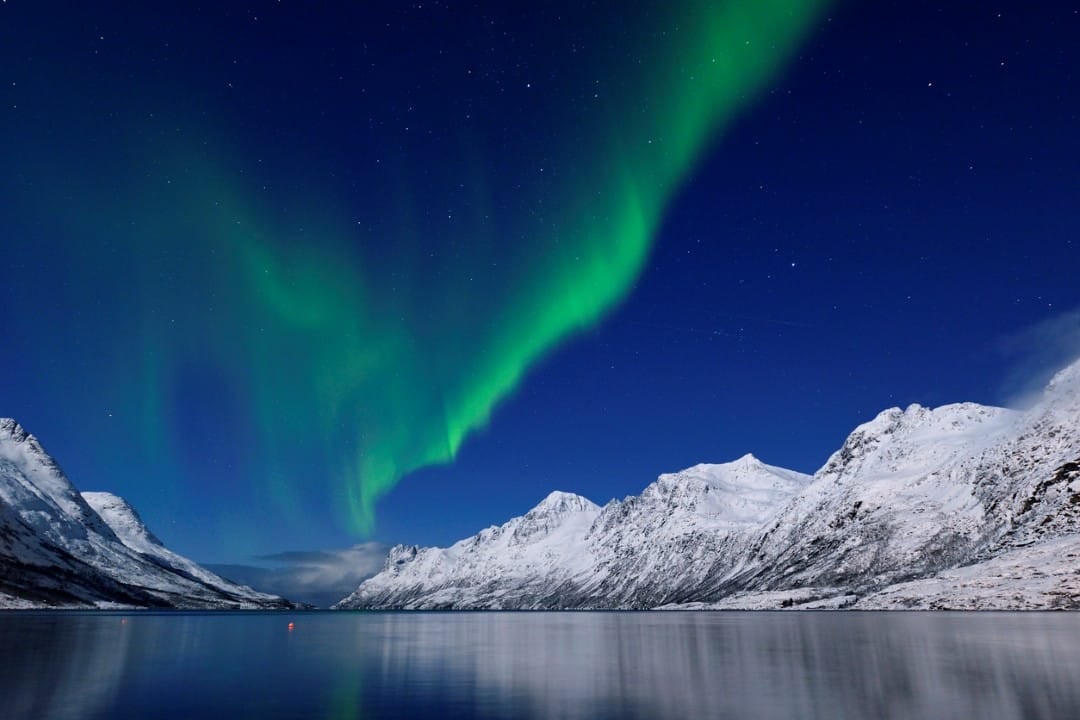
Administração Nacional Oceânica and Atmosférica (NOAA) have issued a significant warning about the arrival of strong geomagnetic storms that are expected to hit Terra between June 4 and 5, 2026. The high-intensity space phenomenon creates a rare opportunity to observe the aurora borealis in areas far beyond the traditional polar regions. The event will reach mid-latitudes in the Estados Unidos territory. Meteorologistas spacecraft closely monitor a series of severe solar perturbations traveling at high speed toward our planet.
The origin of this cosmic event is linked to three recent coronal mass ejections and an intense flow of solar wind that escaped from a coronal hole on the star’s surface. The combination of these space meteorological factors drastically increases magnetic activity in the Earth’s atmosphere. The setting becomes conducive to the luminous spectacle. Especialistas point out that the Kp index, a scale that measures the disturbance of the Terra’s magnetic field, can reach level 8. The number characterizes a condition classified as severe by global monitoring centers.
Intense solar Erupções and the convergence of magnetic forces
Sol has demonstrated extremely agitated behavior over the last few days. The magnetic activity is intense. A specific active region was responsible for launching successive flares classified into categories M and X. Estas letters represent the most powerful explosions recorded by space measurement instruments. The ejections resulting from these explosions travel through outer space and must interact directly with the fast solar wind. Essa convergence of phenomena considerably amplifies the expected impact when the mass of particles reaches the natural protection of our planet.
Cientistas and astronomers carefully monitor variations in the interplanetary magnetic field to predict the exact moment of the shock. Quando the directional component known as Bz points to the south, the magnetic connection with the magnetosphere of Terra strengthens substantially. Solar energy penetrates more easily. High-tech Satélites, like the NOAA-operated DSCOVR, remain strategically positioned to measure real-time solar wind speed and density. Definitive warning about the storm’s peak usually reaches control centers just thirty minutes in advance.
Official projections indicate the occurrence of consolidated geomagnetic storms at the G3 level. The level is already considered strong. Existe a real possibility that the event will escalate to the G4 category alone. Este’s higher level of intensity allows electrically charged particles to penetrate much deeper layers of the Earth’s atmosphere. The violent interaction between the material ejected by Sol and atmospheric gases generates curtains of colored light that fascinate observers.
Regiões of Estados Unidos with favorable viewing conditions
The expansion of the oval auroral ring towards the equator places a vast portion of the North American territory in the zone of potential visibility. The phenomenon will descend to much lower latitudes during the height of the geomagnetic storm. The list prepared by meteorologists covers a total of 23 states. The locations are divided between those with a high probability of direct observation at the zenith and areas where the glow will appear close to the horizon line.
The geographic areas were mapped according to latitude and predicted expansion of the disturbed magnetic field. The division of viewing opportunities is configured as follows:
- Washington, Idaho, Montana, Wyoming, Dakota of Norte, Dakota of Sul, Minnesota, Wisconsin, Michigan, Nova York and Maine form the main belt with the best conditions in the far north of the country.
- Oregon, Nebraska, Iowa, Illinois, Indiana, Ohio, Pensilvânia, Massachusetts, Connecticut, Rhode Island, Vermont and Nova Hampshire make up the secondary band that can also record brief light displays.
- Observadores positioned further north will have the chance to see vibrant colors dancing directly above their heads, while inhabitants of more southern regions will depend on clear skies and maximum event activity.
Moradores from these locations are advised to seek areas with an unobstructed view facing north. The intensity of the colors will directly depend on the force with which the solar wind reaches the ionosphere over each specific region. Green tends to predominate in the sky.
Obstáculos natural and urban for aurora hunters
Astronomy enthusiasts will face significant challenges in viewing the spectacle in the night sky. The proximity to the June solstice represents the main natural obstacle at this time of year. In the Northern Hemisphere, nights become considerably shorter during the month of June. The twilight period lasts for hours after sunset. Esta celestial dynamics dramatically reduces the window of total darkness required for the faintest auroras to become noticeable to the human eye.
Light pollution generated by large urban centers acts as the second biggest enemy of astronomical observation. Recomenda Interested parties are expected to travel to state parks or rural areas. Distancing yourself from the artificial glare of cities is essential. Aplicativos cell phones and websites specializing in real-time space weather monitoring have become indispensable tools for anyone who wants to monitor solar wind fluctuations.
The dynamics of the Northern Lights are known for their extreme unpredictability and rapidity. Light activity can appear suddenly in the dark sky. The glow reaches a peak of dazzling intensity and disappears completely in a matter of a few minutes. Fatores Local weather conditions, such as the presence of dense clouds or rain systems, can also ruin visibility. The combined energy of current solar disturbances creates a window of opportunity considered highly favorable by experts, despite logistical obstacles.
The peak of solar cycle 25 and the increase in space phenomena
The science behind the aurora borealis involves a complex transfer of energy from space to our planet’s atmosphere. The charged particles coming from the star collide violently with the gases present in the Earth’s upper atmosphere. Ocorre is a physical process of atomic excitation. Elementos like oxygen and nitrogen absorb this energy and emit photons of light as they return to their normal state. Oxygen generates greenish and reddish tones. Nitrogen is responsible for rare blue and purple emissions.
The significant increase in the frequency of these luminous events is linked to the cyclical behavior of our star. Sol goes through cycles of magnetic activity that last approximately eleven years. The current period, named by scientists as solar cycle 25, is very close to its maximum peak. The number of sunspots and the frequency of violent flares grow exponentially during this high-energy phase.
The recent history of astronomical observations corroborates the predictions of mathematical models used by space agencies. Boreal Auroras have been documented at surprisingly low latitudes during geomagnetic storms in recent months. The pattern of behavior reinforces the thesis that the current solar cycle acts with great intensity. Visual spectacles become more frequent for populations far from the poles.
Continuous Monitoramento and the importance of climate prediction
Acompanhar the evolution of a space event of this magnitude requires a global technological infrastructure. Cooperation between different scientific institutions is vital. NOAA updates its forecasts and warnings regularly through its official space weather portal. The data provided is crucial for amateur observers, satellite operators and power grid managers. Imagens captured by all-sky cameras helps scientists confirm sightings in real time.
Online communities of skywatchers play a key role in documenting these rare events. Fotógrafos professionals and amateurs share photographic records almost instantly on social networks. The collaborative alert network benefits thousands of people. Meteorologistas constantly warns that peak activity times may vary significantly. The exact speed of successive coronal mass ejections dictates the rhythm of the phenomenon.
The most recent computer models indicate that the combined arrival of solar energy will begin to produce visible effects from late Thursday afternoon. The calculation considers the time zone of Costa Leste and Estados Unidos. The extraordinary event serves as a powerful reminder of the direct and constant influence that Sol has on the space environment near Terra. Stellar activity affects everything from the beauty of the night sky to the functioning of modern technologies.