

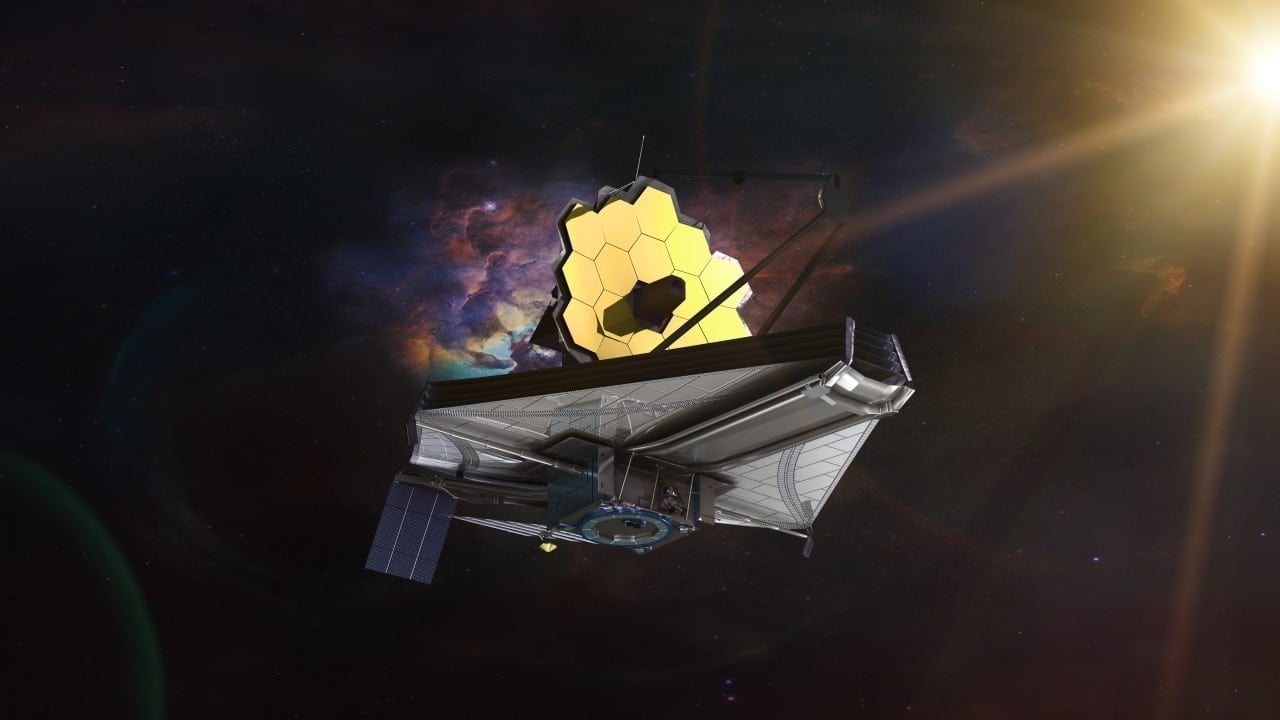
Telescópio Espacial James Webb recorded the presence of methane in the interstellar comet 3I/ATLAS during its passage through our planetary system. The identification represents the first time that astronomers have detected this specific gas directly on a celestial body originating outside Sistema Solar. The object traveled through deep space until it crossed the vicinity of Terra. The discovery occurred after the icy body reached the point of closest proximity to Sol.
The data captured reveals that the chemical composition of the visitor presents different characteristics from local comets. The intense heat generated by the star caused the sublimation of materials that were protected in the deepest layers of the core. The late release of methane surprised the researchers, as previous observations had not indicated the existence of the substance. Detailed mapping provides new foundations for understanding the formation of distant planetary systems.
Ação from solar heat reveals compounds hidden in the nucleus
The 3I/ATLAS heating dynamics demonstrated how the internal structure of interstellar comets reacts to stellar radiation. Methane has high volatility and tends to evaporate quickly when exposed to higher temperatures. The gas, however, remained undetectable during the first phases of the object’s approach. The substance only sublimed and became visible to instruments after the heat reached the internal reserves of the rocky core.
The spatial distribution of the released gases showed varying patterns around the celestial body. The water vapor formed a wide, diffuse cloud. The water spread great distances from the center. Carbon dioxide and methane maintained a much denser concentration and was restricted to areas close to the core. Essa physical separation of chemical elements helps scientists map the visitor’s internal architecture.
The comet’s thermal behavior suggests a thick outer crust. The layer acted as an insulator during interstellar travel. The surface material had to be worn away by continuous solar radiation before the pockets of methane were exposed. The sequence provides a practical model on the preservation of volatiles in the vacuum of deep space.
Proporções chemistries diverge from Sistema Solar patterns
The quantitative analysis of the gases emitted by 3I/ATLAS revealed an unusual chemical signature by local astronomical standards. The measured proportion between the amount of methane and water significantly exceeded the values recorded in comets formed in Nuvem of Oort or in Cinturão of Kuiper. Essa fundamental discrepancy indicates that the object originated in an environment with temperature and pressure conditions radically different from those that shaped our system.
The decline in the rate of gas production also occurred asymmetrically as the comet began its trajectory away. Water vapor emission suffered a much more abrupt reduction compared to the other chemical components monitored. The variation in sublimation rates reinforces the hypothesis that the internal material has a heterogeneous mixture of ice and stardust.
Pesquisadores uses these chemical anomalies as markers to reconstruct the comet’s birth environment. The relative abundance of carbon in relation to oxygen suggests the formation of a protoplanetary disk with specific freezing characteristics. Continuous comparison with data from known celestial bodies makes it possible to calibrate theoretical models on the chemical diversity of the galaxy.
Instrumento infrared ensures accurate mapping
The unprecedented detection directly depended on the technological capacity on board the space observatory. The equipment used was the Mid-Infrared Instrument, known by the acronym MIRI, designed to capture wavelengths in the mid-infrared. The sensor can identify the unique chemical fingerprints that each gas leaves in the light reflected and emitted by the comet.
- The equipment separated the infrared light to isolate the chemical components.
- The measurements recorded clear bands of water, carbon dioxide and methane.
- The sensor also identified traces of heavy metals such as nickel.
- Observations occurred in two time windows separated by 12 days.
Observations were planned at the end of December, when 3I/ATLAS was already in the distancing phase from Sol. The technical team directed the telescope’s mirrors to track the object’s fast trajectory against the background of fixed stars. The tracking accuracy ensured the collection of clear spectra free from external light contamination.
The absence of methane in previous records demonstrates the temporal evolution of cometary activity. Dados previously collected by Telescópio Espacial Hubble and other instruments of James Webb itself had not captured the gas signature. The change in the emissions profile validates the strategy of monitoring interstellar visitors at multiple stages of their passage through perihelion.
Comparação with other known interstellar visitors
The astronomical community has a recent and limited history of recording celestial bodies from outside our cosmic neighborhood. The first object in this category identified was ‘Oumuamua, which had an elongated shape and no visible cometary tail. The second confirmed visitor was comet Borisov, which exhibited behavior much more similar to traditional icy bodies in our system. 3I/ATLAS adds a new layer of complexity to this restricted group of space travelers.
Cada one of these objects provided different pieces to the star formation puzzle. Borisov showed an abundance of carbon monoxide. 3I/ATLAS now stands out for its anomalous proportion of methane. The chemical diversity observed among the few interstellar visitors detected to date suggests that the galaxy’s planetary systems have extremely varied compositions. Astronomers use these differences to understand how heavy elements are distributed throughout Via Láctea’s spiral arms.
The speed of movement of these bodies prevents the sending of space probes to collect physical samples with current technology. Interstellar comets cross Sistema Solar on hyperbolic trajectories. Eles do not orbit Sol and will never return. Essa’s short, unique observing window requires high-powered telescopes to be activated quickly as soon as the discovery of a new object is confirmed by ground-based monitoring networks.
Impacto scientific and continuity of space research
The confirmation of methane in a body of external origin expands the scope of modern astrochemistry. Comets function as time capsules that preserve the primordial building blocks of star systems. The material contained in 3I/ATLAS carries direct information about the physical and chemical processes that occur in regions of Via Láctea inaccessible to current space probes.
The international collaboration responsible for the analysis involves scientists from agencies such as Nasa, Agência Espacial Europeia and Agência Espacial Canadense. Researchers now process the full volume of raw data generated by MIRI in spectroscopy mode. Images combined with contour plots require complex calibration to determine the exact mass of gas released per second during peak activity.
The success of the observation mission cements James Webb’s role as the current primary tool for studying small bodies from Sistema Solar and beyond. The ability to detect volatile organic molecules in faint, distant objects sets precedents for future monitoring campaigns. The astronomical community awaits the publication of the final results in scientific journals to integrate the discoveries into planetary formation catalogs.