

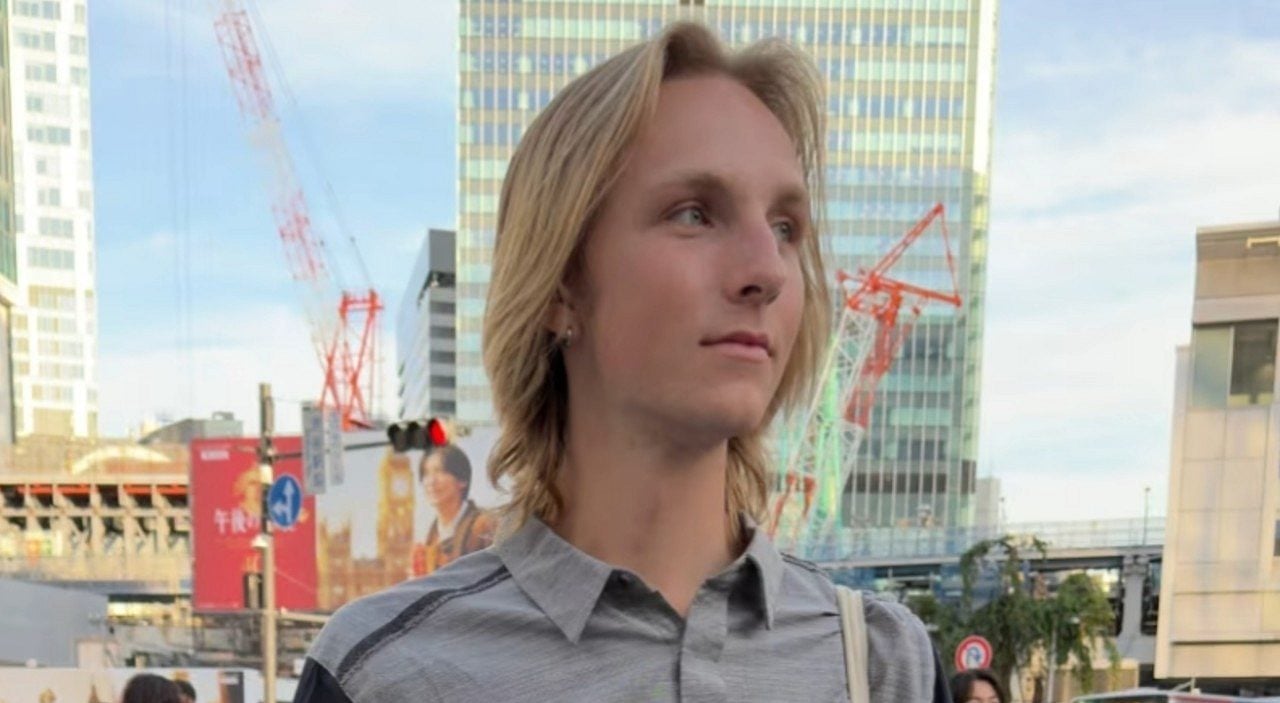
The body of American college student James “Weston” Higginbotham was located lifeless in a mountainous region on the outskirts of Kyoto, in Japão. The 20-year-old had been missing since May 29th. Ele got separated from his family during a tourist trip to explore the city alone. Voluntários who were assisting in the search found the remains on Saturday afternoon. Local police ruled out foul play. The exact cause of death remains confidential to Japanese authorities. Confirmation of the death ends a rescue operation that mobilized dozens of professionals and civilians over several days.
Family Desentendimento and tracking disabled before disappearance
The dynamics of the disappearance involved a family argument moments before the student took a solitary path. Nancy Higginbotham, the university student’s mother, reported that her son deactivated location sharing on the Life360 app. The attitude occurred after a disagreement about the use of artificial intelligence, specifically ChatGPT, to assist in tourist navigation. The shutdown of the tracker made the initial work of rescue teams difficult. The young man walked towards Yamashina’s district. Câmeras security guards recorded the tourist’s last steps. The images showed the boy following a route that gives access to a hiking trail within a dense local forest.
The rugged terrain of the Yamashina region attracts hikers, but presents risks for people unfamiliar with Japanese topography. Kyoto’s topography mixes dense urban areas with outlying mountain ranges. Essa abrupt transition between city and forest demands extra attention from international tourists. The decision to explore the area without digital monitoring limited the leads available to authorities. Kyoto police used the camera footage as a starting point to establish a search perimeter. The absence of a GPS signal required extensive physical scanning. The young man’s behavior of isolating himself was considered unusual by the family. The combination of poor communication and hostile terrain created a complex scenario for emergency responders.
Official rescue Operação and storm impact in the region
Japanese authorities initiated an immediate task force shortly after the disappearance was reported. The official operation lasted 72 uninterrupted hours. The contingent had more than 100 police officers deployed in the forestry area. Cães sniffers and helicopters provided air and ground support in difficult-to-access areas. Kyoto police followed standard protocols for disappearances in heavily forested areas. The concentrated effort sought to cover as much territory as possible in the first few days. Time is a crucial factor in mountain rescues.
Adverse weather conditions significantly hampered the progress of the search. A strong storm hit the region of Kyoto on the night of June 2nd. Intense Ventos and torrential rains forced a temporary halt to helicopter flights. Japanese rescue teams are trained to deal with the country’s rugged, volcanic terrain. However, the force of nature imposed physical limits on the operation. The interruption of flights drastically reduced the ability to visually scan large tracts of land. The sodden ground made the work of sniffer dogs difficult. Reduced visibility in Yamashina’s forest made ground teams’ progression dangerous and slow. The police ended the official search phase on Friday, after expiring the protocol deadline without finding any trace of the student.
Cronologia of the disappearance and mobilization of civilian volunteers
With the end of official operations, the Higginbotham family took over coordinating the searches. Eles hired a private rescue team and had the support of local residents. The civil group focused on sectors of the forest that had not yet been mapped by the authorities. The alternative strategy resulted in the body being located at 2:35 pm on Saturday. The discovery ended the days of uncertainty.
- The student separates from his relatives on May 29th to carry out a solitary exploration for Kyoto.
- The location application is deactivated after a disagreement over the use of artificial intelligence tools on the trip.
- Câmeras security guards catch the young man walking towards the mountainous trails in Yamashina’s district.
- The Japanese police launch a 72-hour operation with more than a hundred agents, dogs and aircraft.
- A severe storm hits the search area, compromising logistics and the safety of rescuers.
- The family organizes an independent task force after the official government search ends.
- Voluntários finds the university student’s remains in a remote part of the mountain in the middle of the Saturday afternoon.
The transition from the official search to the private sector shows the determination of the family members. The collaboration of the Kyoto community was fundamental to the outcome. Moradores from Yamashina’s region knows the mountain’s shortcuts and dangers. The volunteers’ empirical knowledge complemented the police’s previous technical work. The union of civil efforts made it possible to cover the blind spots in the dense forest.
Perfil of the university student and mourning in the American academic community
James “Weston” Higginbotham was studying sustainability engineering at Auburn University. The young man maintained a strong connection with environmental issues. His mother described him as a passionate naturalist and protector of nature. Ele adopted veganism about a year ago to align his habits with conservation values. The student liked to go on long walks on trails. Ele carried a book about butterflies in his pocket during the trip to Japão. The boy’s life goal involved visiting mountains and experiencing different cultures around the world.
The news of his death generated a strong commotion in his hometown and in the university environment. Auburn University president Christopher Roberts issued an official statement mourning the loss. Ele highlighted that the institution offers psychological support to students and staff affected by the tragedy. The academic community paid tribute to the engineering student. The mourning extended beyond the university walls, reaching authorities and local residents.
In the city of Hoover, in the state of Alabama, local authorities expressed their regret. Mayor Nick Derzis stated that the community faces an unimaginable loss. The young man was a former student of Spain Park High School and maintained strong ties with the region’s residents. The mayor highlighted the boy’s remarkable character. Representantes state politicians also published messages of solidarity on social media. Senator Katie Britt, Senator Tommy Tuberville and State Representative Susan DuBose sent condolences to the family. The commotion reflects the impact that the student left on the people around him during his academic and personal trajectory.