

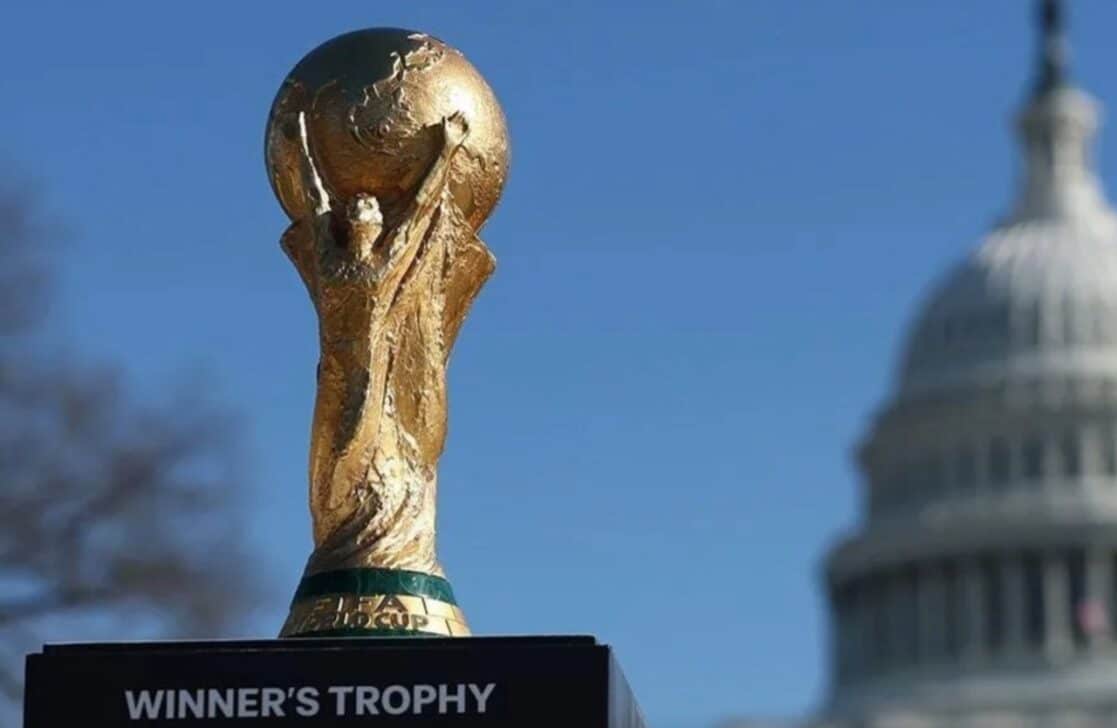
The highest governing body in world football has established the definitive route to the biggest sporting competition on the planet. The tournament takes place between June 11th and July 19th, 2026. Pela For the first time in history, the event will feature the participation of 48 national teams, who will compete for the coveted trophy in a vast territory shared by Estados Unidos, México and Canadá. The drastic change in regulations increases the total number of clashes to 104 matches over just over a month of intense competition.
Seleção Brasileira begins its journey in search of a sixth championship in the first days of the ball rolling. The national team is part of Grupo C and will make its debut on June 13th against the Marrocos team. The expanded format requires rigorous logistical planning on the part of technical committees and fans, as the continental distances between the 16 host cities represent an unprecedented challenge in organizing the championship. The time difference, however, appears as a positive factor for the South American public.
Unreleased Formato and opening on the legendary Estádio Azteca
The kickoff of the competition is scheduled for one of the most traditional stages in world sport. Estádio Azteca, located at Cidade of México, hosts the opening match on June 11th. The México team faces África from Sul at 4pm, at Brasília time, opening the Grupo A competitions. The venue carries immense historical weight, as it has already been the stage for two grand finals in previous editions. Horas later, the ball rolls for the duel between Coreia of Sul and República Tcheca, moving the first round.
The expansion to 48 teams completely changed the dynamics of the initial phase. The teams were divided into 12 groups containing four members each. The new regulations determine that the top two teams in each group advance directly to the knockout stage. Além of them, the eight best third-placed teams also guarantee survival in the tournament. Essa mathematical configuration keeps competitiveness high until the last round of the group stage, reducing the chances of matches without sporting value in the final days of the qualifying stage.
Outros heavyweight clashes mark the first week of competitions in América of Norte. Bracket D presents the clash between Estados Unidos and Paraguai, while Grupo I stands out with the game between França and Senegal. Argentina, current champion, faces Argélia at the end of its initial round. The distribution of matches was designed to balance global broadcast times, allocating games mainly in the afternoon and evening periods.
Caminho from Seleção Brasileira in the group stage
Brasil focuses its attention on Estados Unidos’s East Coast during the first stage of the tournament. The first appointment takes place at the imposing MetLife Stadium, located in the Nova York/Nova Jersey region. The game against Marrocos takes place at 7pm on June 13th. The African team arrives with the status of a dangerous opponent after consistent campaigns on the recent international scene. A victory in the debut is considered essential to establish tranquility in the delegation’s environment.
The second round reserves a clash against the Haiti team. The match is scheduled for June 19th, at 9:30 pm, at Lincoln Financial Field, in the city of Filadélfia. The six-day break between the first and second games provides valuable time for physical recovery and tactical adjustments. The short distance between Nova Jersey and Pensilvânia also favors the planning of the Brazilian technical committee, avoiding excessive wear and tear with long flights at the beginning of the campaign.
The end of Brazilian participation in the group stage takes place in the extreme south of the American east coast. The duel against Escócia takes place on June 24th, at 7pm, on Hard Rock Stadium, on Miami. Dependendo from the results obtained in the first two rounds, this confrontation could serve to consolidate the leadership of Grupo C or decide a dramatic classification. The massive presence of Brazilian immigrants at Flórida promises to transform the stadium into an extremely favorable environment for the national team.
- Brasil and Marrocos play on June 13th at 7pm at MetLife Stadium.
- Brasil and Haiti will face each other on June 19th, at 9:30 pm, on Filadélfia.
- Brasil and Escócia close the bracket on June 24th, at 7pm, at Miami.
- The leadership of Grupo C guarantees a theoretically more accessible crossing in the next phase.
The tiebreaker criteria established by Fifa follow the traditional football pattern. Wins add three points on the leaderboard. Draws yield one point for each side. In case of equality in the final score, the organization will use the goal difference as the first tiebreaker criterion. Afterwards, direct confrontations and the fair play index, based on the number of yellow and red cards, will define who advances to the knockout phase.
Complex Logística and distribution of headquarters in América of Norte
The division of the headquarters between three countries of continental dimensions creates an unprecedented logistical scenario. Canadá participates in the party by hosting matches in the cities of Toronto and Vancouver. México, in addition to the capital, hosts games on Guadalajara and Monterrey. However, the vast majority of clashes take place on US territory. Modern, ultra-high-capacity Arenass, like the SoFi Stadium in Los Angeles and the AT&T Stadium in Dallas, dominate the tournament landscape.
The choice of stadiums with a capacity of more than 70 thousand spectators reflects the organization’s commercial and public ambitions. The infrastructure of these arenas guarantees maximum comfort for fans, but requires very advance financial and route planning. Fãs who wish to follow their teams across different cities will need to deal with frequent internal flights, sudden changes in weather and different immigration requirements when crossing the borders between the three host countries.
Para the South American teams, the challenge goes beyond the four lines. Quick adaptation to temperature variations between coastal headquarters, high-altitude cities in México and the controlled environments of closed stadiums in Estados Unidos will be a competitive differentiator. The North American teams, on the other hand, play with the unconditional support of their local fans and with prior knowledge of the sports facilities.
Final Reta and the big decision in Nova York
The tournament enters its most acute phase from June 28th, the date that marks the beginning of the unprecedented Round of 32 phase. With 32 teams classified, the single elimination format starts to dictate the pace of the competition. A single mistake could mean going home. The crosses are already drawn in fixed brackets, allowing the technical committees to start projecting possible opponents right after the end of the group stage on June 27th.
The round of 16 is scheduled to take place between the 4th and 7th of July. The level of physical demand reaches its peak during this period. The quarter-finals take place in a tight window on the 9th, 10th and 11th of July. The four best teams in the world will meet in the semi-finals, scheduled for the 14th and 15th of July. The fight for third place, often considered a consolation prize, is reserved for July 18th.
The pinnacle of world football has a defined date and location. The Copa grand final of Mundo 2026 will be played on July 19th. MetLife Stadium, the same stage as the Brazilian debut, will host the two finalist teams. Anticipation surrounding the event grows daily, as fans begin to block their schedules, organize family gatherings and prepare logistics so as not to miss any part of the competition that promises to redefine global sports audience and engagement standards.