

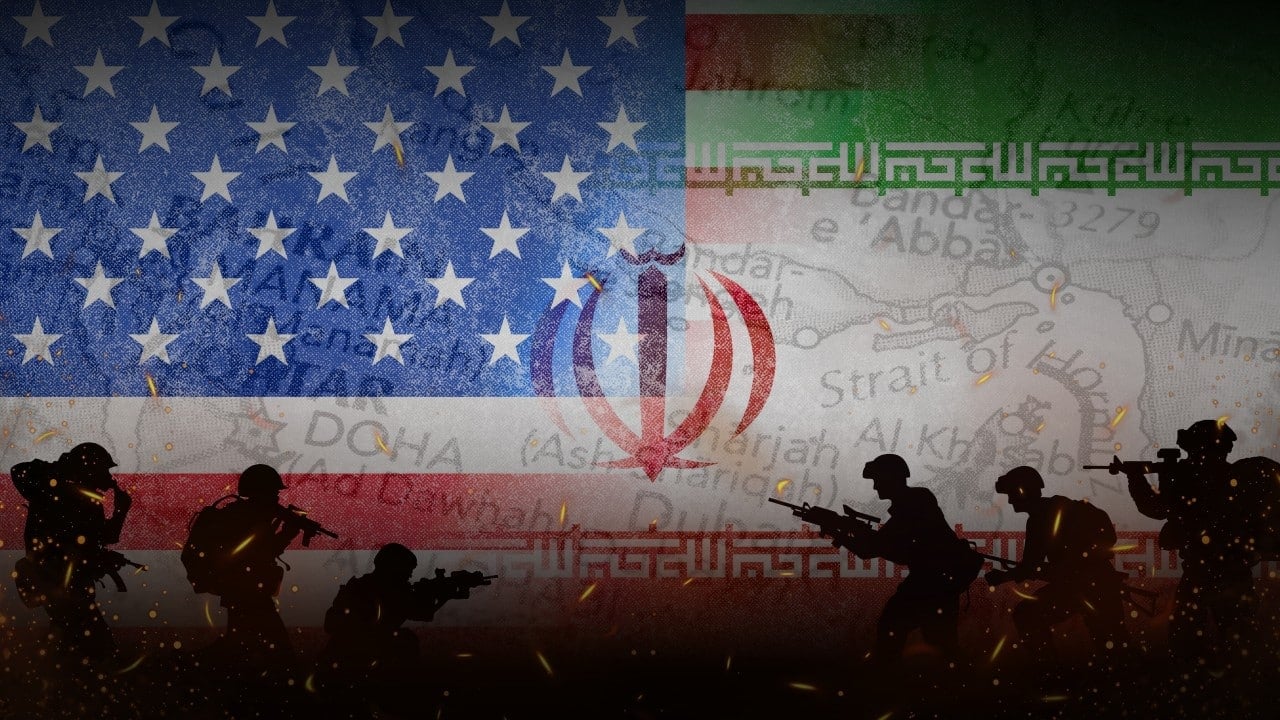
This Monday (8), Irã attributed responsibility for the recent exchange of attacks with Israel to Estados Unidos, a military escalation that, according to Teerã, significantly worsens the already complex diplomatic dynamics. The statement was made by Iranian Relações Exteriores spokesman Ministério, Esmaeil Baghaei, who emphasized how Israeli actions are inextricably linked to American policies. The Iranian perception is that the new clashes not only violate the previously established ceasefire, but also intensify distrust towards Washington, complicating any prospect of agreement.
Baghaei argued that the “chaotic diplomatic process” with Estados Unidos becomes even more turbulent in the face of attacks, reinforcing Teerã’s conviction that Israel does not act independently in such offensives. The situation of increasing tension in Oriente Médio, marked by bombings and retaliations, calls into question efforts towards regional stabilization, raising concerns about the long-term implications for peace and security.
Contexto of Escalada of Ataques and their Consequências
The Oriente Médio region was the scene of a series of intense military events over the weekend, culminating in mutual attacks between Israel and Irã that broke a ceasefire established in April. On Monday morning (Sunday night, 7th, Brasília time), Israel carried out bombings against “military targets” in Irã, as reported by the American website Axios. Explosões were reported in major Iranian cities as Teerã, Tabriz and Isfahan, according to the Al Jazeera TV network, indicating the breadth and seriousness of the attacks.
In response, Irã confirmed having fired missiles at a military base in Israel. Esses events represent the first time since April that both countries have attacked each other directly, marking a significant escalation in the conflict. Força Aérea Israelense justified its actions on social media, claiming to have attacked “military targets belonging to the Iranian terrorist regime in the west and center of Irã.” The definitive breach of the ceasefire increases the risks of an even greater conflagration, with unpredictable repercussions for regional and global stability. Não were reported injured in the Iranian bombings, but images on social media showed interceptions by Ferro’s Domo system in the skies controlled by Israel, highlighting the intensity of the defensive response.
As Acusações Iranianas Contra Washington and Desconfiança Crescente
The Iranian position, expressed by Esmaeil Baghaei, is clear: Israel’s actions cannot be viewed in isolation, but as extensions of American policies. Essa’s perspective deepens Teerã’s distrust of Washington, especially at a time of delicate diplomatic negotiations. Baghaei stressed that Estados Unidos bears direct responsibility for the recent ceasefire violations, stating that Israel does not make significant military decisions without consulting or aligning itself with Washington. Iranian rhetoric suggests that, for Teerã, American influence over Israel is a determining factor in the dynamics of regional conflict.
Essa vision is rooted in a history of complex and often antagonistic relations between Irã and the US, where the perception of Washington as the main supporter of Israel is a pillar of Iranian foreign policy. The spokesman’s insistence that distrust is growing reflects the difficulty of building effective diplomatic bridges when one party feels the other is acting in bad faith or through third parties. Para o Irã, the US stance on Oriente Médio is seen as a central obstacle to conflict resolution, contributing to an environment of “chaotic diplomatic process” rather than facilitating peace.
Atores Chave and Violações of Acordo of Cessar-Fire
The complexity of the situation is accentuated by the involvement of high-ranking political figures and the ambiguity surrounding the terms of the ceasefire. US President Donald Trump had attempted to broker a ceasefire between Israel and Hezbollah, a group active in Líbano, and was also seeking a broader peace agreement with Irã. However, Israel violated the agreement by bombing Beirute, the Lebanese capital. Após these attacks on Líbano’s capital, Irã retaliated with a series of missiles towards Israel.
Diante of the escalation, Trump called Benjamin Netanyahu, the Israeli Prime Minister, asking that there be no military response against Teerã. However, Netanyahu defied the request, announcing that he would counterattack. Essa’s direct disobedience highlights existing tensions even between close allies like the US and Israel. The newspaper “Financial Times” reported that Trump had told Netanyahu that he had “no option” but to accept the peace agreement between Washington and Teerã, indicating that Trump saw himself as “calling the shots” in the negotiations.
Paquistão’s mediation and interpretation of the ceasefire also added layers of complexity. Enquanto Paquistão and Irã insisted that Líbano was included in the truce, the US and Israel argued that only attacks on Iranian territory and in Golfo Pérsico countries were included. Essa Fundamental disagreement over the scope of the agreement contributed to its fragility and eventual collapse, showing a lack of consensus even on basic principles of regional diplomacy.
Implicações from Desafio from Israel to Donald Trump
Israel’s decision to continue the attacks, even after direct appeals from Donald Trump, generated significant diplomatic implications and revealed fissures in the alliance between the two countries. Trump, who had assured last week that Israel would not bomb Líbano again, saw his authority and diplomatic efforts publicly challenged. Essa situation even provoked a heated discussion between Trump and Benjamin Netanyahu.
The US president confirmed that he referred to Netanyahu as “completely crazy” due to Israel’s constant attacks on Líbano, amid the ceasefire. Essa statement exposes the depth of disagreement among leaders over strategy in the region. Direct challenge from such a close ally as Israel has the potential to undermine Estados Unidos’s credibility as a mediator and negotiator, especially in a scenario where Trump seeks to seal a “final peace agreement with Irã.” Trump has publicly expressed his concern about “not screwing up because of what’s happening now”, acknowledging the risk that escalation poses to pending negotiations.
The Israeli stance also raises questions about the autonomy of its military decisions and the extent of American influence over its strategic partner. The repercussion of these events can be felt in future negotiations and the reconfiguration of regional alliances, as it demonstrates that even the strongest ties can be strained by strategic divergences and the search for distinct national interests. The power dynamics, where Trump tried to impose his will, but was thwarted, suggests a new phase in bilateral relations.
Cenário Geopolítico and Ameaça at Bases Americanas
Amid escalating tensions, Irã issued a serious warning, declaring that the 19 Estados Unidos military bases in Oriente Médio have once again become “legitimate targets.” Esta threat also extended to Israeli assets in the region, raising the level of alert and concern. American bases are located in several strategic countries, which increases the complexity of the scenario and the range of possible involvements.
- Os Estados Unidos maintains a military presence in nations such as:
- Emirados Árabes Unidos
- Omã
- Arábia Saudita
- Iraque
- Egito
The Iranian statement was followed by immediate air security actions in the region. Iraque announced the closure of its airspace and the suspension of aircraft navigation services for 72 hours, while Irã itself also closed its airspace. Essas measurements indicate the seriousness with which the threat was perceived and the concern for civil aviation security in a potential conflict zone.
Mohammad Qalibaf, president of the Iranian Parlamento and Irã’s main negotiator in talks with the US, reinforced Teerã’s stance in a post on his social networks. Qalibaf criticized opponents’ lack of commitment to the ceasefire and distrust in dialogue, arguing that they “only understand the language of power.” Essa Hardened rhetoric suggests a diminished scope for diplomatic solutions and an increased likelihood of direct confrontations, transforming the American military presence into a central point of tension and vulnerability on the geopolitical chessboard.
Perspectivas to Processo Diplomático to Meio to Caos
The recent escalation of mutual attacks between Irã and Israel, coupled with Israel’s defiant stance towards Estados Unidos’s calls, casts a thick shadow over the future of the diplomatic process in the region. Iranian spokesman Esmaeil Baghaei had previously characterized the scenario as a “chaotic diplomatic process”, and recent events only reinforce this perception. Mutual distrust, exacerbated by ceasefire violations and Iranian accusations of direct US responsibility, makes it extremely difficult to build an environment conducive to meaningful negotiations.
The possibility of a “final peace agreement” between Washington and Teerã, mentioned by Donald Trump, now seems more distant than ever. The lack of adherence to existing agreements and the refusal to give in to diplomatic pressure indicate that the parties involved are prioritizing their security agendas and their immediate strategic interests, even if this means compromising long-term regional stability. Mediadores like Paquistão will face even greater challenges in reigniting dialogue as the foundation of trust has been severely shaken.
The rhetoric that “they only understand the language of power”, used by Mohammad Qalibaf, suggests that the diplomatic path is closing in favor of a more confrontational approach. The consequences of this dynamic could extend beyond the borders of Irã and Israel, affecting the energy security, trade routes and political stability of the entire Oriente Médio. The current scenario points to a phase of uncertainty and heightened tension, with few immediate prospects for de-escalation or constructive diplomatic advances. The international community is watching the development of events with concern, aware of the potential for a larger conflict with global ramifications.