

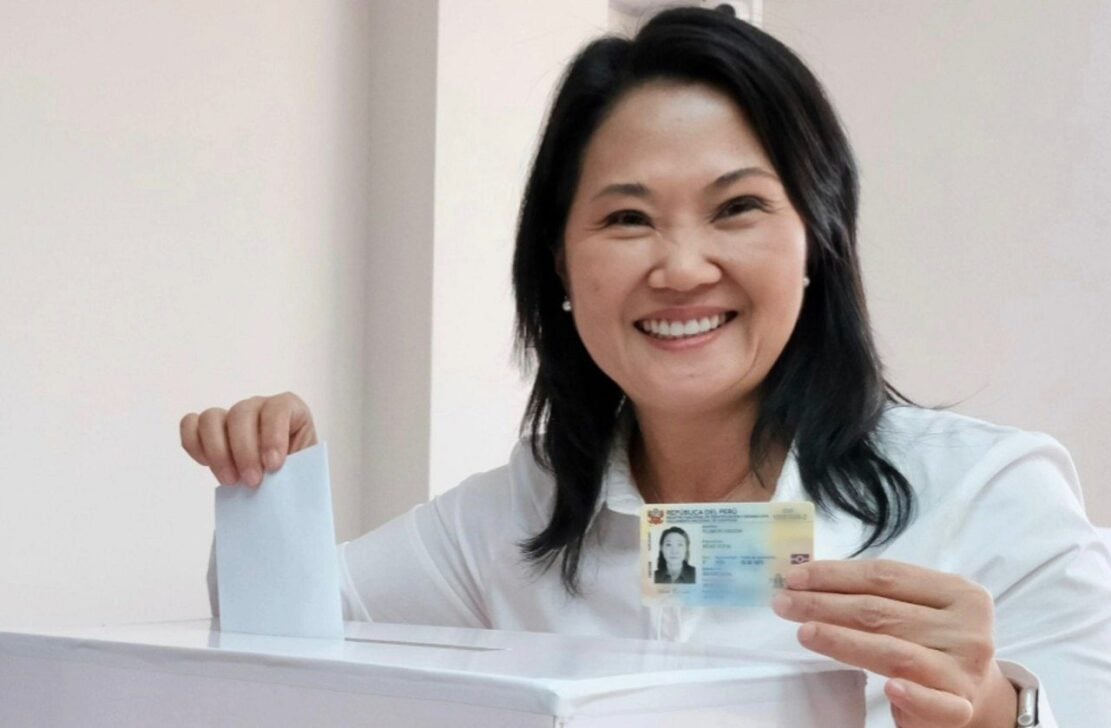
The official count of the presidential elections on Peru records a scenario of absolute uncertainty between the two main candidates. Dados released by the country’s electoral body on June 7, 2026 shows the conservative candidate Keiko Fujimori with 50.16% of the valid votes, while the left-wing deputy Roberto Sánchez appears close behind with 49.83%. The percentage reflects the count of 92% of ballots counted so far. The minimum margin constitutes a strict technical draw. The end result remains uncertain.
The Peruvian electoral panorama highlights a deep polarization in society. The dispute pits the daughter of former president Alberto Fujimori face to face with a representative of the progressive wings of parliament. Pesquisas exit polls pointed to initial favoritism for the right-wing candidate. The strength of the opponent in regions far from large urban centers indicates that defining the winner may take time. Autoridades Peruvian voters claim that the totalization of official votes could take days to complete.
The decisive weight of rural areas in the final stretch
The first round of the presidential election guaranteed Keiko Fujimori 17.2% of the electorate’s preference. Roberto Sánchez obtained 12% of valid votes in the same stage. The initial difference seemed comfortable for the conservative leader. The dynamics of the second round completely changed the national scenario. The election turned into a closely contested vote-by-vote race. The natural slowness in the investigation of remote regions of the country acts as a determining factor in the outcome of the election.
The leftist candidate’s support base is heavily concentrated in rural and Andean areas. The campaign teams’ expectation is that the conservative leader’s current advantage will gradually decrease. Existe the mathematical possibility of a turnaround as ballots from the interior are processed by the central system. The country held the second round vote in a peaceful environment. The first round had recorded technical failures and several reports of irregularities.
Voting centers closed their activities at 5pm local time. Closing corresponds to 7pm Brasília time. The election day took place without serious security incidents. Transparency of the counting process is a vital element for peaceful acceptance of the result. The South American country has a recent history marked by severe political turbulence. The smoothness of the investigation avoids prolonged legal questions.
Histórico instability and institutional crisis
Peruvian politics coexists with acute party fragmentation and a chronic institutional crisis. The first round of the 2026 election registered 35 candidates for the presidency of the republic. The high number illustrates the dispersion of national political forces. Researcher Lucas Berti, from Observatório Político Sul-Americano, assesses that the current crisis has deep roots. The expert points to a continuous process of institutional delegitimization over the years.
Democratically elected Presidentes face immense barriers to governing the country. The lack of a majority in parliament results in short terms of office and frequent interruptions of executive order. The Peruvian Constituição has mechanisms that facilitate the removal of bosses from Estado. Article 113 of the constitutional text allows the president to be removed due to permanent moral or physical incapacity. The diagnosis for the application of the rule is made by the parliamentarians themselves.
The constitutional clause has been triggered with impressive regularity in recent history. Congresso can overthrow presidents in less than 24 hours of deliberation. The ease of the impeachment process exposes the fragility of Peru’s institutions. The Fujimorist coalition has built a solid base of influence in Legislativo and the judicial system over the past few decades. Governability directly depends on the relationship with the parliamentary benches.
Popular Desconfiança and the impact on democracy
The constant clash between the Executivo and Legislativo powers generates direct consequences for the population. The political crisis separates ordinary citizens from democratic institutions. Recent Dados of Latinobarômetro measure the level of adherence to democracy in América Latina. The survey reveals that Peru has the worst institutional confidence indices in the region. The gap between voters and elected officials reaches alarming levels.
A detailed survey indicated that 90% of Peruvians show little or no trust in the central government and Congresso Nacional. Apenas 10% of the population says they are satisfied with the functioning of democracy in the country. Chronic distrust fuels indifference towards the nation’s political direction. The Peruvian party system facilitates the creation of new acronyms in each electoral cycle. The lack of party loyalty worsens the scenario of uncertainty.
- The country has had nine different presidents in a period of just ten years.
- Article 113 of Constituição acts as the main impeachment tool.
- The population’s distrust index in the government and Congresso reaches 90%.
- Apenas 10% of Peruvian citizens declare themselves satisfied with democracy.
Muitos parties emerge months before the election and disappear shortly after the votes are counted. Candidates’ loyalty to their own parties is practically nil. Party Mudanças occur frequently during legislative terms. Voters perceive that politicians run for office without a solid ideological basis. The fear that the elected leader will quickly lose his position dominates the public debate.
The conservative candidate’s fourth presidential attempt
Keiko Fujimori has commanded the main conservative current of Peru since 2008. The political leader founded the Fuerza Popular party to unify the national right. The 2026 election marks his fourth attempt to take over Poder Executivo. The candidate ran for president in 2011, 2016 and 2021. The three previous attempts ended in defeats in the second round by extremely tight vote margins.
The current electoral dispute represents a new chance of power for the heir of Fujimorism. The result remains open due to the mathematical proximity between the two competitors. Cientistas Politicians note that Keiko’s successive defeats illustrate the complexity of the Andean electorate. The candidate has the support of a strong coalition in Congresso, but faces high rejection at the polls. The consolidation of national leadership comes up against extreme polarization.
The candidate’s political trajectory reflects the turbulence experienced by Peru in recent decades. Governance remains the biggest challenge for any leader who takes over the presidential palace. The country’s division is evident in the geography of the votes counted so far. The rural vote count will determine the next head of Estado.