

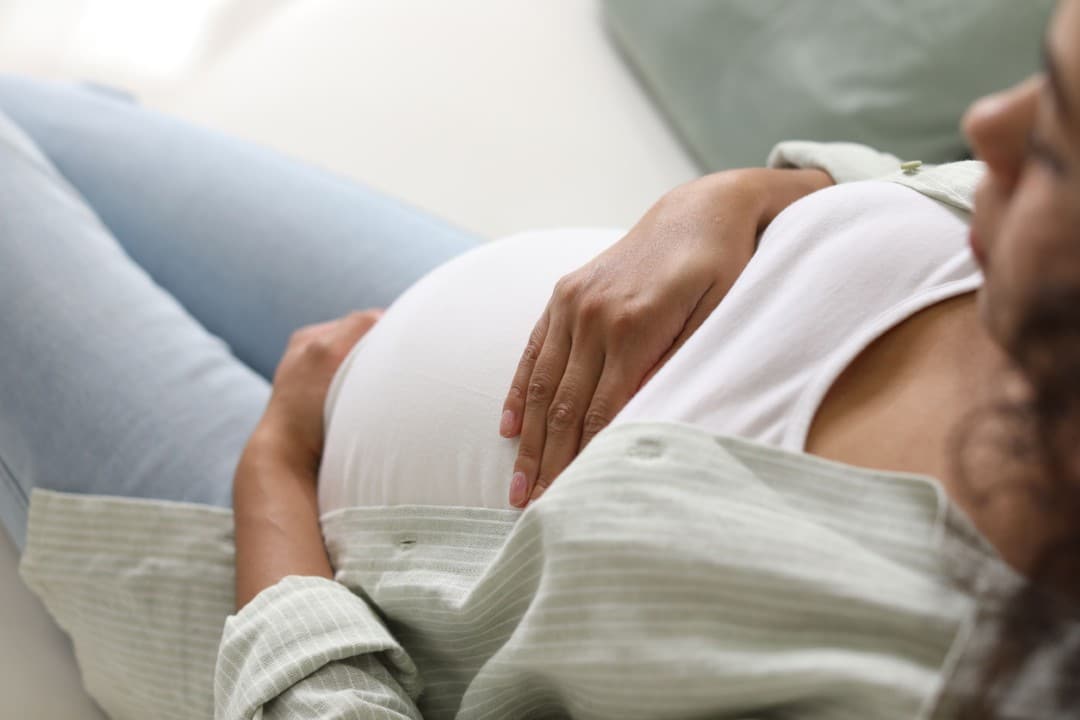
Birth rates have been falling across the planet since the period of greatest growth after World War II. Today, these rates are below the level necessary for population replacement in most countries, including Australia. In simple terms, populations are not renewing themselves on average.
From figures like Elon Musk to the Prime Minister of Italy, Giorgia Meloni, and the Pope, different voices speak out about the reduction in fertility rates, that is, the average number of children per woman.
Fears of overpopulation and depopulation problems
In his 1968 book “The Population Bomb,” Paul Ehrlich predicted that the 1970s would bring an avalanche of people and a “cancer” of overpopulation, with famine and widespread conflict. The extinction of humanity seemed imminent, according to warnings at the time.
This prediction of extinction linked to overpopulation did not come true.
The global total fertility rate has more than halved since 1950. In OECD countries, the current average stands at 1.46 births per woman, well below the 2.1 needed to keep the population stable from one generation to the next.
Projections indicate a decline in the world population from the mid-2080s onwards. China is experiencing the fourth consecutive year of population reduction. South Korea has seen a decline since 2019, with birth rates among the lowest in the world.
In Germany, the number of deaths has exceeded the number of births since 1972. Japan, Greece, Italy, Cuba and Thailand also face depopulation processes.
Without the contribution of immigration, the United Kingdom would see its population shrink, with more deaths than births. Australia is about a generation away from experiencing a similar situation. Migration restrictions have already caused depopulation in Canada.
Birth rates: a solution to the “problem” of aging?
Great advances in healthcare and medical technology since the 1950s, especially vaccines and advanced treatments, have allowed people to live longer. At the same time, the reduction in the number of children has resulted in an older population.
Population aging represents a success in human capacity, but economic models tend to treat aging societies as a challenge.
Working-age workers are critical to sustaining a balanced economy. In Australia, individual income tax payers form the main base of federal revenue. With fewer people of working age to replace retirees, economic well-being may suffer, forcing governments to deliver more services with fewer resources.
The birth rate below replacement level and the impact on public accounts led Australian politicians to encourage more children. “Have one for your mother, one for your father and one for your country”, declared then Finance Minister Peter Costello in a striking phrase from 2004.
In 2020, former Prime Minister Tony Abbott suggested that the wrong profile of women was having children and advocated for those in the “middle class” to have more. When discussing the 2024 budget, Treasurer Jim Chalmers stated that it would be “better if birth rates were higher.”
Human catastrophe of low birth rates
The number of people who attribute the decision to have fewer children to external factors is growing. In a global United Nations survey, around one in five respondents said that fear of the future led them, or would lead them, to reduce the number of children they want.
Difficulties in accessing housing, economic instability, gender inequality and climate change act as obstacles that are difficult to overcome for those who dream of starting a family.
The lack of conditions to have children in regions with fertility below replacement represents, in the view of many, a human catastrophe. How did society become so adverse that children became something unthinkable for so many who want them?
The pact between generations has been seriously compromised.
The question arises of who will care for older people now that there are fewer children.
Is it possible to avoid a human catastrophe?
The burden of starting a family falls mainly on the working-age population, especially women.
A baby bonus or lump sum payment is unlikely to change people’s views and raise the total fertility rate; these measures only postpone the birth. To truly increase fertility, a broad package of political actions is needed.
Measures that address the four major axes — housing, economy, gender and climate — include points such as safe and affordable housing, job and income stability, cheap childcare, gender equality at work and in society, and initiatives against climate change.
People of childbearing age do not make decisions hedonistically. They consider the future world and evaluate what it will be like for their children to come.
The loss of hope among those of reproductive age, including the fear of being left behind, fuels greater concerns about an uncertain tomorrow.
The human catastrophe of low birth rates not only reflects broad concerns such as insecurity, but can also weaken social cohesion.
Instead of a ticking time bomb of overpopulation, the world faces an economic and social implosion due to the lack of concrete support needed to raise the children many want.
It’s past time to ask people what they really need — and provide it.