

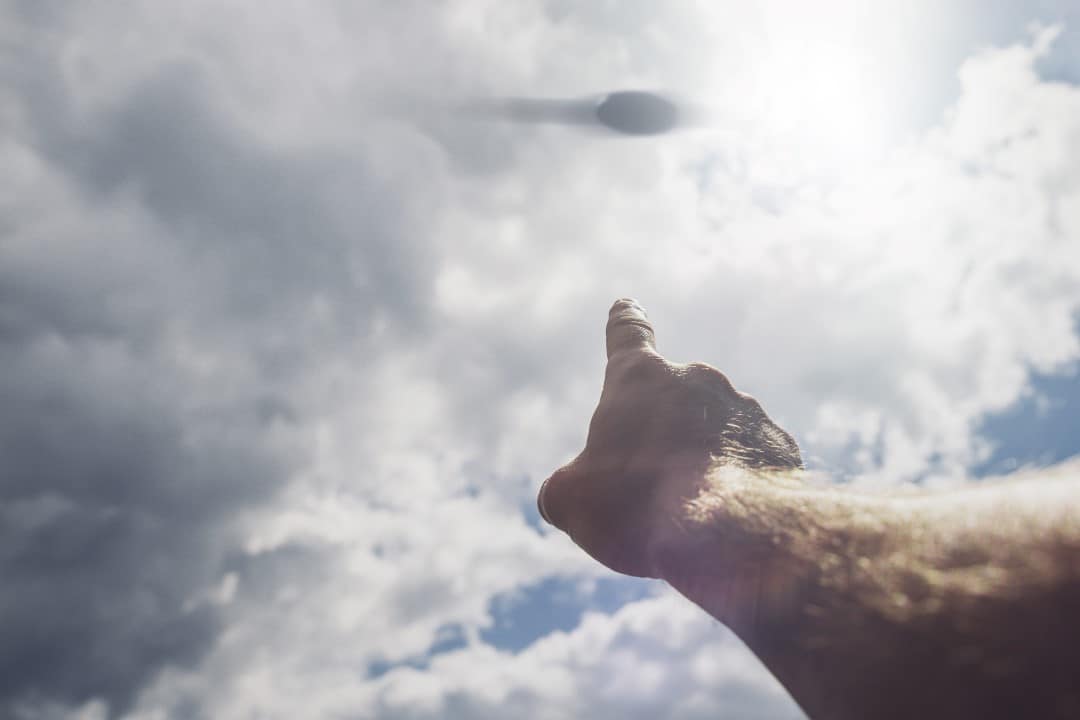
The moment of humanity’s first contact with extraterrestrial life has always been portrayed in science fiction as a sudden and dramatic event. In general, the scene shows an isolated scientist who has an instant revelation when he realizes that Earth receives visits from beings from light years away.
Aliens gained new impetus in the collective imagination because of Steven Spielberg’s most recent film,D-Day(Disclosure Day). The production follows the efforts of an activist to expose supposed extraterrestrial visits to the world and is scheduled to premiere in Brazil on June 11, 2026.
In practice, however, the detection of extraterrestrial intelligence is most likely to begin as a small anomaly in astronomical data. The next process involves slow verification, peer review and broad international debate. There should not be a single “Eureka” moment nor a lone researcher with the definitive solution.
With the advancement of telescopes, the complexity of the context in which we live has also increased. Therefore, a committee of the International Academy of Astronautics (IAA) recently approved a broad reformulation of “post-detection protocols” — the set of scientific rules that guide what to do after finding signs of life beyond Earth.
The IAA body responsible for approving the changes is the Search for Extraterrestrial Intelligence (SETI) Committee. SETI brings together scientific projects dedicated to searching for signs of intelligent alien life in the Universe.
The previous version of these principles had been adopted in 2010. At that time, “fake news” was not yet a widespread reality, social networks were in their infancy, and the broader concept of “technosignals” — searching for signs of alien technology, such as heat from megastructures in space — remained outside mainstream astronomy.
Currently, the field has grown significantly. Scientists are no longer limited to capturing radio signals from specific stars. Initiatives like Breakthrough Listen have expanded the search to a global scale, and now monitoring spans the entire electromagnetic spectrum for any trace of advanced extraterrestrial technology.
Furthermore, the information environment has become much more risky. In times of deepfakes and immediate global connection, a single unconfirmed claim can generate worldwide panic or mass misinformation before researchers are even able to validate the data.
At the heart of the 2026 update is a commitment to scientific rigor. The new protocols make it clear that scientists should not announce “alien” when they see an unusual signal in the data. If a researcher identifies a candidate, be it an artificial radio signal or other technological clue, the first step is a discreet and exhaustive check to try to disprove it. Confirmation needs to come independently from several institutions with different equipment.
Disclosure to the public should only occur when there is consensus that the signal is truly reliable.
It’s not about keeping secrets out of principle. There is no requirement to reveal verification work while it is in progress, precisely to avoid false alarms that could cause embarrassment or harm.
But once the discovery is confirmed, protocols require full transparency. The raw data, analysis methods and code used must be released to the entire global scientific community and the general public, allowing for independent replication.
Should we respond?
An important new feature in the 2026 declaration is the emphasis on protecting researchers. In recent years, scientists involved in high-impact news have suffered harassment or “doxxing,” when personal data is maliciously exposed online. The new rules recommend that institutions protect their professionals against professional retaliation and physical or digital threats.
The protocols also address radio frequency interference (RFI) generated by humanity itself. The bands used by SETI to listen for extraterrestrial signals are increasingly polluted by mobile networks, radars and, especially, satellite megaconstellations like Starlink.
The declaration defends international efforts to protect the frequencies where a possible signal is detected, preventing our own technology from stifling the “communication channel” with possible aliens.
The most controversial issue in SETI is not the search, but the transmission of messages — known as METI (Messaging Extraterrestrial Intelligence). The idea of sending intentional signals to other worlds divides the community. The 2026 Declaration maintains the previous position: no response should be sent without broad international consultation.
The decision of how Earth would present itself to an alien civilization must be made by all of humanity, and not by an isolated institution or person. These discussions need to take place through the United Nations or other representative multilateral forums.
The discovery of intelligent life beyond Earth would be one of the most transformative events in human history. To manage the fallout, the IAA SETI Committee is creating a permanent Post-Detection Subcommittee.
This group will not only be made up of astronomers. It will include international experts in ethics, law, social sciences and communications to advise on the long-term impacts of contact.
The updated protocols were designed as living documents, complemented by a Code of Conduct and Best Practice Guidelines that will be reviewed periodically.
The revised statement has been formally adopted by the IAA Board of Trustees and will be submitted to other organizations for endorsement throughout the year. The next step is to present it to the scientific community at the International Astronautical Congress in Türkiye, in August 2026, and seek analysis from the UN.
By setting strict rules now, scientists ensure that if the signal arrives, the world is prepared to verify, publicize, and respond in a unified way.
Michael Garrett led the working group, which included professor Kathryn Denning (University of York, Canada), professor Carol Oliver (University of New South Wales, Australia) and lawyer Les Tennen (Sterns and Tennen, USA, and legal advisor to the IAA).