

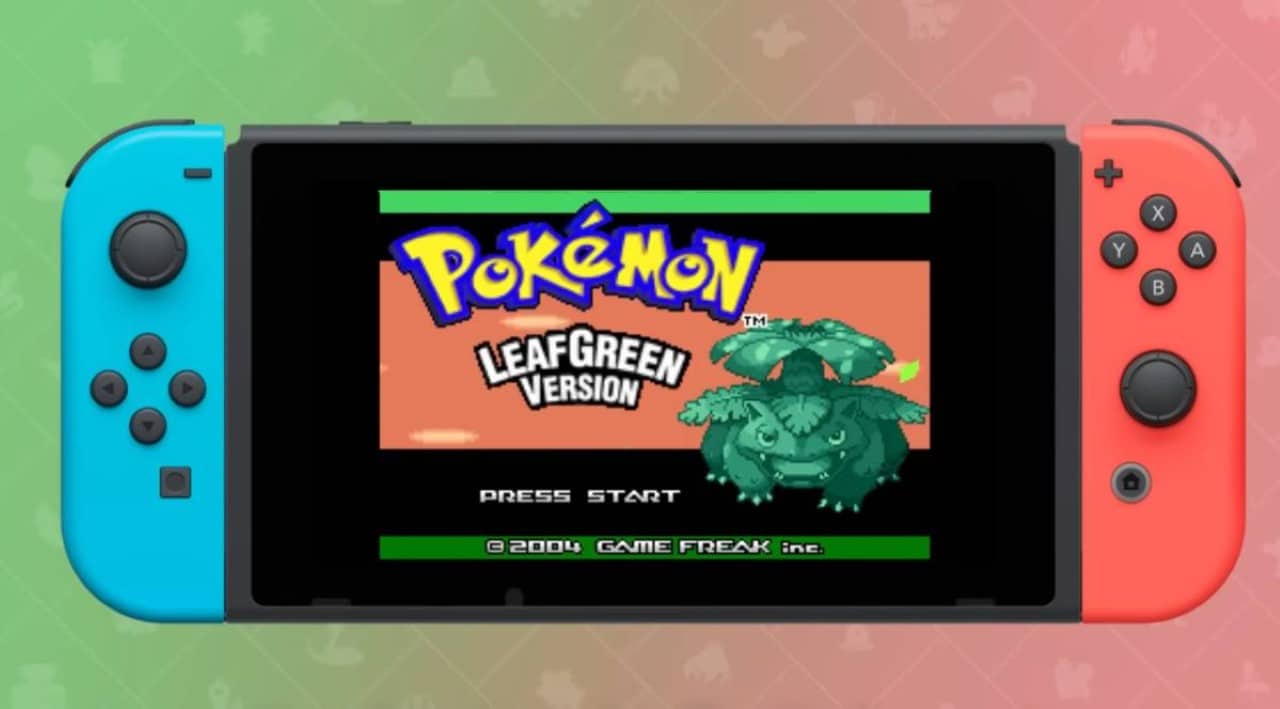
Nintendo and The Pokémon Company have announced the official arrival of Pokémon FireRed and LeafGreen to the Nintendo Switch catalog. The games will be available for download from February 27th, a date that celebrates the franchise’s thirtieth anniversary on the global market, known by fans as Pokémon Day. The titles arrive directly on the eShop virtual store shortly after the transmission of the Pokémon Presents event. The installation file occupies around 40 MB in the device’s internal memory, maintaining the lightness characteristic of software of that generation.
Commercialization model and impact on the retro games market
The sales format defined by the Asian company breaks with the recent trend of distributing old games. The two adventures originating from the Game Boy Advance will be sold in a definitive purchase format, eliminating the requirement for an active subscription to the Nintendo Switch Online service. The official value established for the Brazilian market is R$120.99, while in the United States the price was set at US$19.99. The measure meets a long-standing demand from consumers, who prefer permanent possession of products instead of the temporary access model.
The one-time sale format also guarantees no microtransactions or additional hidden costs. The software delivers the complete content immediately after payment confirmation on the platform. The eShop interface lists games individually, allowing buyers to choose their favorite version without the need to purchase expansion packs. Analysts in the technology sector point out that this approach strengthens public trust in the digital store, in addition to ensuring the application works even in scenarios of prolonged internet disconnection.
The digital release has a direct impact on the physical media collectors market. Original cartridges in good condition fetch exorbitant prices on auction sites, driven by scarcity and nostalgia. In Japan, complete copies in the box cost 19,800 yen, the equivalent of hundreds of reais in direct conversion. Financial speculation keeps new players away from the classic experience, making official availability on the eShop a tool to democratize access and combat piracy of ROM files on the internet.
Local connectivity and integration with modern systems
Communication between players received a specific technical adaptation for contemporary hardware. The console system emulates the functions of the old Game Boy Advance wireless adapter through the Nintendo Switch’s local connection. Users can carry out battles and exchange creatures just by bringing the physical devices closer together, without the need for cables. This feature eliminates dependence on external Wi-Fi networks or routers, replicating the stability and low latency required for competitive play at the time of original launch.
The main technological innovation of this version involves direct compatibility with the Pokémon Home application. The cloud storage service allows creatures captured in the Kanto region to be sent to the franchise’s latest games, such as Pokémon Scarlet and Violet. The transfer process occurs unilaterally, which means that a monster sent to the central server cannot return to the source file. The integration solves a historical problem of isolating data saved on older platforms.
Virtual boxes are managed through a dedicated interface in the game’s main menu. The player needs to link the Nintendo account to the cell phone application or the console itself to enable data synchronization. The security measure prevents file cloning and protects the integrity of the company’s global database. The system recognizes the source data and certifies the legitimacy of each capture made during the campaign.
- Native support for local exchanges without requiring an internet connection.
- Multiplayer battles stabilized by the console’s own communication protocol.
- Permanent transfer of creatures to the current Pokémon Home ecosystem.
- Authenticity certification to prevent the entry of artificially generated monsters.
Differences between versions and exploration of the Kanto region
The original titles hit the market in 2004 as the first updated recreations of the series’ inaugural adventures, originally released in 1996 in Japan. Developer Game Freak used the hardware of the time to revitalize the Kanto region with new graphics and improved mechanics. The current digital version keeps the source code intact, preserving the authentic experience designed two decades ago. The advance download is already available for users who purchase during the pre-sale period.
The main journey requires choosing between two editions that feature slightly different content. The Pokémon FireRed digital cartridge features exclusive creatures such as Ekans, Oddish and Growlithe, requiring the player to interact with other people to complete the virtual encyclopedia. The LeafGreen edition guarantees access to monsters such as Sandshrew, Vulpix and Bellsprout. The division of species encourages cooperation and trade among the user community, with the ultimate goal of cataloging the 151 original specimens.
The campaign script follows a young trainer in his search for eight gym badges spread across cities across the continent. The path culminates in the challenge against the Elite Four, the strongest group of fighters in the region. The parallel narrative involves the dismantling of the criminal organization Team Rocket, led by Giovanni, who acts as the main antagonist throughout the plot’s progression. The game’s difficulty gradually increases, requiring combat strategies based on the advantages of the elemental types.
Post-game content expands the original map with the introduction of the Sevii Islands archipelago. This new area, added in an unprecedented way in the 2004 version, features additional missions and creatures native to the Johto region. The player explores seven main islands filled with environmental puzzles and advanced level trainers. Completing this stage releases communication with third generation games. Total campaign time exceeds the forty hour mark for users looking to complete all objectives.
Historical preservation and transition to the next console
The longevity of the purchase receives official guarantees from the hardware manufacturer. Nintendo has confirmed that digital files for Pokémon FireRed and LeafGreen will work on the successor to the current console, tentatively called the Nintendo Switch 2 by the industry. Backwards compatibility ensures that the consumer’s financial investment remains valid on the next generation of devices. The library transition will occur through the same user account linked to the current system, facilitating data migration.
The digital preservation strategy reinforces the construction of a permanent catalog for the platform. The decision to sell the games separately responds to requests from users who reject the software rental model, setting a new standard for the company. The franchise takes advantage of its anniversary to consolidate the availability of its historical roots on modern hardware. The move sets an important precedent for future re-releases of later generations in the same commercial format.