King Charles III converts historic property in Scotland into ecological hub with 130 jobs By Maria
6 min read
 |
The Scottish complex of Dumfries House, situated in the East Ayrshire region, has undergone profound restructuring over the last few decades under the leadership of King Charles III. Purchased in 2007 by a group of investors led by the former Prince of Wales, the building dating from the 18th century and its vast area of 800 hectares escaped a fate of abandonment and the dismemberment of its historical assets.
The audiovisual production Finding Harmony: A King’s Vision, which debuted in the Prime Video catalog in the first months of 2026, sheds light on the transformation of the space into a center for teaching artisanal techniques and respect for the environment. The project materializes the vision of peaceful coexistence between humanity and natural resources, an ideal that the British head of state has promoted for several years.
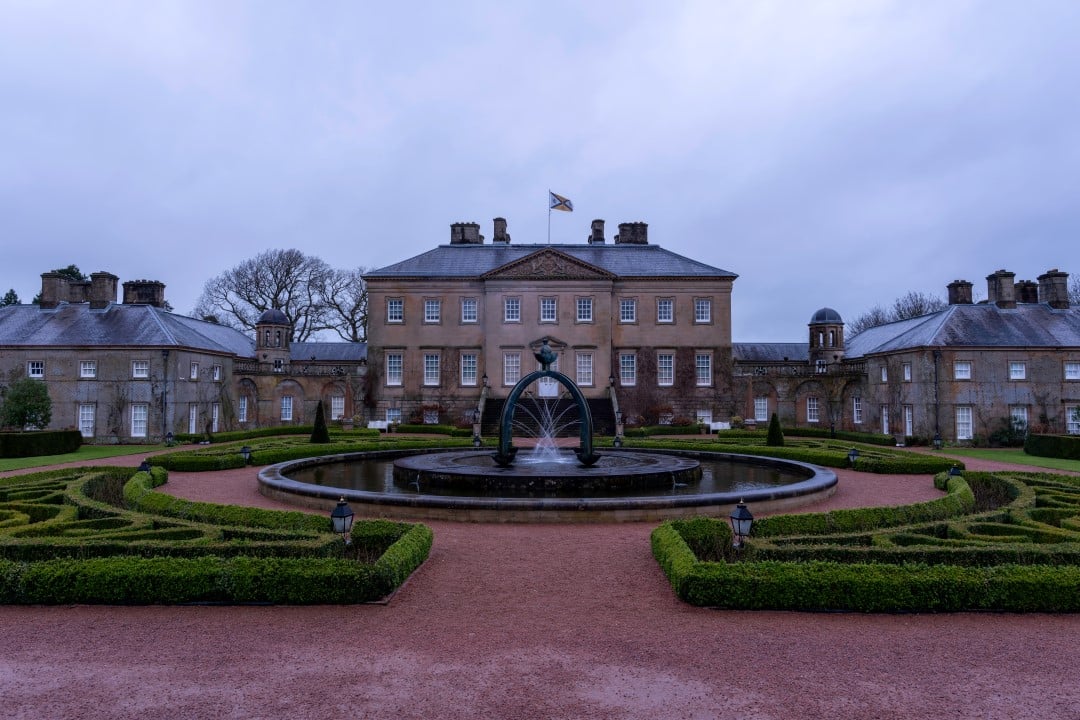
The complex houses a very rare collection of furniture signed by Thomas Chippendale, considered the greatest master cabinetmaker in England in the 18th century, whose pieces have remained intact for more than two and a half centuries. The work to restore the main structure and green areas incorporated current low-consumption technologies, such as clean heating systems, reducing operational costs and the release of polluting gases.
- Technical training in classic manual work for thousands of apprentices.
- Programs aimed at pesticide-free cultivation and ecological awareness.
- Meetings aimed at the local population that help to move areas affected by the end of coal extraction.
The King’s Foundation organization, which maintains its base of operations on the property, supports approximately 130 employees and has awarded diplomas to almost 100,000 students since 2013.
How 18th-century mansion was saved from financial ruin
The architectural project for Dumfries House came to fruition between 1754 and 1759, signed by Robert Adam to meet the wishes of the 5th Earl of Dumfries. The palace served as the exclusive home of the Bute lineage for two and a half centuries, which ensured the preservation of its entire set of rococo-style furniture.
By 2007, expenses to keep the structure standing had spiraled out of control, forcing an attempt at commercialization that would put the entire cultural treasure at risk of separation. The current King Charles III, occupying the position of Prince of Wales at the time, organized a group of buyers who purchased the building, the lands and the entire historic contents for the sum of 45 million pounds.
The financial transaction involved a significant transfer of resources from the monarch’s own charitable institution. The movement guaranteed the protection of an asset of national interest and enabled citizens’ access to space, always with the aim of promoting the region’s social and financial development.
The British monarch’s ecological vision put into practice
Since the 1990s, King Charles III has publicly argued the urgency of finding a balance between advancing society and protecting nature. Scottish property functions as a real testing ground for this ideology, mixing the protection of ancient assets with actions to respect fauna and flora.
The cinematographic work Finding Harmony: A King’s Vision shows never-before-seen footage of the royal leader walking through the courtyards and corridors of the palace. During the recordings, he details the weight of recovering entire territories by focusing on the union of different work fronts.
Initiatives focused on conscious nutrition have been operating on the complex’s premises for a long time, encouraging planting without chemicals and valuing nearby suppliers. Those enrolled in the courses put their hands on the soil, understanding in practice the connection between what reaches the table and the health of the planet.
Training courses and unprecedented partnership with the audiovisual sector
The King’s Foundation provides training in professions that were disappearing, teaching everything from making clothes with zero waste to the artisanal handling of leather items. An initiative launched recently, supported by Amazon MGM Studios, prepares workers to work behind the scenes of films and series using only inputs that do not harm nature.
Students like Kyra Ho, a Glasgow resident, highlight the importance of tackling the disposable fashion industry by adopting responsible production methods. The first class in this specific segment drew attention for selecting a small group of just eight students.
Educational institutions in the region organize frequent excursions to the foundation’s lands for learning experiences in the middle of the forest. In 2023, the complex was reinforced by the MacRobert Farming and Rural Skills Center, multiplying the vacancies for teaching rural techniques.
In a recent delivery, participants in the Building Craft Program completed the assembly of an observation refuge in the middle of the forest, exclusively applying construction methods from the past.
Centuries-old techniques guarantee the preservation of million-dollar pieces
The conservation efforts that gained momentum in 2007 involved dealing with extremely high-value furniture, including a Chippendale bookcase with an estimated market price of 20 million pounds. Experts resorted to old wax polishing methods so as not to alter the factory characteristics of the objects.
The land administration implemented clean energy matrices in both historic and newly erected buildings, cutting old exorbitant electricity bills in the bud. Caring for architectural heritage goes hand in hand with protecting the local ecosystem.
Expansion works prepare the complex for a sustainable future
In the first month of 2026, The King’s Foundation confirmed the construction of The King’s Hall, a pavilion designed to house up to 200 guests. The project, with an estimated cost of around 6.5 million pounds, builds walls with rocks extracted from the region itself and combines ancient knowledge with current engineering standards.
Temperature control carried out by heat pumps and biomass-powered equipment consolidates the project’s zero-emission promise. The new building will take the place of a temporary tent, making room in the agenda for a greater number of meetings each week.
Another architectural landmark delivered at the end of 2025 was a wildlife contemplation shelter built by the apprentices themselves. Movements of this type inject money into the local economy and open doors for those looking for professional specialization.
Organic production supplies the complex’s internal needs
Specific sectors of the property are entirely dedicated to clean cultivation, ensuring that the ingredients served at meetings and classes come from the backyard. The work fronts include vegetable gardens cared for by neighbors and classes on correct soil management.
The MacRobert Centre, opened three years ago, focuses its efforts on teaching land management and plantation management. Anyone who passes by can see up close how environmental protection theories work when applied to large areas of land.
Economic revitalization in a former Scottish mining zone
The change in the property’s profile brings direct relief to a region that suffered a severe economic blow with the closure of coal mines in the 1980s, now generating formal jobs and promoting learning tourism. The daily operation of the space involves the hiring of suppliers and service providers.
More than 10,000 citizens cross the gates every year to take part in the group dynamics offered by the institution. The management model proves that it is possible to apply strict rules of respect for nature in realities involving different income ranges.
The person responsible for the foundation’s teaching guidelines, Dr. Simon Sadinsky, points out that the secret is connecting food production with urban space planning. These pillars dictate the rhythm of all daily activities within the property’s walls.
The long-term impact of the royal’s environmental policies
King Charles III often cites Dumfries House as concrete proof that it is possible to generate profits and sign employment contracts by investing in the clean economy. The land serves as a showcase for how to restore old buildings, embrace the neighborhood and protect greenery at the same time.
The cameras in the new documentary capture the head of state watching recordings of his own warnings about global warming and the extinction of animal species. The warnings he issued in the 1990s clashed with what major international panels were already beginning to map.
The search for a peaceful coexistence with the planet dictates all the rules of the game within The King’s Foundation. The Scottish complex continues to expand, bringing new ideas to paper that validate the discourse of joining forces in favor of the environment.