Meteorite 2 billion years old brings DNA molecules and boosts theory of life from space

A shocking discovery in a meteorite approximately 2 billion years old has revealed the presence of nucleotide structures that surprisingly resemble those of human DNA. This finding reignited scientific discussions about the primordial origin of life, raising the possibility that the chemical building blocks essential for existence were not only formed on Earth, but much earlier, in cosmic environments. With the identification of these substances in meteorite fragments, new lines of investigation are opening up to understand extraterrestrial life.
Scientists detail that the organic molecules located in these ancient meteorites, estimated to be 2 billion years old, have similarities with fundamental nucleotides such as adenine, guanine, cytosine and thymine, components of human DNA. However, its characteristics are distinctive, presenting unique isotopic signatures and molecular arrangements. These specific traces are crucial to unequivocally confirm that these structures had their origin in outer space, eliminating doubts about possible terrestrial contamination and reinforcing the hypothesis that life may have been “seeded” on our planet.
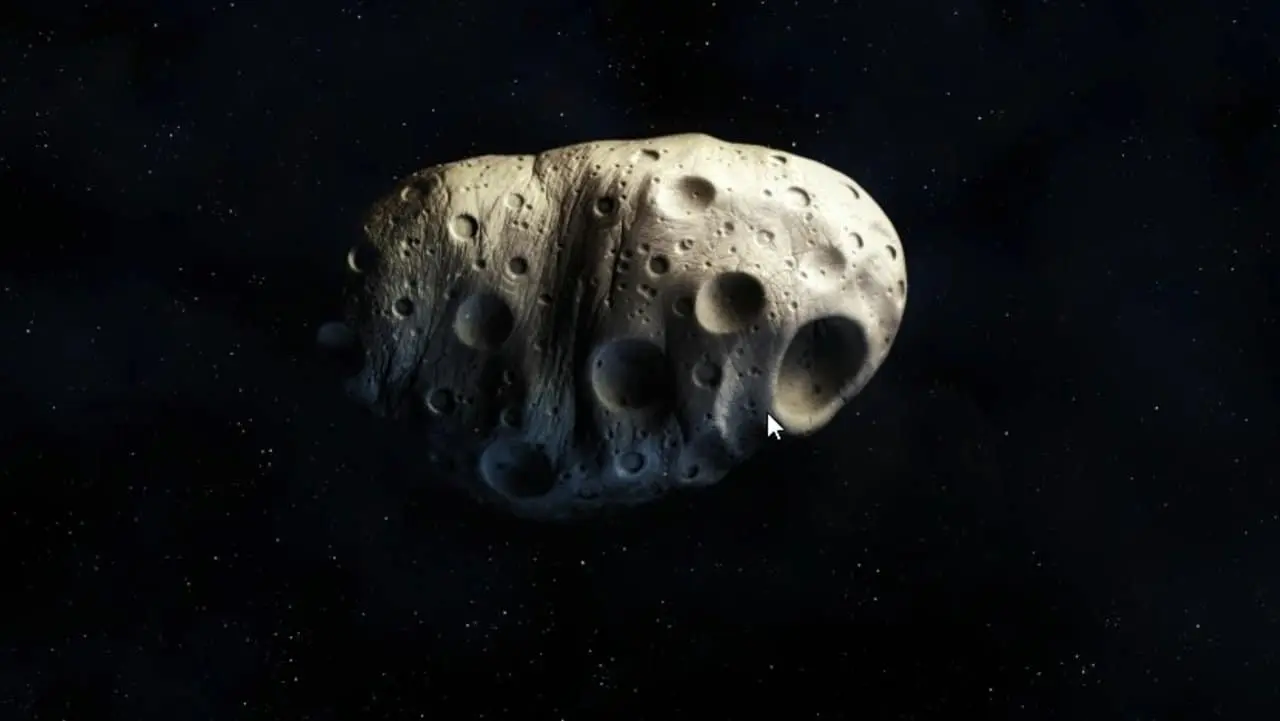
This robust evidence significantly strengthens “panspermia,” a theory that posits that vital chemicals reached Earth transported by asteroids and meteorites. These space materials would have functioned as chemical precursors, kickstarting the development of life on the planet.
Leia Também

Financial analysis indicates that GTA 6 generated US$1 billion in the first hour of pre-sales

George Russell secures second Formula 1 triumph and leads Austrian GP after controlling Verstappen and Antonelli

Air crash in France kills 11 people on parachuting school aircraft
The researchers explain that such organic molecules can be synthesized gradually by different mechanisms: by the radiation present in interstellar molecular clouds, by chemical reactions with water within the meteorites themselves, or even formed under the extreme conditions of high temperatures and pressures generated by asteroid collisions, functioning as a true natural “chemical reactor” in space.
The recent discovery evokes the memory of the emblematic revelation of the Murchison meteorite, in Australia, in 1969. On that occasion, scientists identified more than 90 amino acids in its fragments, a finding that already challenged the idea that the molecules of life could form exclusively on Earth. Currently, with improved mass spectrometry and isotope analysis techniques, scientists are able to identify and characterize molecules analogous to DNA with much greater precision in older meteorites.