

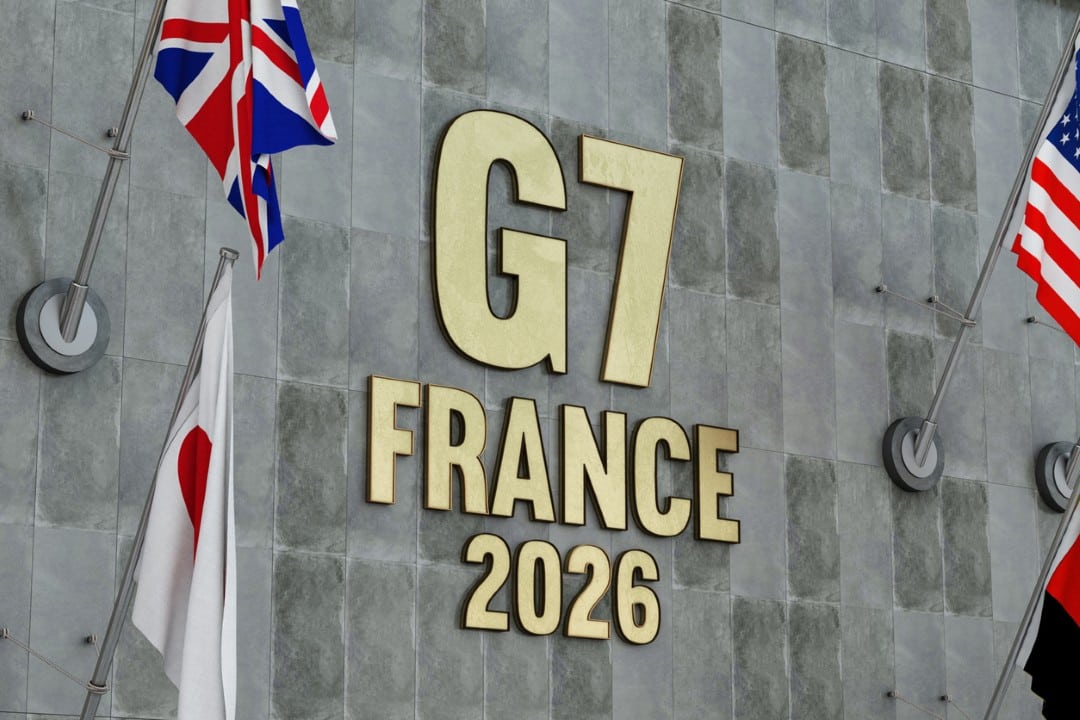
Diplomatic hostilities intensified ahead of the G7 summit, which began on June 15 in the French city of Évian. President Donald Trump, over recent months, has made a series of verbal attacks against most of the group’s heads of state, which not only revived old feuds with figures previously considered allies, but also generated significant new friction.
The central reason for the current diplomatic malaise lies in the refusal of global leaders to ally with the United States and Israel in a military conflict against Iran. This point of contention highlights a fundamental division that goes beyond mere trade disagreements, directly impacting the G7’s ability to act as a united front on crucial global security issues. The expectation is that this stance of non-involvement, together with the recent agreement with Iran announced by Trump last weekend, will dominate discussions during the summit.
However, friction between Donald Trump and the other members of the G7 is not a recent phenomenon; the history of tensions was already evident in previous summits, since his first presidential term. Although in the past, world leaders often tried to ignore the American president’s criticism, the current stance reveals a change, with some of them beginning to react publicly.
Relationship with French President Emmanuel Macron becomes more complex
Trump’s most lasting link within the group is with French President Emmanuel Macron, who currently presides over Congress. This makes the dynamic between the two one of the most intricate. At one moment, Trump expresses consideration; in the next, he makes jocular comments about Macron’s personal life. The French leader, who already boasted of his ability to manage the relationship with Trump, today shows increasing signs of exhaustion.
Growing friction with Canadian Prime Minister Carney
The relationship between Trump and Canadian Prime Minister Carney seemed promising the previous year, especially when compared to disagreements with former Prime Minister Justin Trudeau. However, trade disagreements and a scathing speech by Carney in Davos earlier this year have drastically altered Trump’s views. After Carney suggested that Canada could become the 51st American state, Trump began publicly referring to him as “Governor Carney.”
British Prime Minister Starmer receives Trump scorn
Probably no other European head of government has put as much effort into developing a connection with President Trump as UK Prime Minister Starmer. For much of the past year, their interaction seemed stable. However, the relationship soured when Starmer declined to support a military offensive against Iran. Trump publicly belittled him, saying the prime minister was “not Winston Churchill.”
German Chancellor Merz leaves the president’s list of favorites
German Chancellor Merz initially won over Trump by visiting the White House and presenting the birth certificate of Trump’s grandfather, who had German roots. However, his doubts about military action against Iran and declaration that the United States was being “humiliated by the Iranian leadership” resulted in him losing his status as one of Trump’s preferred European leaders.
Italian Prime Minister Meloni and the reaction to Trump’s fury
Even Italy’s Prime Minister Meloni, once considered Trump’s closest in Europe, faced presidential fury after refusing to join a military campaign against Iran. Meloni later called Trump’s attack on Pope Leo XIV “unacceptable”, which provoked a critical and scathing response from the American president. This episode demonstrated that not even a loyal supporter like Meloni was immune to Trump’s reprisals.
Japanese Prime Minister Sanae Takaichi tries to avoid tensions
Japan’s Prime Minister Sanae Takaichi, the most recent addition to the G7, has so far managed to escape Trump’s attacks. Takaichi dedicated himself to building a close personal relationship with the American president, using as a basis the ties shared with former Prime Minister Shinzo Abe, who died in an assassination. However, Trump has already expressed discontent with Japan’s non-participation in a war against Iran and, earlier this year, in a meeting in the Oval Office, he made an insensitive joke about the attack on Pearl Harbor, causing discomfort in Japan.