

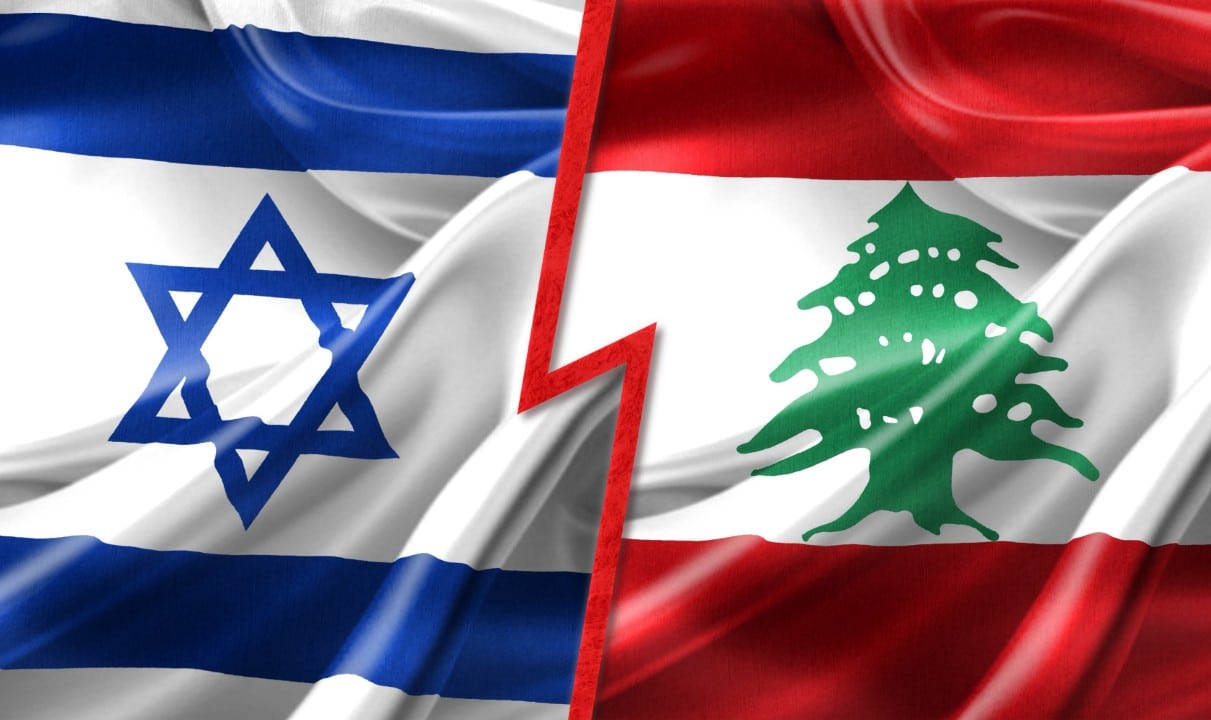
The Israeli Minister of National Security, Itamar Ben Gvir, made strong statements this Friday (19), at a time of growing global calls for an end to clashes in the Middle East. The Israeli government reaffirms that it will continue with its military action against the Hezbollah group in Lebanon, disregarding the protocol of understanding signed between the United States and Iran.
“With due respect to the Americans, Israel needs to communicate to everyone that the lives of our young people and the protection of our residents are non-negotiable. All of Lebanon must burn,” declared Ben Gvir in an official statement. He further added: “For every cry of an Israeli mother, a thousand Lebanese mothers must shed tears.” The minister, a prominent far-right figure and political partner of Prime Minister Benjamin Netanyahu, is known for his inflammatory rhetoric, which in this context directly challenges diplomatic efforts.
Such demonstrations occurred shortly after the Israeli army announced the loss of four of its soldiers in a clash in the southern region of Lebanon, also this Friday. Recent Israeli air strikes in the same area have, in the last few hours, killed at least 18 people and injured 33, according to a preliminary report released by the Lebanese Ministry of Health, characterizing themselves as the most violent in weeks.
The Israeli nation continues its attack on neighboring territory, regardless of the formalization of the protocol between Iran and the United States, which establishes a halt to war actions on all fronts in the region. On Thursday (18), Benjamin Netanyahu had already reiterated that Israeli troops would remain in the southern portion of Lebanon “for as long as necessary”, a stance that reflects the internal political pressure faced by the prime minister on the eve of elections.

This stance is supported by other members of the cabinet, such as the ultranationalist Minister of Finance, Bezalel Smotrich. He used the social network X to express that “it is necessary to let the fire speak […] open the gates of hell”, making a clear reference to the dead soldiers, although he did not mention Lebanon directly.
To intensify the pressure on Netanyahu, whose parliamentary base appears fragile given the proximity of the elections, scheduled for the end of October at the latest, Avigdor Lieberman, who heads an opposition nationalist party, called for the imposition of “a high price […] from which the opposing party will never recover”. He argued, also in X, that if Hezbollah’s strongholds “remain intact, this will represent a clear setback for the prime minister and the defense minister.”
Escalation of military attacks in the Lebanon region
Israel declared this Friday that it had attacked “more than 80 strategic points” and eliminated “dozens” of Hezbollah members, justifying the actions as a “response to violations of the ceasefire”. The bombings hit at least a dozen towns neighboring Nabatiyé, in the south of Lebanon, including Harouf, where eight individuals died, according to a provisional report from the Lebanese National Information Agency (ANI). Other Israeli airstrikes were recorded in the Baalbek area, in the eastern sector of Lebanon.
The escalation of the military onslaught is causing a new wave of population exodus. According to information from ANI, hundreds of inhabitants “began to flee, leaving the Tire region in overloaded vehicles, transporting mattresses and personal objects”.
In a statement issued at dawn, Hezbollah, an Iranian-backed group, announced that its fighters launched offensives against Israeli forces near the hills of Ali Taher, near Nabatiyé, using “missiles and mortars.” On Thursday night, the organization had reported the destruction of three Israeli tanks during clashes between its members and an Israeli army unit in the southern portion of Lebanon.
France’s position on the diplomatic agreement
In an interview with France Info radio this morning, French Foreign Minister Jean-Noël Barrot urged Israel to honor the pact sealed between Iran and the United States. “This commitment establishes the end of hostilities; the Israeli government must comply with it, and the United States, especially, must apply the necessary pressure on the Israeli administration to ensure its compliance,” said the chancellor.
Barrot, however, minimized the postponement of talks that were scheduled to begin in Switzerland, between Washington and Tehran, with the aim of putting into practice the consensus reached on Wednesday (17). “The most challenging section is still approaching, but it is not advisable to overestimate the delays in the meetings, since this agreement has already been signed”, he considered.
“The fundamental thing now is that the debates, including those of a technical nature, can continue so that the initial phases stipulated by the agreement can be implemented”, concluded the French minister.