

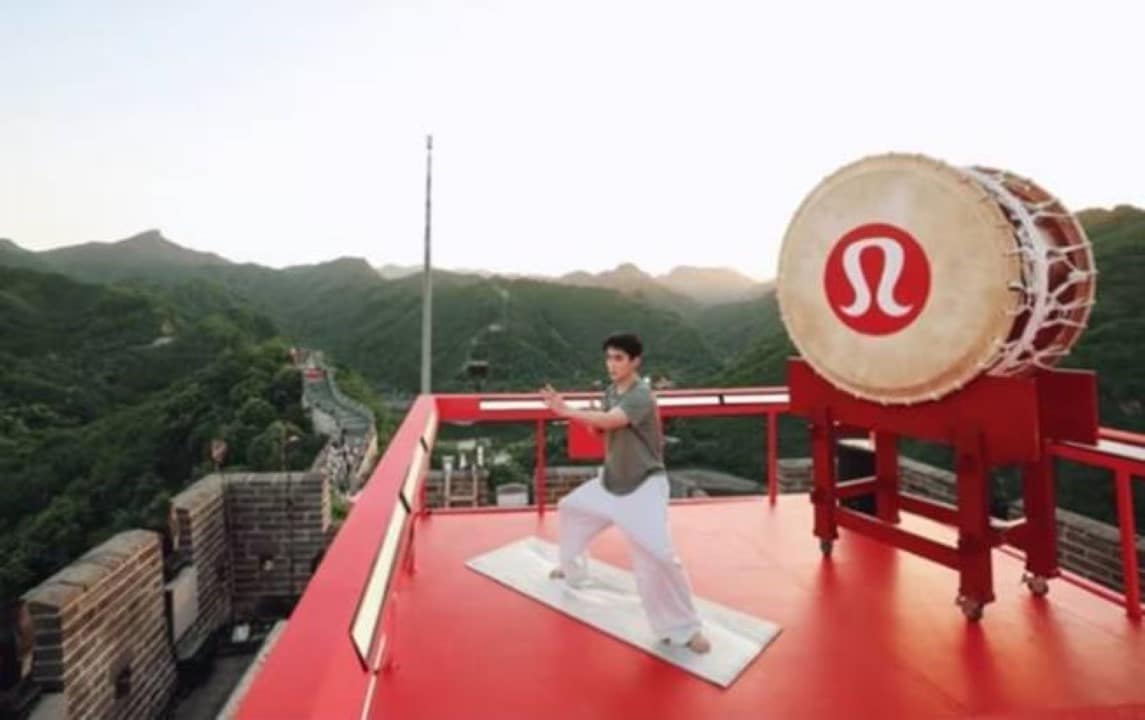
A wave of outrage took over Chinese social media after sportswear brand Lululemon promoted a yoga event on the iconic Great Wall of China, using what many identified as Japanese taiko drums. The incident, which quickly went viral, forced the company to issue a public apology and take the entire campaign offline. The situation again highlights the cultural delicacy and growing nationalism in the Chinese market, where Western brands can easily face boycotts for gaffes perceived as offensive.
Immediate repercussion and the cultural distinction of the instruments
The yoga festival, which took place on May 30 at the Great Wall of China, aimed to celebrate Chinese culture and health, attracting more than 2,000 participants. The event was attended by Chinese actor Zhu Yilong, who took part in a musical performance with what were initially described as “traditional Chinese drums”. However, the choice of instruments soon raised questions among internet users and specialized musicians, transforming the celebration into a cultural controversy.
Questions about the true origin of the drums quickly arose, with many pointing out similarities to the Japanese taiko drum rather than traditional Chinese models. Chinese percussionist Xu Yang, for example, used his social platforms to clarify the notable differences in format and style between the two types of instruments, warning of the importance of not confusing them. Historically, Japanese taiko, although with origins that date back to older Asian instruments, developed in Japan for its own ceremonial, military and artistic uses, acquiring a very particular sound and visual identity. Chinese drums, in turn, also have a rich tapestry of shapes and purposes, rooted in millennia of imperial and folk tradition. The fusion or confusion of these symbols, especially on a stage of such national relevance, can be interpreted as an affront to Chinese cultural identity.
The sensitivity surrounding the origin of the drums was intensified by the location chosen for the event. The Great Wall is one of the greatest symbols of Chinese sovereignty and history. The presence of an item perceived as Japanese in a place of such national importance evoked for some painful memories of Japanese imperialism and atrocities committed during the war, transforming a simple performance into a focus of geopolitical controversy.
Lululemon’s response and public apology
The controversy generated millions of views and discussions on Weibo, China’s main microblogging platform. Faced with intense pressure, Zhu Yilong’s office asked Lululemon to fully review the incident and take appropriate measures, reinforcing the actor’s commitment to promoting traditional Chinese culture. Lululemon responded on the 16th, deeply regretting the situation.
In its statement, which was later deleted, the company declared that the event aimed to demonstrate “unwavering respect for Chinese culture.” Lululemon admitted its “expertise limitations,” acknowledging that it had not fully understood the “potential points of contention” in the initial presentation planning and review phase. The brand apologized to actor Zhu and the public, promising to take a “stricter approach” in future initiatives, as well as removing all festival-related content from its online platforms. The rush to remove the content and admission of “expertise limitations” underscore the immense pressure international corporations face in navigating China’s cultural and political complexities, where a misstep can quickly turn into a commercial and reputational crisis. The drum group involved also issued a separate apology, saying it had stopped any promotion or use of the drums in question.
History of Controversies for Western Brands in China
This episode is not isolated and is part of a pattern of incidents in which foreign brands face negative reactions in China due to cultural or geopolitical issues. The Chinese market, with its rising nationalism and a government vigilant over cultural sovereignty, demands an in-depth understanding of local sensibilities. Small mistakes can quickly escalate into major image crises and consumer boycotts. This scenario is driven by a fervent nationalism, often encouraged by state media, which turns any perception of cultural disrespect or violation of sovereignty into a catalyst for popular outrage and consumer boycotts.
The following list details some high-profile cases of Western brands facing severe criticism in China in recent years:
- 2021: Boycott H&M and Nike:Clothing brands have been targeted by massive boycotts for their statements regarding alleged allegations of forced labor in cotton production in the Xinjiang Uyghur Autonomous Region. The issue generated strong rejection and significant market loss.
- 2021: PVH and Xinjiang restrictions:PVH, parent company of brands such as Calvin Klein and Tommy Hilfiger, faced retaliation when it banned the supply of cotton from the Xinjiang region, being included on China’s blacklist amid trade tensions with the United States.
- 2019: Luxury brands and territorial integrity:Coach, Givenchy and Versace were forced to issue formal apologies. T-shirts from his collections suggested that Hong Kong and Taiwan were not part of China, a direct violation of the “One China” policy of the Chinese Communist Party, which claims Taiwan as its territory despite never having governed it.
Lasting impact on the positioning of foreign brands
The swift and forceful reactions to incidents like the Lululemon one demonstrate how vigilant and sensitive the Chinese public has become, especially on topics touching history, culture and national sovereignty. For Western companies, the lesson is clear: global expansion requires not only adapting products, but also a deep immersion in the cultural and political nuances of the markets in which they operate. Event planning, the choice of symbols and even the language used must be meticulously reviewed to avoid misunderstandings that could harm reputation and operations in one of the largest consumer markets in the world. Lululemon, like many others before it, has experienced firsthand that global expansion into China is not just a matter of adapting products to local tastes, but rather a deep and ongoing immersion in political, historical and social nuances. Errors that could be minor in other markets take on an amplified dimension, requiring a level of care and cultural research that goes far beyond traditional marketing campaigns. The episode serves as a blunt reminder to all Western companies of the need for rigor and deep respect when operating in an environment where national identity is so sacred and reactive to any perception of disrespect.