

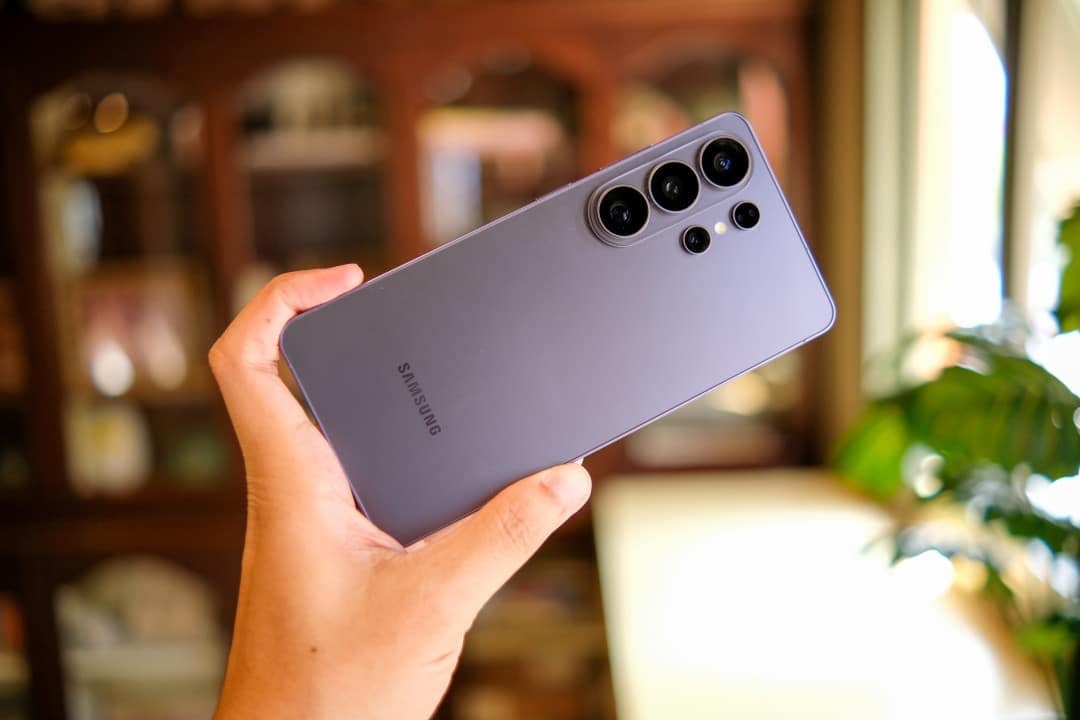
The South Korean manufacturer decided to anticipate the future of cybersecurity by implementing advanced defenses on its mobile devices through the One UI 8.5 interface. This technological change works as a preventive shield against highly complex invasions, a fundamental step in an era dominated by machine learning algorithms and networks of interconnected devices. The brand’s central objective is to shield consumers’ privacy and ensure that personal files remain inaccessible in the face of rapid transformations in the virtual environment.
How new supercomputer protection barriers work
The concept of post-quantum defense involves the creation of complex mathematical codes that not even the most powerful machines of tomorrow will be able to decipher. Today, the global data protection infrastructure, which ranges from banking applications to messaging, is based on standards like RSA, which can be easily broken on the so-called “Q Day” — the theoretical moment when quantum technology will reach maturity. The accelerated advancement of this sector raises a real warning about the fragility of conventional methods of blocking information.

Professionals specializing in cybersecurity point out that the transition to new defense protocols requires years of adaptation, even though equipment capable of breaking current passwords still only operates in restricted laboratories. Starting the migration to these mathematical barriers now represents a crucial pre-emption tactic. In this way, the company ensures that photos, financial documents and private conversations remain protected long before attackers have access to ultra-fast processing tools.
Practical changes to the internet connection of the brand’s cell phones
The integration of these impenetrable defenses has already begun to operate in the daily functions of the One UI 8.5 system. The greatest example of this application occurs in the secure wireless networking tool, which now uses state-of-the-art protocols immune to code breaking. In practice, the user gains invisible and extremely resistant shielding whenever they need to access the internet in airports, cafes or any other public access point.
This movement reflects the manufacturer’s long-term planning to build a technological environment free of vulnerabilities. As automation and virtual assistance tools analyze cell phone owner behavior on a daily basis, processing everything from routines to banking information, it has become mandatory to raise the blocking standard. The company understands that buyer confidence directly depends on the ability to keep these records away from third parties.
Integrated blocking tools in the mobile ecosystem
The structured defense scheme for mobile devices operates on several simultaneous fronts, starting with the physical parts of the phone and ending with remote servers. The arrival of One UI 8.5 powers Samsung Knox and its Matrix variant, creating a network of mutual trust between tablets, watches and phones that share the same user account.
- Implementation of new algorithms focused on hiding the owner’s digital footprint.
- Constant, automated scanning that looks for security flaws among connected equipment.
- Early blocking systems created to isolate the device at the slightest sign of intrusion.
- Expansion of the Knox Enhanced Encrypted Protection (KEEP) architecture, aimed exclusively at shielding data generated by virtual assistants.
Privacy improvements delivered by the software update
The newly launched software package transforms communication between the brand’s electronics by applying stricter access keys and intelligence in permissions management. In addition to making it difficult to extract files saved in the phone’s internal memory, the new version of the operating system expands end-to-end encryption to all services linked to the manufacturer’s cloud.
Another highlight of the updated interface is the balance achieved between the use of virtual assistants and personal confidentiality. The operating environment was rewritten to deliver intelligent suggestions and daily automations without the company needing to collect or expose consumer habits. With this, the South Korean brand consolidates its position in the market by delivering tools that prevent data leakage crises even before attack technologies are invented.
The new operating system with advanced defenses can now be downloaded on a wide list of devices, including the premium Galaxy S26 and Galaxy S25 lines, as well as the intermediary Galaxy A57 5G and Galaxy A37 5G. The Galaxy Z Fold7, Z Flip7 and Z Flip7 FE flexible screen models also receive the package, as do the Galaxy A16 5G and Galaxy M34 5G entry-level options.