

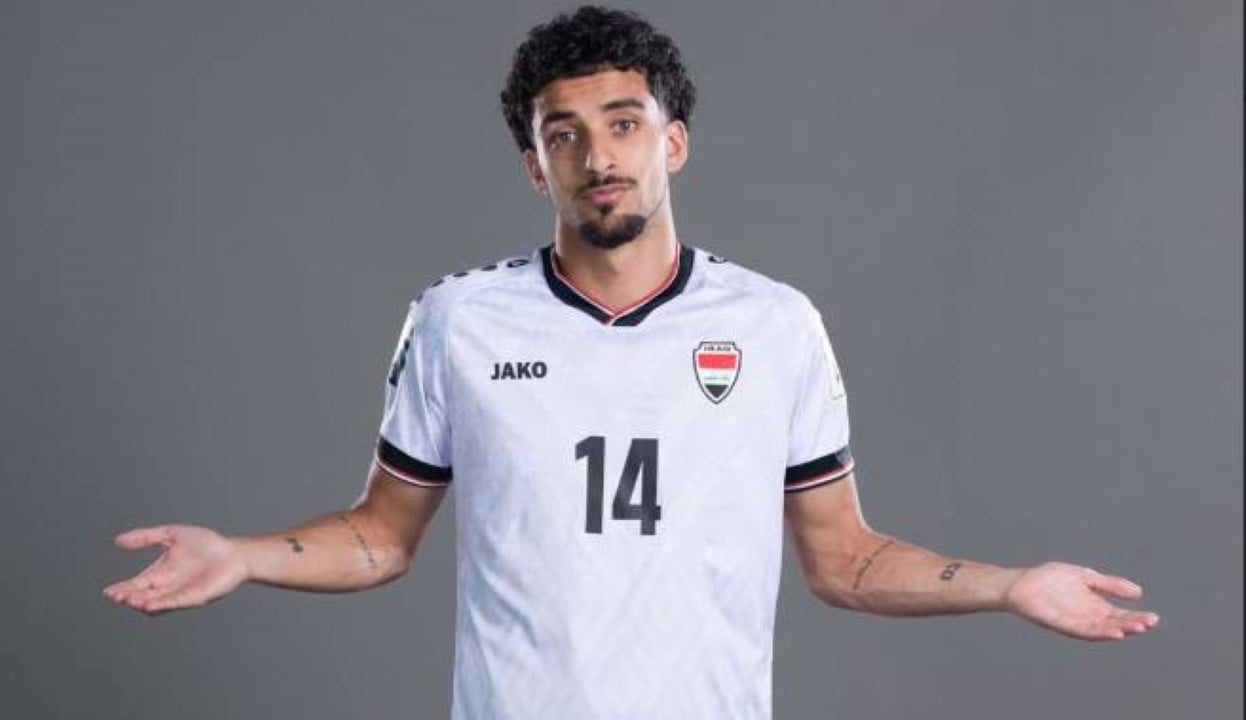
The world of football is preparing for one of the most symbolic and unexpected encounters, which promises to stir the emotions of fans and sports scholars. The Iraq national team will have a player named Zidane on the field when they face France. This athlete, of Iraqi origin, but born on English soil, bears in his name a tribute to one of the greatest icons of world football, Zinedine Zidane, top scorer for the French national team.
The coincidence becomes even more striking when considering that there are not just one, but two “Zidanes” with close ties to France on the international stage. In addition to the Iraqi midfielder, there is an Algerian goalkeeper, direct son of the legendary French star, who also stands out. This peculiarity highlights the global and lasting dimension of the influence of great names in sport, capable of transcending generations and cultural borders.
Iraqi player named Zidane prepares for clash with France
Zidane Iqbal, the young midfielder defending the colors of Iraq, is preparing for a high-profile duel against the French national team. Born in England on April 27, 2003, Iqbal’s roots are firmly linked to Iraq, the country he has chosen to represent on the international stage. The irony of his name is undeniable, given that he will carry the weight of a French legend while wearing the shirt of an opposing nation.
Expectations for the match, scheduled for June 22, 2026, are high, especially due to the storyline involving the athlete’s name. The presence of a “Zidane” in the rival team adds a layer of fascination and curiosity to the confrontation. Iqbal’s parents, inspired by the mastery of Zinedine Zidane, who at the time was at the height of his career and would be voted the best player in the world, decided to name their son in tribute to their idol.
The inspiration of a name that crosses borders and generations
The phenomenon of parents naming their children after sporting idols is a testament to the deep connection that football establishes with cultures around the world. In the case of Zidane Iqbal, the choice reflects not only admiration for an exceptional player, but also the universality of his impact. Zinedine Zidane, an Algerian-French, managed to capture hearts far beyond the borders of his homeland, influencing personal decisions in a home in England with Iraqi roots.
This type of tribute is common in several sports, but it takes on a special shine in football, where passion and admiration for great stars often manifest themselves in creative ways. Zidane Iqbal’s story is a vivid example of how a name can carry meanings and expectations, uniting different cultures under the umbrella of sport. It is a way of keeping alive the memory and legacy of talents that marked an era.
The different paths of the “Zidanes” on the world football scene
World football currently presents an interesting confluence of “Zidane” names, each with their own trajectory and challenges. In addition to Zidane Iqbal, who plays for Iraq and has English origins, there is also Luca Zidane, son of the legendary Zinedine Zidane. Luca, who plays as a goalkeeper for the Algerian national team, follows in his father’s footsteps in football, but in a position and with a different national identity from the French one that marked his progenitor’s career.
The existence of these two players, one by inspiration and the other by family inheritance, highlights the way in which an icon’s legacy can manifest itself. Zidane Iqbal faces the challenge of carving out his own identity on the pitch, carrying a name that evokes inevitable comparisons. Luca Zidane, on the other hand, deals with the pressure of being the son of a legend, seeking his own space and recognition in a completely different position. Both, however, are reminders of Zinedine Zidane’s vast influence.
The impact of sports legends across cultural borders
Zinedine Zidane’s career is a classic example of how genius in sport can transcend geographical and cultural barriers, inspiring millions on different continents. His unique skill and charisma on the field have earned him global icon status, far beyond the field. This impact is the driving force behind decisions such as naming a child after him, as happened with Zidane Iqbal.
The power of a figure like Zidane is not limited to trophies or broken records, but extends to his ability to shape popular culture and influence personal choices. The reverberation of his name in countries like Iraq and Algeria, where distinguished players now carry it, illustrates the depth of his relevance. It is a phenomenon that demonstrates how sport can create bridges between different peoples and traditions.
- 1998:Leads France to the World Cup title at home, scoring two goals in the final against Brazil.
- 2002:He won the UEFA Champions League with Real Madrid, scoring a memorable volley goal in the decision.
- 2006:Leads a discredited French team to the World Cup final, in a stellar individual performance.
- 2016-2018:As coach of Real Madrid, he became three consecutive champions of the Champions League, an unprecedented feat in the modern era.
Prospects for the confrontation between Iraq and France on the global stage
The duel between Iraq and France will not be just another football match; he will carry with him a rich and symbolic narrative, amplified by the presence of Zidane Iqbal. For the Iraqi team, the game represents an opportunity to prove themselves on the international stage and, for Iqbal, it is the chance to make his own mark, regardless of the weight of the name he carries. The visibility of the confrontation against a powerhouse like France is immense and could boost the young player’s career.
This encounter serves as a powerful reminder that football is more than just a sport; It is a tangle of intersecting histories, identities and legacies. The match between Iraq and France, with its peculiar “Zidane”, offers a fascinating glimpse into how the sport’s past and present can intertwine, creating unique and unforgettable moments for fans around the world. It is a celebration of the passion that drives football in its most diverse manifestations.