

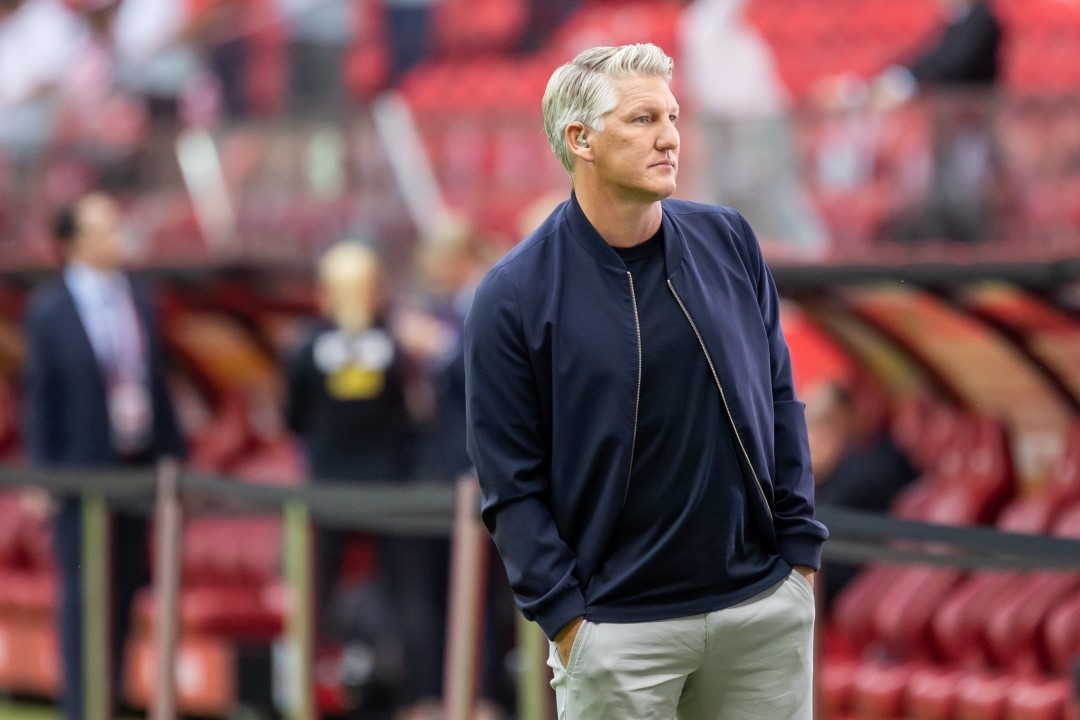
Former German national team player Bastian Schweinsteiger is at the center of a controversy after being accused of using racist stereotypes when describing the Ivory Coast team, Germany’s opponents in a recent World Cup clash last Saturday (20/06).
Acting as a commentator for German public broadcaster ARD, the German declared that Ivorian athletes played “African football”, characterizing it as “unorthodox”, “a bit wild” and, at certain times, “not so focused on tactics”.
The original word used by Schweinsteiger in German was “wild”, which can be translated as “savage” into Portuguese, but also encompasses broader or informal connotations such as rebellion, irreverence or lack of control.
The 2014 world champion even stated that the German team should prepare for a match that would be “unpredictable at times”.
To date, the former midfielder from clubs such as Bayern Munich and Manchester United has not publicly commented on what happened.
Debate about colonial roots in Schweinsteiger’s speeches
Schweinsteiger’s statements provoked a series of demonstrations on social media and in the traditional German press, with criticism accusing him of reinforcing racist and colonial clichés, which tend to reduce black individuals to supposed physical qualities, ignoring their intellectual capabilities.
The black German journalist Philipp Awounou, in a text for Spiegel magazine, stated that the characterizations of ‘wild’ and ‘unpredictable’ carry stereotypes with racist and colonial roots, preceding football itself. He detailed that, historically, black individuals of African descent have been stigmatized as uncivilized, unstandardized and even dangerous, revealing the persistence of a prejudice that continues to shape discourses in contemporary sport and requires constant vigilance.
In turn, sports content creator Patrick Schnitzler highlighted recent academic research that indicates a greater propensity for commentators and fans to emphasize physical attributes in black players, compared to non-black athletes.
“We learn these stereotypes because we grow up in a society that reproduces them,” he told his more than 50,000 Instagram followers. “Schweinsteiger too. You and me too.”
Awounou, who chooses not to directly label Schweinsteiger as racist, argued that the former player’s comments “reflect the opinion of many German football fans and experts”.

Ivory Coast’s solid tactical presentation in the match
The predictions made by the ARD commentator were not confirmed throughout the match on Saturday.
Especially during the initial stage, the Ivory Coast team demonstrated robust tactical organization against Germany. The team under the command of Julian Nagelsmann was forced to explore the sides of the field and limit themselves to crosses and long-range shots.
This performance is not a surprise, given that Côte d’Ivoire had a successful qualifying campaign for the World Cup and most of their players already play for important clubs in Europe. The African team created danger with counterattacks and opened the scoring with captain Franck Kessié, after a beautiful play by Yan Diomande, an RB Leipzig striker coveted by other clubs. Even so, Germany managed to win 2-1.
After the match, Schweinsteiger commented on his social media: “Ivory Coast were the difficult opponent we expected and demonstrated their technical and physical quality.”
Awounou, in his Spiegel column, concluded: “If I had to decide, I would say that the most ‘savage’ team in this game was us: the Germans”, suggesting that the least “orthodox” athlete on the field, notable for his physical and technical strength, was not Ivorian, but Felix Nmecha.
“A German. A black player. With Nigerian roots. Born in Hamburg. Grew up and trained in England. What does that tell us?”, asked Awounou. “That our world, and with it football, have become too global to determine qualities based on continent of origin or skin color.”