3-year-old child threatened with shooting by teacher at Military Brigade daycare center in Rio Grande do Sul
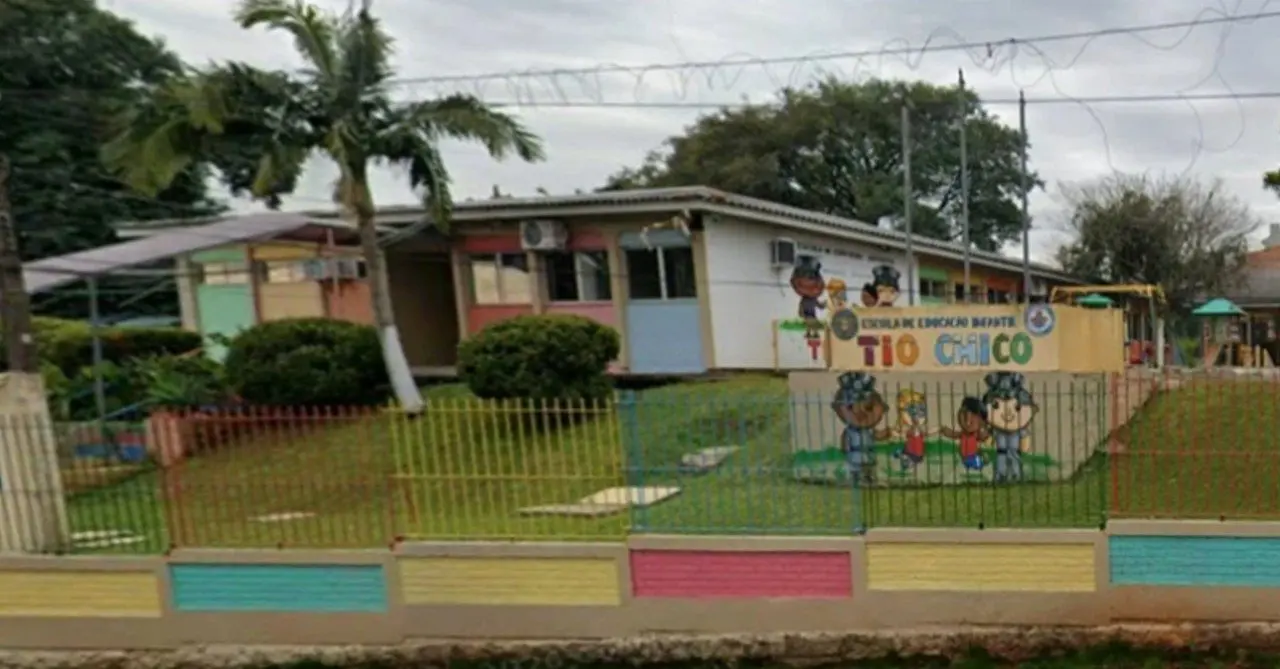
The unusual behavior of a three-year-old boy, who started waking up at night crying and asking about school, raised an alarm in psychologist Shaiane Costa.
The child’s persistent crying as he approached the Tio Chico Education School, located in Porto Alegre, raised suspicions among the mother. This institution, linked to the Military Brigade of Rio Grande do Sul, offers free education for children of brigade members between the ages of two and six.
The mother reported that little Pedro, a fictitious name to protect his identity, came home mentioning punishments and repeatedly apologized for any mistake. If, for example, he dropped a glass of water, the child would apologize insistently. The crying visibly intensified upon arrival at school.
The last straw for Shaiane was witnessing another day in which Pedro was taken inside the school in tears and jumping, without her being able to access or accompany her son.
With the situation untenable, the next day, Shaiane decided to put a recorder in the boy’s backpack.
Initially, Shaiane stated that she had no reason to worry about the institution where her son stayed during part of the day.
To enter school, the family waited for the boy to reach two years of age, the minimum age for enrollment, and was approved in a selection process whose admission criteria they were unaware of.
After the initial period of adaptation, Pedro began to get used to the environment and form bonds of friendship.
However, certain incidents at school, such as the day the boy returned with an inexplicable bite on his arm, caused discomfort for the mother.
When asked whether Pedro had reported the incident to the teacher, he replied that he had not, as she would be busy with other children and, for that reason, he preferred not to speak.
“I couldn’t understand. How is it possible that no one noticed that bite?”, expressed the mother.
When seeking clarification from the teacher, Shaiane was informed that what had happened had not been seen by anyone and that the boy did not appear to have cried.
“We consider the situation strange. A bite like that would certainly cause pain, and it is natural for a child to cry,” he commented.
Among the events that alarmed the family, there was also the day when Pedro returned with a high fever, without his parents being alerted in advance by the school.
On another occasion, Pedro arrived home with a severe rash that made it difficult for him to move around.
The mother reported that in none of these incidents did the educational institution demonstrate knowledge of the facts.
“Small situations like these piled up, and it seemed like no one was paying attention,” said Shaiane.
Attempts to contact the school, according to the mother’s version, often resulted in frustration.
“I have several records of messages sent to the teacher, who always minimized the incidents,” he declared. “There was no acceptance on their part, just responses like ‘ah, this happens, it’s normal’.”
“I sent messages to the sergeant, who plays the role of school coordinator, and I didn’t get a response,” he added. “I felt completely ignored.”
In the following months, Shaiane noticed that her son’s first question when he woke up was about the need to go to school. After a positive confirmation, he spent the morning in silence at home.
“He didn’t play, he showed a lack of energy and disposition. It seemed like he had been waiting all morning for a moment of suffering,” the mother described.
With the lack of communication from the school and the worrying incidents, Shaiane decided to use the recorder.
That day when the device was placed in his backpack, the boy returned home with a hoarse voice.
“He could barely speak, and I remember texting my husband saying ‘he’s got a cold,'” she recalled.
Soon after, the mother listened to the recorded audio.
“It was a shock,” she said.
Excerpts from the recording, obtained by press outlets, reveal the boy crying, asking for his pacifier and crying out for his mother.
Leia Também

Messi reaches 19 goals in FIFA World Cups with great free kick for Argentina in clash with Jordan

Cristiano Ronaldo shines beyond the pitch at the 2026 World Cup with business empire and family luxury

At 41, Cristiano Ronaldo reaffirms his historic legacy and prepares to shine in the 2026 World Cup
“My son screamed for approximately 40 minutes and ended up calming down on his own, as there is a point in the recording where he says ‘I calmed down'”, Shaiane narrated. “He was completely neglected.”
In one part of the audio, a female voice is heard telling the boy, “What are you doing? You’re not going to paint anymore,” and the boy responds, “I’m sorry.”
The woman then declares: “No, you’re not going to paint anymore, it’s over. I love painting and I will.” The boy starts crying, calling for his mother, and the woman replies: “Don’t say ‘mommy'”.
An even more alarming fragment of the recording revealed the voice of a woman saying: “Cry, you can cry, cry a lot, cry like you want to. If you don’t, I’ll shoot you.”
“The recording constantly records noises, and I hear my son screaming and asking for his mother”, reported Shaiane.
“It is clear, then, that that day he arrived home hoarse not because of a cold, but because of intense crying”, concluded the mother.
Questions about treatment and institutional response
The events described took place the previous year. Shaiane and her husband approached the Public Ministry of Rio Grande do Sul (MPRS), which instructed them to formalize a complaint with the Rio Grande do Sul Military Brigade Internal Affairs Office.
In a statement, the press department of the Military Brigade confirmed the opening of an inquiry to investigate the facts, mentioning the removal of Pedro’s teacher during the investigation.
However, the server returned to her duties before the investigation was completed. According to Shaiane, other parents of students organized a petition requesting the professional’s return.
“There were attempts to silence us. In fact, a mother published an excerpt of the confidential process in a WhatsApp group”, reported Shaiane.
The note from the Military Brigade indicated that the expert report, conducted by the Internal Affairs Department itself, concluded that “the files analyzed did not have sufficient technical elements to fully confirm the content disclosed, nor did they enable the conclusive identification of vocal authorship.”
The document also states that, “based on the evidence collected, including statements and the expert report, sufficient elements were not found to prove a criminal offense or disciplinary transgression.” The conduct of the investigation by the military institution itself, responsible for the school, raised questions about the impartiality of the process in the face of a mother’s complaints.
Contradictorily, statements from two school employees, who appear in the process, revealed that both recognized the voice in the recording and identified Pedro’s teacher.
Despite the Brigade’s claim about the lack of evidence, the teacher was dismissed from the school at the end of the year, without an official explanation for her departure from the position being released.
The Brigade stated that “it is not the institution’s responsibility to make public individualized information relating to civil servants or employees”.
When asked whether the teacher recognized the speeches in the audios, the institution declared that “it is not authorized to disclose statements, statements or positions attributed to individuals involved in administrative or investigative procedures”.
Regarding Shaiane’s frustrated attempts to dialogue with the school, the Brigade assured that it “maintains permanent channels of communication with families and deals seriously with all demands received”. However, the corporation did not confirm or comment on “specific facts”, citing data and information protection.
The Internal Affairs investigation requested that the case be archived in the Rio Grande do Sul Military Court, but the process remains ongoing.
The mother is currently waiting for the MPRS to conduct its own investigation. An investigation is open at the prosecutor’s office, but additional information about the procedural progress was not obtained by the report with the press office or the responsible prosecutor.
Since the beginning of this year, Pedro has been enrolled in a new private educational institution, where he has already established new friendships and is looking for a more relaxed routine. Shaiane reveals that he still shows fear behind closed doors and continues to apologize excessively for small mistakes.
“The boy panics about closed doors, as he reported that he was locked in the sergeant’s office as a form of punishment”, explained Shaiane. “Although the school has always denied it, a document sent during the process confirmed, with date and time, his presence in the coordinator’s office.”
“I wonder why a child of just two and a half years old was taken to the sergeant’s office”, asked the mother.
The boy still presents some emotional triggers whose exact origin the parents cannot completely identify. “This is precisely due to the lack of knowledge of everything that really happened”, he commented.
Shaiane hopes that time and therapeutic support will help her son overcome part of what happened.
She, however, claims that she cannot forget.
“The recordings, which only cover a single day, are a sample that haunts me deeply, as we constantly ask ourselves: what else could he have faced?”, concluded the mother.