

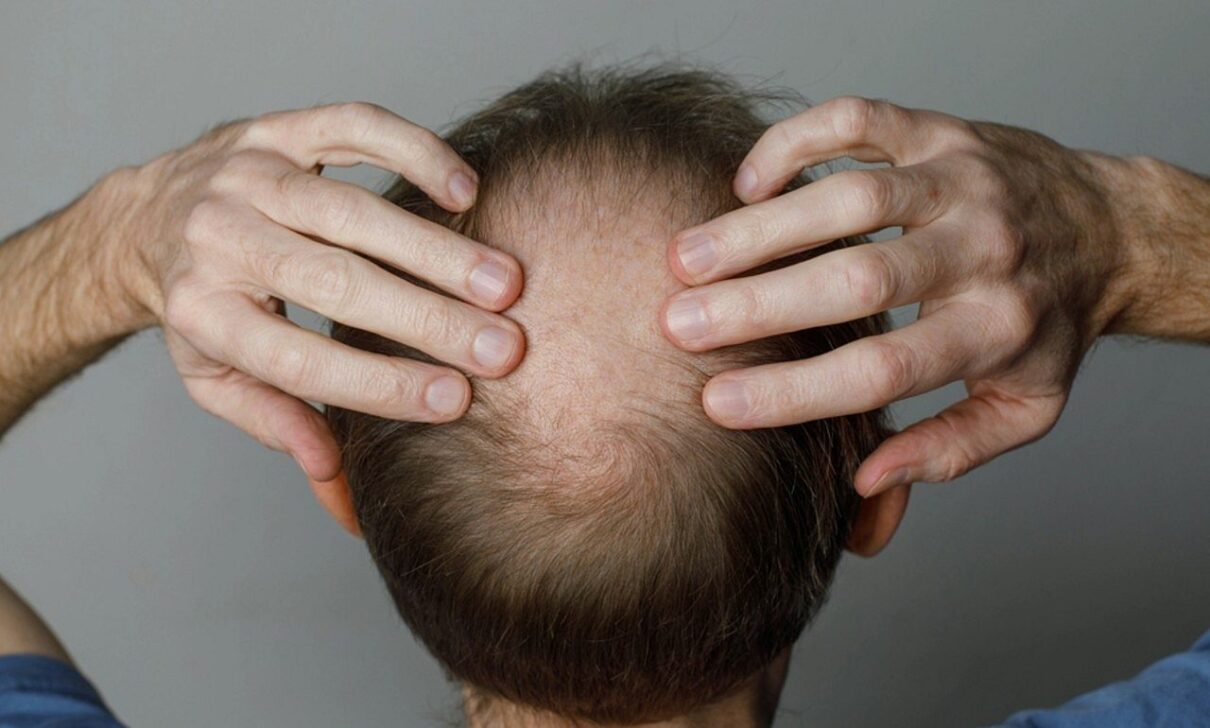
New hope emerges for millions facing baldness, with a drug in trials showing remarkable performance. The experimental treatment, focused on androgenetic alopecia — the most common cause of hair loss in both sexes — showed promise in large-scale clinical research, being seen by experts as a significant milestone in years.
The significance of this finding is amplified by the stagnation in the sector. Hair loss treatment options available on the market have remained virtually unchanged since the 1990s. Even with developments in techniques and compositions, a new, targeted oral therapy for the condition has not been launched since then, making this announcement even more relevant.
Attention now turns to VDPHL01, a compound created by the company Veradermics. This medication consists of an advanced formulation of minoxidil, designed for extended release in the body.
Features that differentiate VDPHL01 in the treatment of baldness
Minoxidil is an active ingredient already known and widely used to combat hair loss, especially in its topical form. Recently, dermatologists have adopted the prescription of low oral doses, however, their use is still considered “off-label” in several countries. One of the biggest obstacles to conventional oral minoxidil, originally developed to treat hypertension, has always been the potential adverse effects on the cardiovascular system.
Veradermics’ VDPHL01 compound appears as a solution to this issue. According to the biopharmaceutical company, its technology aims for continuous delivery of the medicine throughout the day, preventing abrupt increases in blood concentration often associated with heart problems.
A significant additional advantage is the non-hormonal nature of this new therapy. Unlike finasteride, which inhibits the production of the hormone DHT — one of the main causes of hair thinning — VDPHL01 can be safely administered to patients of both sexes.
VDPHL01 Efficacy Research Protocol Details
The data presented in April 2026 correspond to the initial stage of a phase 2/3 clinical research. This study involved a group of 519 men who had mild to moderate androgenetic alopecia.
For the analysis, participants were divided into three distinct categories: one group received 8.5 mg of VDPHL01 once a day; another, the same dosage twice a day; and the third group used a placebo.
At the end of six months of follow-up, it was found that volunteers treated with the drug demonstrated notably superior hair growth compared to those who received only the placebo.
The results showed an average increase of 30.3 hairs per square centimeter for the once-daily dose group, and 33 hairs per square centimeter for the two-dose group. In contrast, the placebo group recorded an increase of just 7.3 hairs per square centimeter.
The subjective assessment of the participants themselves also highlighted the effectiveness of the treatment. Approximately 79% of patients receiving one daily dose, and 86% of those receiving two daily doses, reported a visible improvement in their hair coverage. In the group that took placebo, this positive perception was around 36%.
Furthermore, the researchers noticed the emergence of new hairs in the initial months of treatment, suggesting that the compound acts relatively quickly.
According to information from Veradermics, the medication demonstrated good tolerance among participants. There were no reports of serious adverse effects directly linked to the therapy, nor were heart problems identified that raised concerns during the research. Dropouts due to side reactions were also similar to those observed in the placebo group.
Although the results are promising, it is essential to highlight that the current data was presented by the developing company itself. They still require rigorous analysis by the scientific community and approval from regulatory bodies, such as the Food and Drug Administration (FDA) in the United States.
Predictions for commercial availability of VDPHL01
The newly released research constitutes just one phase of the drug’s clinical development process. Currently, a second phase 3 trial, which includes men, is ongoing and its results are expected in 2026. At the same time, the company is looking for volunteers for a study dedicated specifically to androgenetic alopecia in women.
If future results confirm the safety and efficacy already observed, Veradermics plans to file a request for regulatory approval in the United States in 2027. As a result, the drug could be launched on the market between the end of 2027 and the beginning of 2028.
Does VDPHL01 represent a permanent cure for hair loss?
For now, the answer is no. Despite the enthusiasm generated by the results, VDPHL01 remains a treatment in the testing phase. Research points to the ability to stimulate hair growth and expand existing therapy options, especially for women, who today have a more limited range of medications.
However, it is premature to say that this is a permanent cure. Androgenetic alopecia is a chronic condition, shaped by hormonal and genetic influences, and generally demands a continuous therapeutic approach to preserve the benefits achieved.
What the current data indicates, in itself, is already a major advance: the promise of an unprecedented oral medicine, designed specifically for the treatment of hair loss. This new compound demonstrates solid efficacy and an encouraging safety profile — a leap that has not been seen in the field for nearly three decades.