

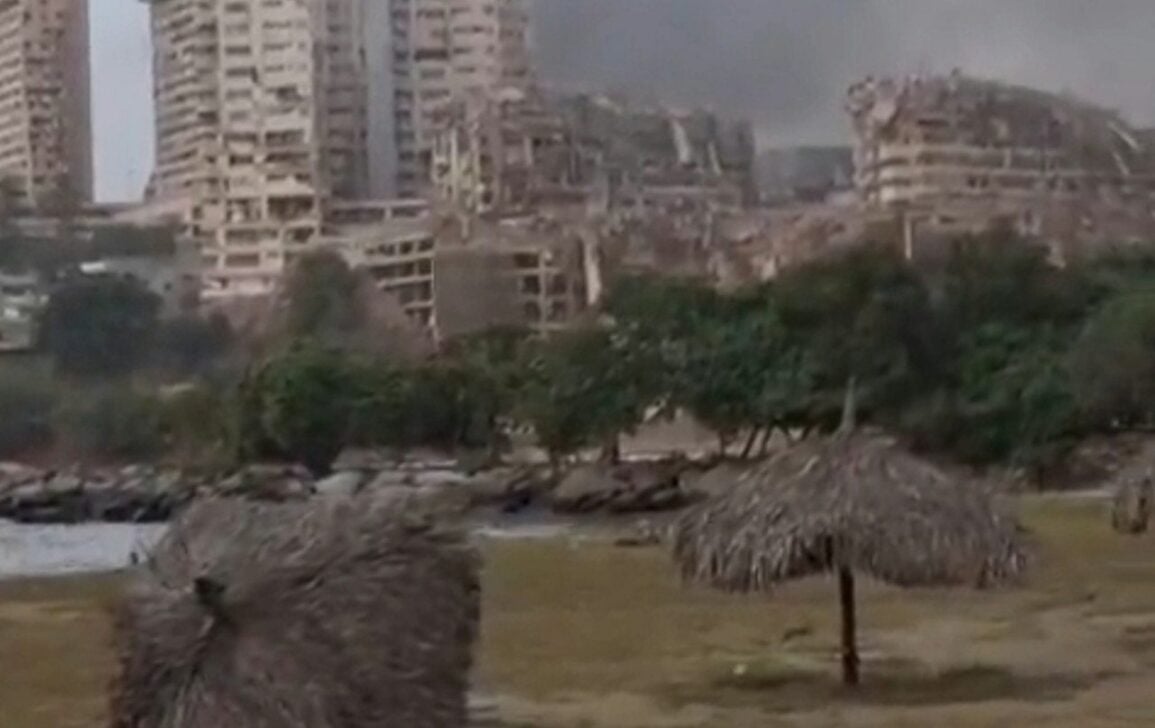
The capital of Venezuela, Caracas, suffered catastrophic damage after being hit by two strong earthquakes on the night of June 24, 2026. The tremors, which registered magnitudes of 7.5 and 7.2 on the Richter scale at around 11:03 pm (Brasília time), generated a frightening forecast from the United States government, which projects between 10,000 and 100,000 fatalities. The strength of the geological phenomenon was so significant that the impacts crossed the border and could be noticed in the northern region of Brazilian territory, especially in the state of Pará.
To date, the Venezuelan public administration has not released an official report on the total number of deaths or injuries. Emergency teams work tirelessly on the streets of Caracas to try to locate people trapped under collapsed structures. The scenario of destruction takes on even more dramatic contours due to the lack of clarity regarding the real number of missing people, posing a logistical and medical challenge without recent precedents in the neighboring country.

Projection of fatalities in Venezuelan territory sparks global alert
The calculation released by American agencies highlights the level of devastation caused by geological events in the metropolis. The severity of the situation can be explained by some crucial factors observed by seismology experts:
- The estimate of human losses varies drastically between 10,000 and 100,000 people, indicating an urban collapse.
- The almost simultaneous occurrence of two earthquakes of magnitudes 7.5 and 7.2 generated a lethal sequence of shocks.
- The violent repetition of the tremors compromised the foundations and caused the mass collapse of commercial and residential buildings.
As Caracas is home to an extremely dense population, the risk of a high number of casualties increases considerably. Rescue professionals face an environment of extreme disorder, fighting against time to remove pieces of concrete and twisted iron in the hope of finding survivors. While the world waits for concrete data from the local government, international anguish grows at the images of entire neighborhoods reduced to dust.
The wide margin in the American estimate demonstrates how difficult it is to measure the immediate impact of a tragedy of this scale. The vulnerability of local infrastructure is aggravated by the city’s location, located right in the interaction zone between the Caribbean and South American tectonic plates, which increases damage from intense earthquakes. Faced with this geological and structural reality, leaders from several countries have already begun to mobilize technical resources and humanitarian aid to assist in relief operations.
Shock waves reach Brazil and scare residents of Pará
The impact of the Venezuelan disaster was not limited to the country of origin and invaded the air and land space of the northern region of Brazil. Citizens living in Belém and the municipality of Santarém experienced minutes of intense apprehension and quickly shared recordings of what happened on digital platforms. The fact that the seismic waves traveled thousands of kilometers to Pará proves the extreme magnitude of the energy released underground.
Initially, many Brazilians believed that the epicenter of the tremor was in their own backyard, which led people to look for escape routes. Reports indicate that heavy furniture, ceiling lamps and appliances shook violently inside the apartments. As the population of Pará is not used to dealing with this type of instability on the ground, the immediate reaction was to abandon closed spaces in search of open, safe areas.
Audiovisual records captured by cell phones show the psychological shock suffered by those who witnessed the atypical movement. Even without the record of landslides on the Brazilian side of the border, the episode left a deep mark on collective memory. Feeling the earth shake at such a great distance from the main focus reveals how South American geological faults can transmit powerful vibrations even to areas classified as low risk.
Preventative evacuation action ensures safety in Santarém
The mobilization in Santarém occurred quickly, demonstrating the preparation of public security teams for atypical scenarios. As soon as they noticed the walls and windows wobbling, residents of at least four vertical condominiums chose to vacate the units in an orderly manner. This precautionary attitude was essential to avoid injuries during the period of greatest tension on the city’s streets.
Fire Department vehicles quickly arrived at the affected addresses to conduct a thorough sweep of the structures. After a rigorous analysis of the pillars and foundations, the military confirmed that there were no cracks or compromises that would put people’s lives at risk. With the favorable technical report, the families were released to return to their homes, ending the morning of uncertainty.
The success of the operation in the interior of Pará serves as a model of how correct guidance can minimize danger during unexpected crises. The relief of finding buildings intact in Brazil creates a painful contrast with the reality of rubble faced by Venezuelans. The episode reinforces the need to keep evacuation plans up to date, proving that prevention remains the best tool against the force of nature.
Regional impacts and the need for unity between neighboring countries
The catastrophe that destroyed part of Venezuela and shook Brazilian soil makes it clear that geological phenomena ignore dividing lines on political maps. The South American continent has a complex rock formation, and shocks of this proportion show how fragile society is in the face of the planet’s movement. The physical connection between nations means that the suffering of a territory is immediately felt and shared by the surrounding countries.
Dealing with the prospect of one hundred thousand lives lost goes beyond the barrier of statistics and enters the field of a global health emergency that will require years of work. Cleaning up the debris, rebuilding hospitals and housing the homeless will require a massive injection of capital and labor. While Caracas mourns its losses in the epicenter of the disaster, Brazil, which felt the physical reflection of the tragedy, positions itself as a fundamental ally in sending support and solidarity.
This entire situation highlights the urgency of creating joint seismic monitoring protocols between South American governments. Having the ability to anticipate risks and act in a coordinated manner saves lives and accelerates the reconstruction of devastated areas. The swinging of the lamps in the houses of Pará will be recorded not only as a shock, but as a physical reminder of the immense pain that gripped the border nation.