

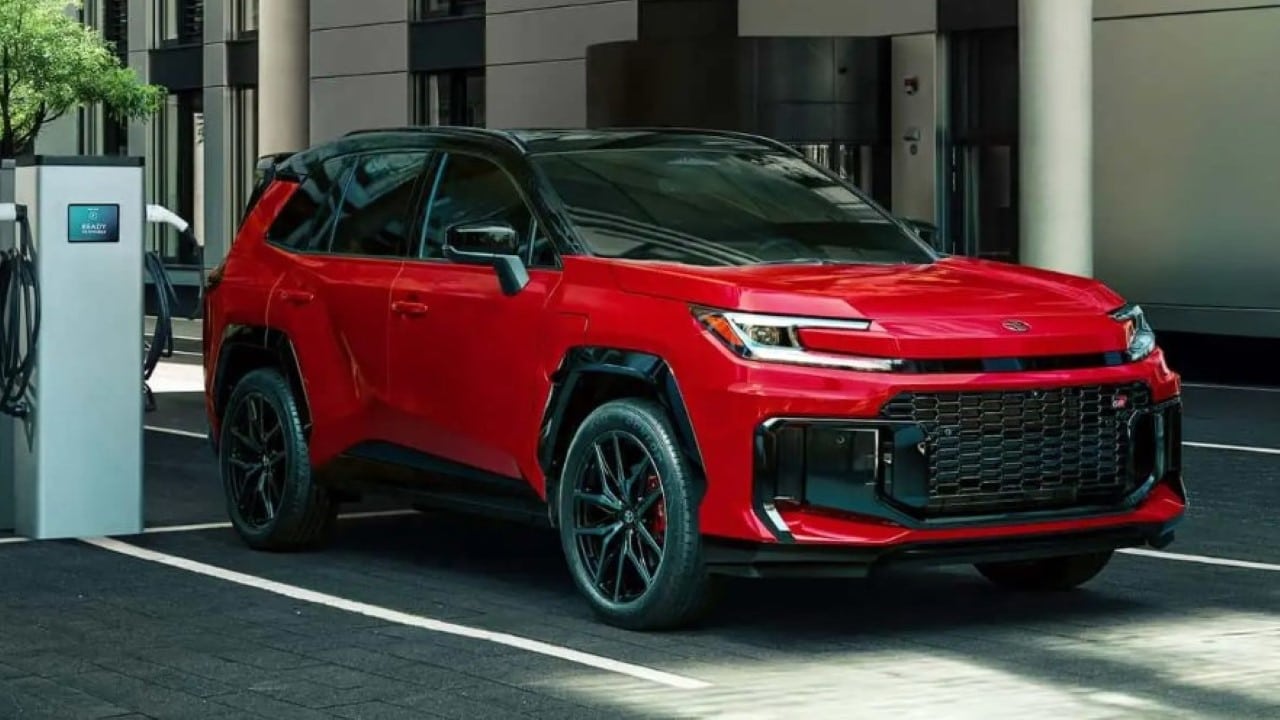
General Motors is faced with a challenging scenario: Toyota has a real chance of regaining its position as sales leader in the United States. The Japanese automaker’s growth is significantly driven by high demand for its vehicles that combine gasoline and electric engines.
Projections from research firm Cox Automotive indicate that Toyota could see its market share grow to 15.8% in the first half of this year. On the other hand, GM’s share could register a drop of almost one percentage point, reaching 16.8%. If consumers maintain their preference for more fuel-efficient cars, Toyota could become the largest car seller in the US by 2024.
For Charlie Chesbrough, senior economist at Cox, “Toyota has a chance” of reaching that mark. He points out that, although it is not yet the official forecast, the trend is viable, as “consumers are interested in hybrids, and GM cannot compete.”
Chesbrough, however, believes that General Motors will not remain passive. “They will use incentives to try to maintain their leadership,” declared the expert.
An eventual overcoming of Toyota over General Motors in its own territory would represent a change of historic proportions. GM has held market leadership since 1931, when it overtook Ford Motor Company, having lost the position only once, in 2021, due to an atypical global semiconductor crisis.
The potential reversal of positions would also highlight the consequences of CEO Mary Barra’s risky bet on fully electric vehicles, to the detriment of hybrid models, given that the majority of American consumers have shown resistance to the complete transition to electric.
GM spokesman Jim Cain refuted the idea that the automaker would step up incentives to maintain a lead over Toyota. The company argues that it has avoided large discounts as part of its strategy to maximize profit and cash flow, keeping incentives below the sector average over the last three years.
“Our track record speaks for itself in terms of discipline in production, pricing and incentives,” assured Cain.
A Toyota representative did not immediately comment on the possibility of the company taking over sales leadership in the United States.
The growing strength of hybrid vehicles in the market
Until the month of May, sales of Toyota’s electrified vehicles — which include battery-electric models, but are predominantly hybrids — recorded growth of 5.6%, while the overall market is expected to contract this year.
In contrast, the full-size pickup and SUV sector, where GM and Ford have a strong presence, has seen declining sales, especially after the war with Iran pushed the average price of gasoline to nearly $4 per gallon.
This week, Toyota began manufacturing the new version of the RAV4, its best-selling model, which will now be sold exclusively as a hybrid. Production takes place at the automaker’s factory in Lexington, Kentucky.
To meet the high demand for the compact SUV, the Japanese company plans to increase production in the US by 100,000 vehicles this year, complementing imports from Canada and Japan, according to Kerry Creech, president of Toyota Motor Manufacturing Kentucky.
“Our acceleration will be very rapid”, assured Creech, adding that production will be “fully scaled in 30 days” after applying the knowledge acquired in the previous manufacture of the RAV4 in the Canadian operation.
Toyota offers hybrid versions of more than 20 models in the US, while GM only has the electrified Corvette. Ford, in turn, offers hybrids only in variants of the Maverick, the F-150 and the Lincoln Nautilus SUV.
“Toyota has maintained that you need a broad portfolio,” said Chesbrough. “They have medium, compact cars. The Detroit Three are focused on more specific vehicles.”
General Motors made its big bet on electric vehicles during a period of strong growth in Tesla sales and shares, and tightening of emissions regulations globally. For GM, hybrids were seen as a high-cost intermediate solution, leading Barra to focus more intensely on all-electric models.
“For electrics, this pleased Wall Street,” said Stephanie Valdez Streaty, director of industry insights at Cox. “The idea was to achieve a valuation like Tesla.”
Ford also faces the risk of losing third place to South Korea’s Hyundai Motor Company, which offers several hybrid models. Cox projects Ford’s market share to fall to 12.6% in the first half of 2026, while Hyundai’s is expected to rise to about 11.7%.