

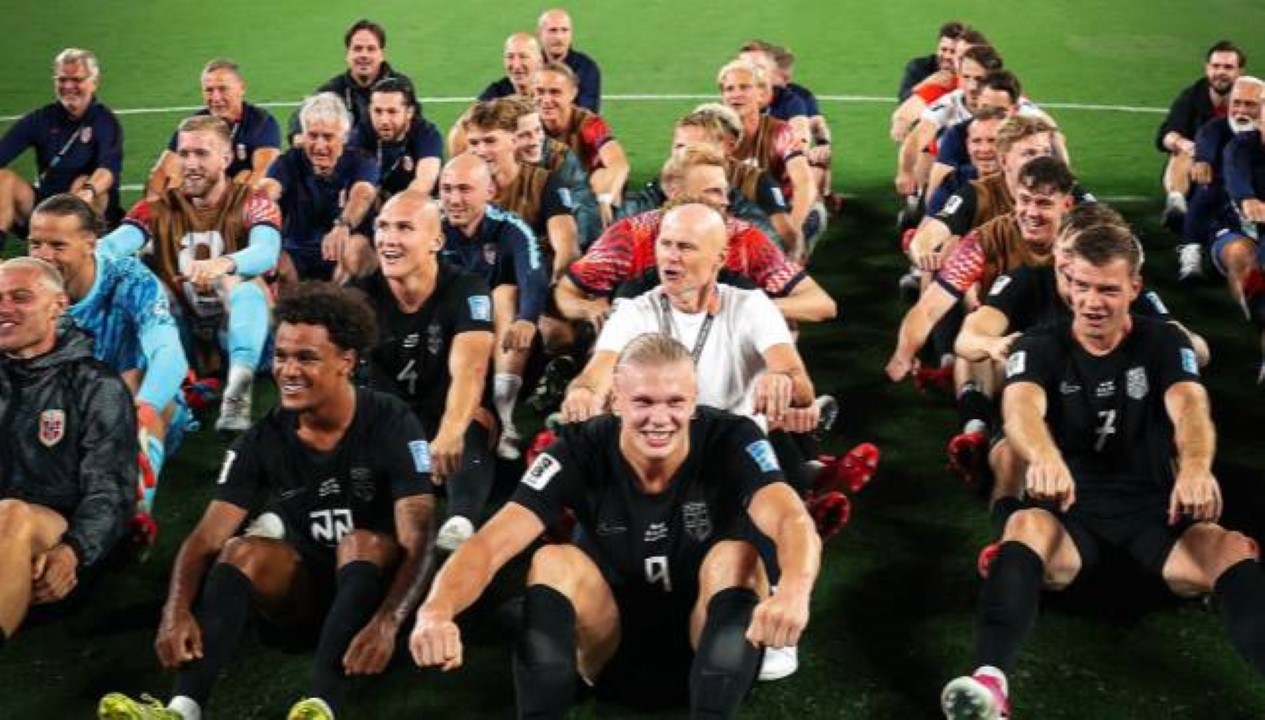
Recently, a peculiar celebration by Norwegian fans at a sporting event rekindled popular imagination about the Vikings, with simulations of rowing in ancient boats. This depiction, which echoes the strength and seafaring traditions of the Norse people, is a constant reminder of how the Vikings are etched into the culture. However, recent scientific discoveries are beginning to rewrite this history, challenging deep-rooted conceptions about the true identity of these explorers and warriors.
Uncovering the identity of ancient Norse people
Historically, the Vikings were known as people from Scandinavia – a region that encompasses Denmark, Sweden and Norway. They were notable for their expeditions between the 8th and 11th centuries AD, a period known as the Viking Age, alternating between agricultural activities in the spring and plundering and trading expeditions in the summer. Although often associated with war, many were also skilled farmers, growing cereals such as barley and vegetables such as cabbage and turnips.
The daily lives of these people were rich in culture, with art playing a significant role. Jewelry, for example, was not only ornamental but also expressed religious affiliations. The use of amulets, such as the hammer of Thor, god of thunder and protector of order, was common among them, indicating a strong connection with their mythological beliefs.
The vast trade and exploration routes of the Vikings
Far from being just invaders, the Vikings were also excellent traders and navigators, who expanded their influence across vast regions. Their trade routes extended across Europe, combining plundering expeditions with exchanges of valuable goods. A notable example is the Volga River route in modern-day Russia, which connected northern Europe to the Arab and Byzantine worlds, allowing the acquisition of items such as salt, dyes and spices in exchange for honey, furs and even enslaved people.
The Vikings’ navigational ability was revolutionary for the time, a key factor in their long voyages and reach to distant lands, including North America in the late 10th century. Their ships were masterpieces of naval engineering, designed for speed and to navigate shallow waters, such as rivers, with little resistance. For orientation, they used instruments such as the “solar compass” and even crystals, which helped them determine the direction of the sun even in foggy conditions, facilitating the return to their homelands or other previously explored locations.
Genetic research deconstructs the myth of the blond, blue-eyed Viking
The popular image of Vikings as fierce, invariably blond, blue-eyed warriors has been significantly shaken by recent scientific studies. International research conducted by evolutionary geneticists, including Professor Eske Willerslev of the universities of Cambridge and Copenhagen, has revealed much greater ethnic diversity among these peoples than previously imagined.
For six years, the team analyzed the DNA of 442 Viking Age individuals, extracted from remains found at more than 80 archaeological sites. By comparing this genetic material with that of thousands of people from ancient and modern times, researchers came to surprising discoveries:
- Diverse origins:Viking genes were not restricted to Scandinavia, showing an ancestry that included people from southern Europe and Asia.
- Varied physical appearance:Far from the stereotype, the presence of blonde hair and blue eyes was less common in the Viking Age than it is today in Scandinavia.
- Genetic mix:The Vikings’ extensive trade and exploration routes, which ranged from Canada to Afghanistan, promoted significant miscegenation. This interaction with other cultures has resulted in a wide range of physical appearances.
Martin Sikora, also from the University of Copenhagen, noted that there was no genetically homogeneous group, indicating great diversity within the Viking population itself.
The concept of “Viking” as a lifestyle and not an ethnicity
The conclusions of genetic studies point to a fundamental redefinition of what it meant to be a Viking. Viking identity, according to research, was not linked to a specific genetic or ethnic origin, but rather to a shared lifestyle. Eske Willerslev, project leader, emphasizes that “the Viking phenomenon is not something Scandinavian, in the sense that it is not ethnicity that determines whether someone is a Viking or not. It is a lifestyle.”
This perspective is reinforced by the observation that there were Vikings who did not have Scandinavian genes, actively participating in the expeditions and culture of that period. Furthermore, the research details the preferred routes of different Viking groups: the Danes went mainly to England, the Norwegians explored Ireland, Iceland and Greenland, while the Swedes concentrated their activities in the Baltic Sea. These discoveries not only change historical understanding, but also challenge the way collective identity is constructed and perceived over time.