
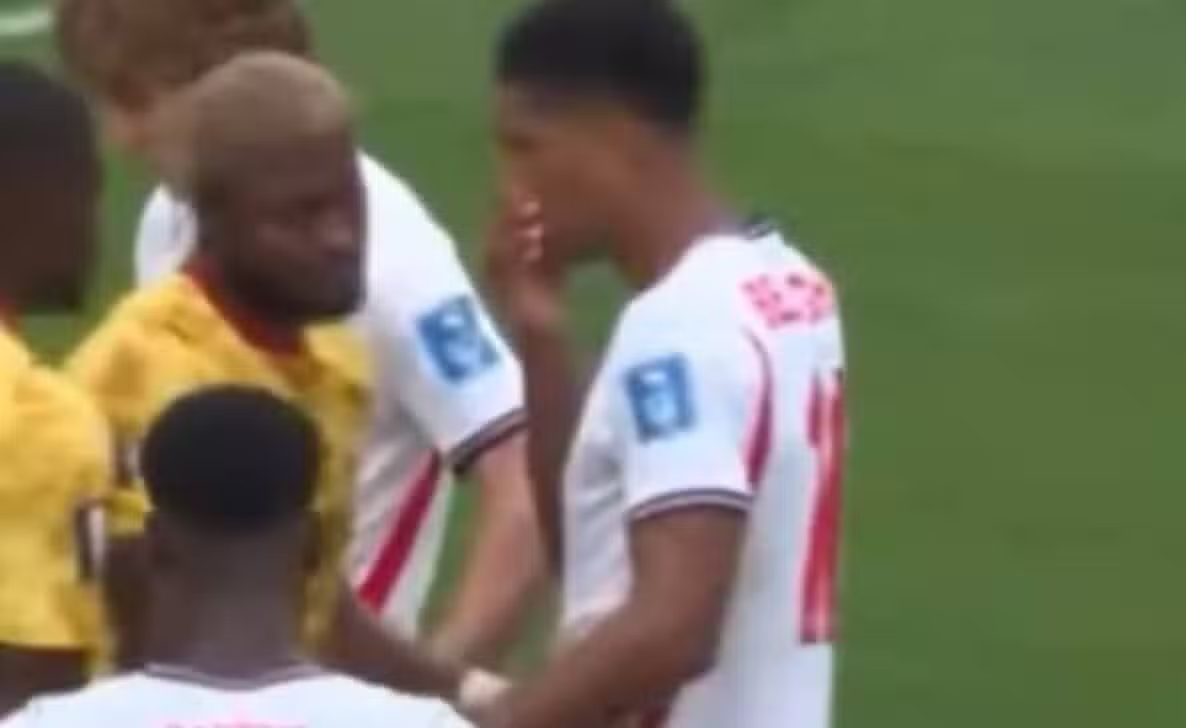
England midfielder Jude Bellingham was not warned even after covering his mouth on the field during the goalless draw against Ghana, last Tuesday, in the World Cup. The situation raised questions about the application of the so-called Vini Jr. Law, but the arbitration decision was based on the analysis of the specific context of the dialogue.
Understand the FIFA regulations that inspired the Vini Jr Law.
The updated guidelines from the International Football Federation (FIFA) establish sanctions for athletes who cover their mouths in moments of friction, heated debates or provocations on the field. This measure aims to prevent possible verbal attacks from going unnoticed by the capture of images and the refereeing team, seeking greater transparency and curbing racism in football.
The specificity of the episode involving Bellingham on the field
Covering the mouth alone does not result in an immediate expulsion. In the match with Bellingham, the dialogue with player Jordan Ayew was not characterized as a confrontation, leading to the decision not to issue a red card to the England athlete.
The interpretation of the rule lies in the nature of the gesture and its purpose. A clear example was the expulsion of Miguel Almirón, a Paraguayan striker, in a match against Turkey. He was punished with a straight red card, after VAR analysis, for covering his mouth while arguing heatedly with an opponent.
Before the competition even started, the president of the FIFA arbitration committee, Pierluigi Collina, had already detailed how the new rule would be used.
“If the dialogue is of a friendly nature, the athletes can continue with the gesture without any complications”, declared Collina, reinforcing the subjective criterion of arbitration.
Details about Miguel Almirón’s punishment
The repercussion of the Bellingham case was intensified by the fact that Miguel Almirón was the first to receive a sanction based on the Vini Jr. Law during the current World Cup, days before. His expulsion occurred in Paraguay’s 1-0 victory over Turkey for covering his mouth in an altercation with a rival, resulting in a FIFA suspension that ruled him out of the final round of the group stage.
This episode set a crucial precedent for understanding the new regulations, as the punishment was meted out in an explicit confrontational scenario, a direct contrast to Bellingham’s interaction in the clash against Ghana.