

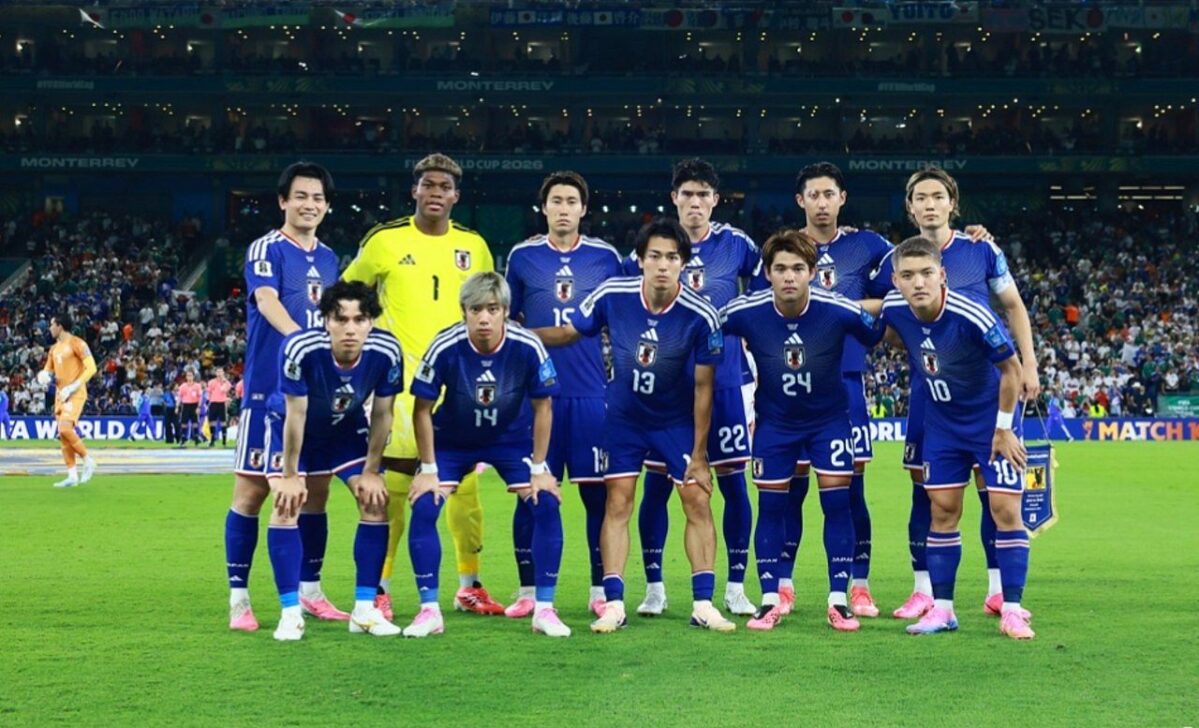
The Brazilian team secured top spot in Group C after an impressive 3-0 victory over Scotland in the group stage. Now, the focus turns to the next opponent in the second phase of the 2026 World Cup, with the definition depending directly on Group F, which includes Japan, the Netherlands and Sweden. According to “Bola de Cristal”, GLOBO’s predictive tool, the Japanese emerge as the most likely confrontation for Brazil, with a 46.01% chance.
This specialized platform offers in-depth analytics to understand team performance. It projects Brazil’s possible paths, also indicating a 39.71% probability of a clash against the Netherlands and 14.28% for Sweden.
Professor Gilcione Nonato Costa, from the Department of Mathematics at UFMG and creator of the tool, details the logic behind the projection. He explains that the Netherlands, current leaders of their group, will face Tunisia, a team that has already been eliminated. This paves the way for Japan, who, by drawing or beating Sweden, should secure second place in Group F, placing them directly on the path of Brazil, leader of Group C.
There is also the possibility of the Brazilian team crossing paths with the Netherlands, a scenario that would materialize if Sweden beats Japan and the Dutch do not confirm their favoritism against Tunisia, changing the group’s leadership. The professor also mentions a more remote chance of facing Sweden, depending on complex combinations of results and goal difference tiebreakers in Group F.
In all scenarios analyzed, the Brazilian team displays a considerable statistical advantage. Against Japan, the odds indicate a 38.06% victory in regulation time, a 28.26% defeat and a 33.68% draw. The confrontation with the Netherlands presents a greater balance, with a 35.00% victory for Brazil, a 31.41% draw and a 33.59% Dutch victory. Against Sweden, the forecast is more favorable to Brazil, with a 44.89% chance of victory, 29.51% of a draw and a 25.60% chance of defeat for the Swedes.
Brazilian team’s journey to the World Cup
Brazil’s trajectory in the round of 16 can vary greatly depending on the configurations of the other half of the group. The most consistent projections indicate possible clashes with Norway (20.77%) and Ivory Coast (20.08%). Soon after, France (10.88%) emerges as a potential opponent, followed by teams such as Curaçao and Ecuador on more distant routes.
In the quarterfinals, the level of demand tends to increase significantly. Mexico (9.92%), one of the competition’s host countries, and England (6.04%) appear as the most likely duels. However, there are also possibilities of confrontations with Scotland, Croatia and Senegal, although with lower percentages in the projections.
For the semifinals, the predictive model again points to a balance between the European powers. Germany (3.02%) and France (2.56%) lead the crossover estimates with Brazil, followed by Morocco (2.47%) and the Netherlands (1.47%). South Korea appears as a more distant option, but still viable within the simulations.
If the national team manages to reach the grand final, it could face opponents such as Argentina (1.09% in final combinations), the United States, Spain, Colombia or Portugal. This wide range of possibilities underlines the unpredictability of the tournament in its decisive stages.
Understand the methodology of the ‘Crystal Ball’ tool
“Bola de Cristal” is a predictive system that evaluates the chances of the fifteen most important teams in each match, their chances of advancing in each phase and the likely opponents. The calculations are developed by the Mathematics Department of the Federal University of Minas Gerais (UFMG). The tool considers the performance of the teams over the last year, assigning different weights according to the position of the opponents faced in the FIFA rankings. The results of the World Cup games, in turn, receive greater weight, and the projections are updated immediately after the final whistle of each match.
Faced with the biggest World Cup ever organized, Professor Gilcione reports that the complexity of the work of programming the paths of each team required an extra dose of creativity. To illustrate the unpredictability of the tournament, the new phase that precedes the round of 16 introduces no less than 495 possible seeding arrangements.
With a new format that allows two teams per group to advance directly to the knockout stages, in addition to the eight best third-placed teams, 32 teams remain in contention after the initial phase. In this expanded scenario, tiebreaker criteria gain even more relevance. FIFA establishes as a priority the direct confrontation between teams with equal points. If parity persists, goal difference, the number of goals scored and fair play, which counts yellow and red cards, are considered.