

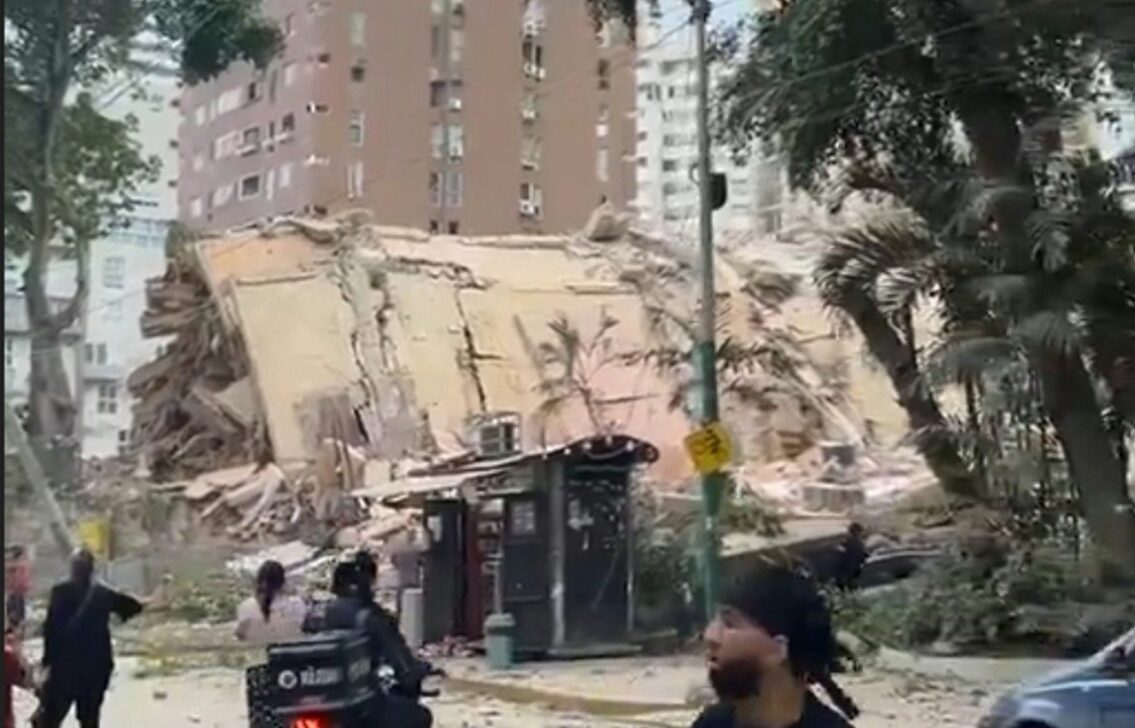
Two high-magnitude earthquakes hit Venezuela on Wednesday night (24), resulting in more than 150 deaths and around a thousand injuries. The tremors, of magnitudes 7.2 and 7.5, occurred just one minute apart and generated at least 20 subsequent aftershocks, according to information from the Venezuelan government.
The tremors, the most intense to shake the country in more than a century, were widely felt in several cities in the North of Brazil, such as Belém, Manaus, Boa Vista and Macapá, highlighting the strength of the earthquakes and the vast area of perception.
The intensity of the earthquakes and the geology of the region
The United States Geological Survey (USGS) detailed that two main earthquakes were recorded, with epicenters separated by just five kilometers. The first tremor occurred at 7 pm (Brasília time), followed by a second, even more intense tremor, less than a minute later.
The epicenter of the strongest earthquake was located near the city of El Guayabo, approximately 168 kilometers from Caracas, and at a depth of 13 kilometers. Classified as a shallow earthquake, this type of seismic shock tends to be felt with greater intensity and cause more significant damage to buildings and other structures due to its proximity to the surface.
The tragic human consequences and the immediate response
The natural disaster left an alarming number of victims. The interim president of Venezuela, Delcy Rodríguez, confirmed more than 150 deaths and around a thousand injured people, expressing solidarity with the affected families. The Brazilian Ministry of Foreign Affairs, Itamaraty, reported that, to date, there is no record of Brazilian citizens among the victims.
Given the seriousness of the situation, the presidency declared a state of national emergency. Rescue, security and civil defense teams were immediately mobilized to respond to the most impacted areas. In addition, classes and non-essential services were suspended across the country, and gas and electricity networks were preventively turned off in some regions to avoid additional accidents.
Extensive damage to infrastructure and disruption of essential services
The impact of the earthquakes caused a wave of destruction in several Venezuelan cities, including the capital Caracas. Reports from authorities and residents point to a scenario of collapse of buildings and homes.
- Buildings and houses collapsed in Caracas and other cities.
- A hotel with at least eight floors on the coast was completely destroyed.
- Simón Bolívar International Airport, the country’s main air terminal, had part of its roof compromised and was closed.
- Hospitals in the capital activated emergency plans and called in extra teams to reinforce care for the injured.
Family members are desperately searching for information about people who may be buried under the rubble, while rescue teams work intensely.
The reach of tremors in Brazilian territory
The Brazilian Seismographic Network confirmed the record of earthquakes by monitoring stations located throughout the country. Residents of several cities in the North of Brazil reported having felt earthquakes.
Cities like Belém, in Pará; Manaus, in Amazonas; Boa Vista, in Roraima; and Macapá, in Amapá, had reports of noticeable tremors. According to seismologist Bruno Collaço, from the USP Seismology Center, it is common for large-magnitude earthquakes like these to be felt at considerable distances from their epicenters.
US$200 million fund to rebuild the country
In an effort to mitigate the devastating effects of the earthquakes and aid in recovery, Interim President Delcy Rodríguez announced the creation of a $200 million fund. This amount, coming from the International Monetary Fund (IMF), will be used to rebuild infrastructure, hospitals and housing in the most affected areas.
The measure aims to provide robust financial support for the restoration of affected communities, highlighting the scale of the tragedy and the need for a comprehensive, long-term recovery plan.