Euclid reveals the heart of the Milky Way in an unprecedented portrait with more than 60 million stars by ESA
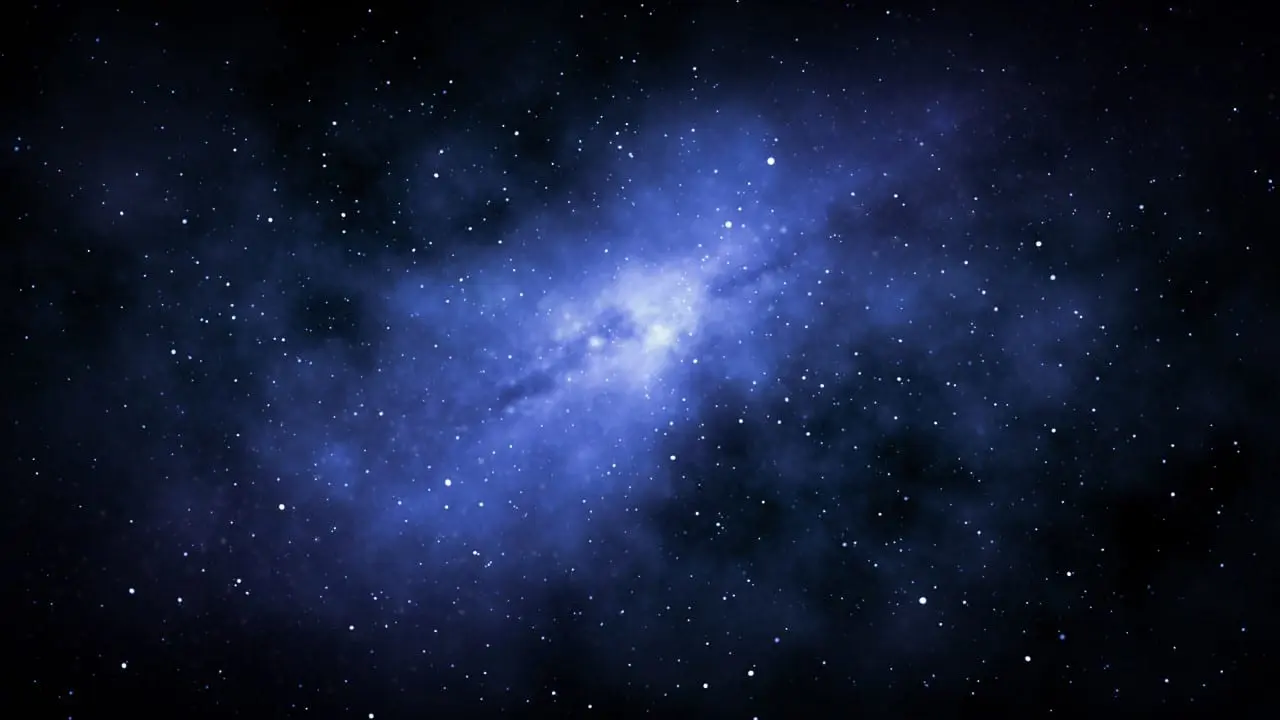
The European Space Agency (ESA) released on Tuesday (24) the widest and most detailed image ever obtained of the center of the Milky Way, using visible light. This feat represents a significant advance in the observation of our galaxy.
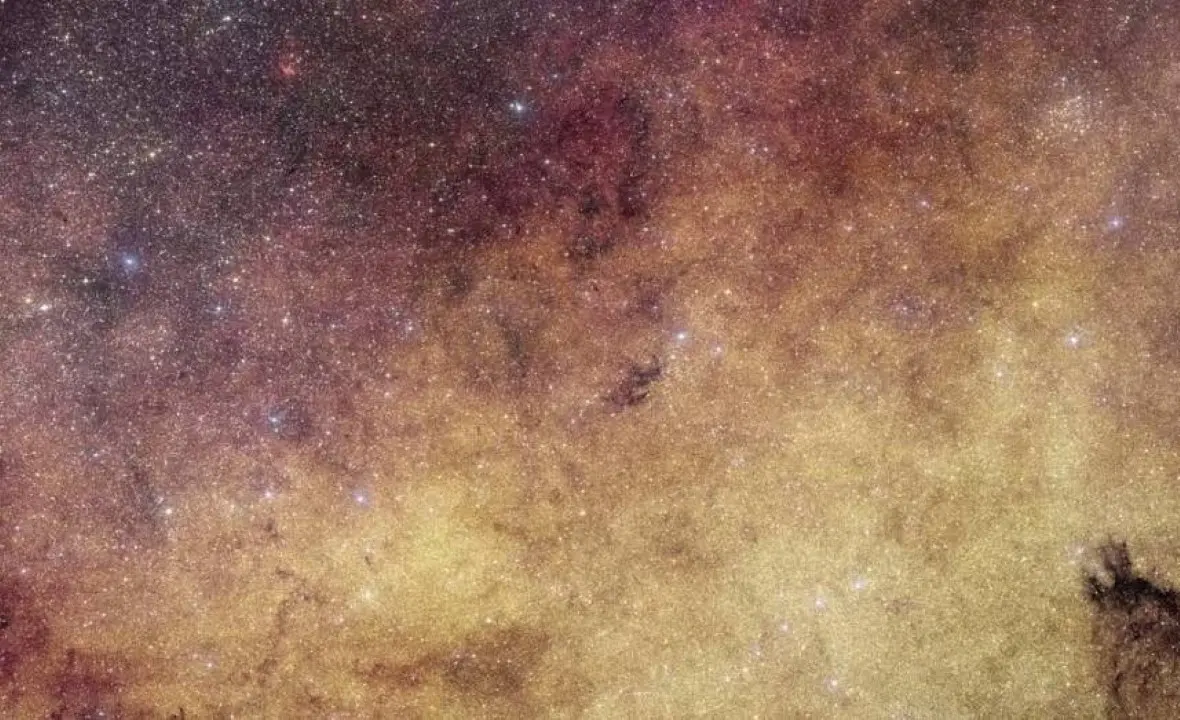
The record, captured by the Euclid space telescope, shows an impressive concentration of more than 60 million stars located in the galactic bulge, the central and most luminous area of the Milky Way. In addition to the stars, the image also reveals nebulae and several star clusters.
The photograph was taken in March 2025, after approximately 26 hours of continuous monitoring. It is the result of the combination of nine separate images, meticulously joined together to form the complete panorama.
To contextualize the magnitude of the work, each of these nine images covers a portion of the sky larger than the full Moon seen from Earth. A large ground-based telescope would require around 2,000 hours to capture the same extent and level of detail.
Although Euclid was designed to investigate dark matter and dark energy, invisible components that predominate in the distant universe, this time its focus was directed to an area closer to home, at the request of the astronomical community. The unique ability of the equipment allows individual stars to be distinguished even in regions of very high density, without the intense brightness overshadowing them.
Leia Também

Messi reaches 19 goals in FIFA World Cups with great free kick for Argentina in clash with Jordan

Cristiano Ronaldo shines beyond the pitch at the 2026 World Cup with business empire and family luxury

At 41, Cristiano Ronaldo reaffirms his historic legacy and prepares to shine in the 2026 World Cup
This particularity of the telescope is of great interest to researchers. The new image is expected to help identify and study planets orbiting other stars, known as exoplanets, through a technique called gravitational microlensing.
The gravitational microlensing method works when a closer star aligns with a more distant one, acting as a natural magnifying glass and intensifying the luminosity of the celestial body in the background. If there is a planet orbiting the nearest star, its gravity causes a small additional change in its brightness, revealing its presence.
In the last twenty years, approximately 300 exoplanets have been discovered using this technique, all using ground-based telescopes pointed at the center of our galaxy. Jean-Philippe Beaulieu, researcher at the Paris Institute of Astrophysics and the University of Tasmania, and one of those responsible for the Euclid survey, highlighted that this image already includes 51 known planetary systems and will be fundamental for the study of many others that will be detected in the future.
Although a single day’s capture is not enough for the immediate discovery of new planets — which would require stellar tracking for more than twenty days — the photo acts as a “pre-event” record. By documenting the exact position of stars before any alignment, it establishes an essential temporal reference point for future missions, such as NASA’s Roman Space Telescope. With this data, it will be possible to confirm the existence of planets and measure their masses, making this technique particularly effective for locating cold worlds far from their stars.