

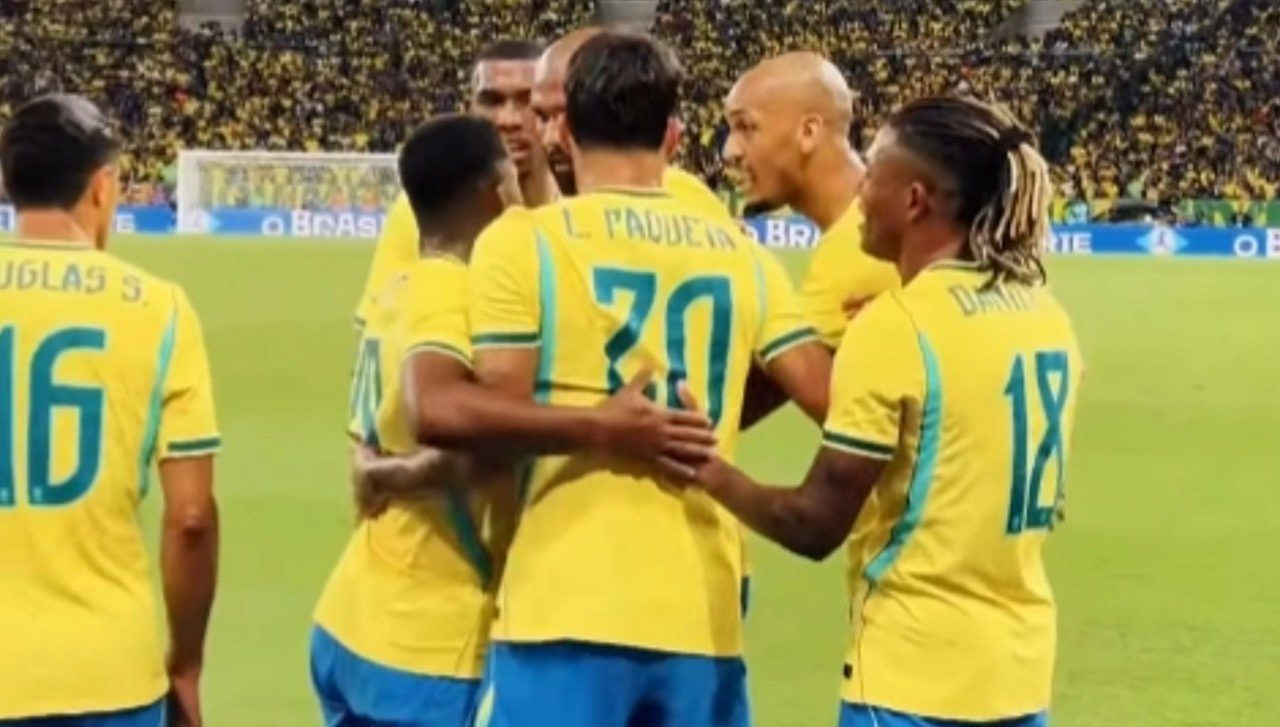
With the place at the top of their group already secured, the Brazilian team awaits the outcome of Group F to meet their first opponent in the knockout stage. Starting at 8pm (Brasília time) this Thursday, the final matches of the group stage will define which of the three possible opponents – Netherlands, Japan or Sweden – will be the next challenge for Carlo Ancelotti’s team. The cast knows that, among the options, there are different degrees of difficulty.
The lack of definition is a characteristic of the new format of the World Cup, but the only certainty for the Brazilians is that the initial confrontation of the knockout stage will be against the second placed team in Group F. This wait generates expectations, as one of the potential opponents appears to be considerably more accessible than the others.
This waiting period allows the coaching staff and players to deeply study the characteristics and strategies of each of the candidate teams, preparing themselves for the different styles of play that can be faced. Tactical analysis becomes fundamental at this decisive moment in the competition.
Decisive scenarios for Group F of the World Cup
The final round of Group F promises intense mathematical analysis throughout the ninety minutes of play. The Netherlands are at the top of the group with four points and will face Tunisia, one of the few teams already eliminated, indicating a theoretically smoother path to securing their position.
How the direct elimination phase works at the World Cup
Meanwhile, Japan, who also have four points and have the same goal difference as the Netherlands, will have a direct clash against Sweden, who have three points. This match is crucial for defining the second place in the group.
A clash that the Brazilian team and its observers would certainly prefer to avoid so soon would be against the Dutch. In addition to the vast tradition in world football and a squad full of talented athletes, the team led by Ronald Koeman demonstrated great offensive power in a 5-1 rout of Sweden. The team stands out for its ability to build plays quickly through the wings and finish with precision, a point that can expose the defensive fragility, considered one of the Achilles heels of Ancelotti’s formation.

However, one should not underestimate the evolution of the Japanese team. Under the guidance of Hajime Moriyasu, who is in his second World Cup, Japan displays intelligent movement, valuing agility in supported play and simplicity in passing exchanges. Graham Potter, Sweden’s coach, avoided highlighting individuals in the Japanese team in a recent interview, preferring to praise the strength of his team.
“I’m super impressed with Japan. They’ve been together for a long time and they know what they want to do,” said Potter, highlighting the cohesion of the Asian cast.
The English coach’s concern is not unfounded. Facing a team with a well-established game model, he needs to resolve his own defensive uncertainties. After the defeat suffered against the Netherlands, Sweden’s defensive system began to be rigorously evaluated, and finding a way to make it more resilient became a priority for Potter.
Analysts who have in-depth knowledge of Asian and Scandinavian football have no doubts about which of the teams represents the biggest obstacle for the Brazilian team.
Makoto Asahara, a reporter for the Swedish newspaper Aftonbladet, with experience in the national teams of both countries, believes that “Japan has already shown what it can do against teams at the level of Brazil and won the last game between the two. Perhaps they are a more difficult opponent than the Netherlands”. He also adds a tactical perspective: “Brazil will not underestimate the Netherlands, and there is a chance that Ronald Koeman will overestimate this Brazil and choose a more defensive approach than he should.”
While there is a perception in the international press that the current Brazil is more accessible than teams from other times, the idea still prevails that facing Morocco would be more convenient than facing the Brazilians. This perspective is even stronger among the Japanese journalists consulted.
Coach Moriyasu, in turn, maintains a neutral stance and reinforces his group’s self-confidence. “We don’t know what kind of team we will face in the next phase, but the important thing is that we are solid. I believe we would be able to deal with any team that comes,” he declared.