Mercedes postpones bonus payments and negotiates unpaid overtime amid cost crisis in Germany
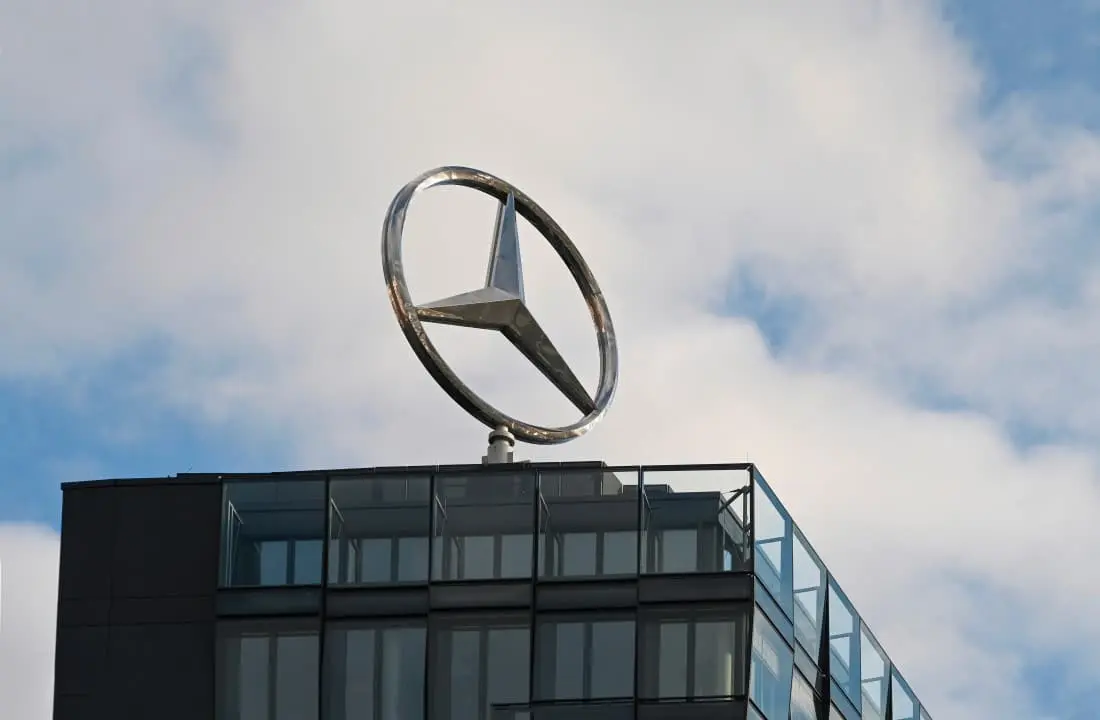
Mercedes-Benz announced the postponement of a special tariff payment for its employees in Germany, initially scheduled for July, which will now only be made next year. The automotive giant’s decision, part of a cost-cutting effort, was communicated to employees through an internal document obtained by Deutsche Presse-Agentur.
Drastic measures to contain salary costs
The deferred amount refers to “Transformationsbaustein”, an annual component that corresponds to 18.4% of workers’ regular individual monthly salary. The total amount involved has not yet been specified by the company, but it represents a direct impact on employees’ finances.
Not limited to this, Mercedes-Benz management plans to begin discussions with the works council in the coming weeks. The objective is to negotiate the extension of the working day without any additional salary compensation, a practice that would alter the current collective contract, which provides for 35 hours of work per week.
The company’s justification points to a lack of competitiveness
In its communication to the team, the Mercedes-Benz board justified the actions, pointing out the urgency of reducing structural costs in Germany, especially those related to labor. The company stated that such expenses are not competitive compared to other international markets.
The internal note described the situation as “dramatic” in the country, emphasizing the need to cut expenses “urgently” to maintain the competitiveness of the prices of its products. According to the automaker, each new product or task directed to German units makes Mercedes operations more expensive.
Declining financial performance worries investors
The austerity initiatives reflect a scenario of falling financial results at Mercedes-Benz. In the first quarter of this year, the group’s profit fell by 17.2%. The year 2025 had already been marked by a sharp decline, with profits plummeting by almost half, from 10.4 billion euros to 5.3 billion euros, after a lower performance in 2024 compared to previous periods.
Leia Também

VAR decides to cancel Colombia’s goal against Portugal after a thorough analysis of the tip of the boot, impacting the classification in Group K of the 2026 World Cup

Lautaro Martínez simply scores a great penalty in Jordan x Argentina at the 2026 World Cup

Rota officer and family member of Eloá Pimentel is ambushed by gunfire at a traffic light in ABC Paulista
Pressure extends to other giants in the German automotive sector
The cost and competitiveness challenge is not unique to Mercedes-Benz, reverberating throughout the German automotive industry. The transition to electric vehicles and intense global competition put significant pressure on the country’s companies, which traditionally operate with high production costs.
Volkswagen, Europe’s largest automaker, also faces a similar scenario and is planning significant job cuts.
- “Manager Magazin” reported that Volkswagen intends to eliminate around 100,000 of its 657,000 global jobs in the coming years, doubling the previous reduction target.
- There is the possibility of closing four German factories in the medium term, including Volkswagen plants in Hannover, Zwickau and Emden, as well as the Audi plant in Neckarsulm.
- Production would be halted at these plants once current models reached the end of their life cycle.
Political repercussions on the future of the industry in the country
The Minister of Economy of the state of Baden-Württemberg, Dr. Nicole Hoffmeister-Kraut (CDU), expressed concern about the news involving Mercedes and the possible stoppage at Audi in Neckarsulm. In a statement, the minister highlighted that both announcements highlight the “enormous pressure and challenges that Germany’s economic hub faces.”
Minister Hoffmeister-Kraut called on politics and society to work together, seeing the moment as a clear sign of the need for coordinated action to ensure the resilience of the automotive sector and the German economy as a whole. The measures being discussed by automakers highlight the urgency of adaptation and innovation to maintain relevance on the global stage.