Research reveals that earthquake in 2011 permanently moved the entire territory of Japan
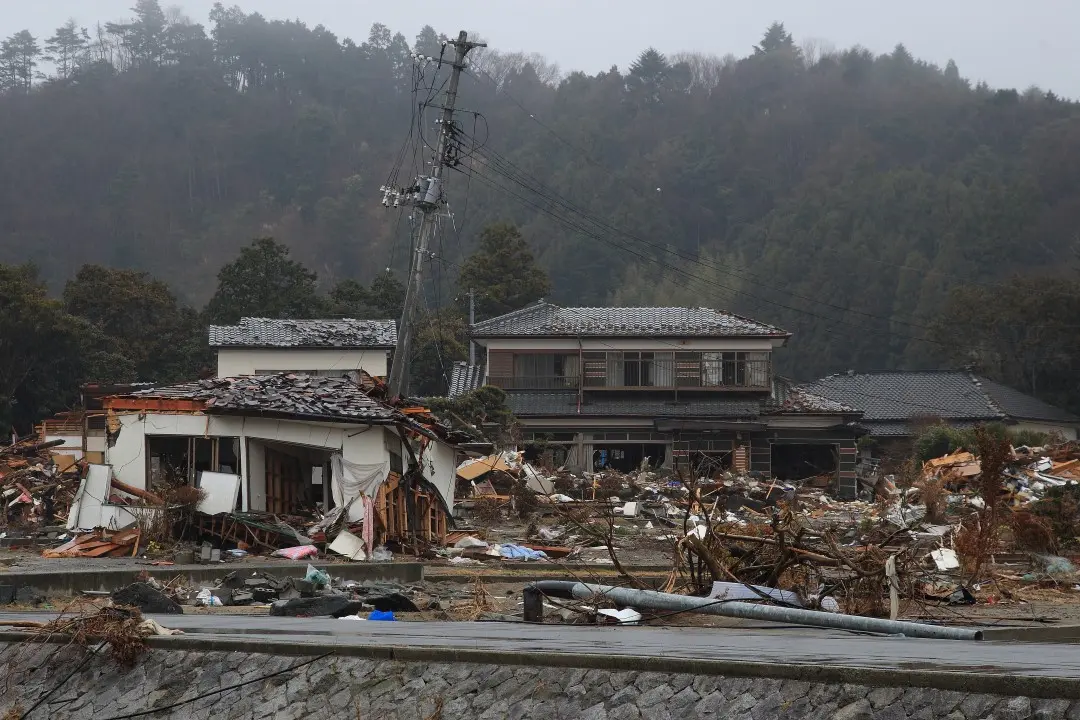
A powerful 9.0 magnitude earthquake that struck Japan on March 11, 2011, caused lasting movement in the country’s soil. About 15 minutes after the main tremor, at 2:46 pm local time, the entire Japanese territory moved towards the east, as indicated by data collected by GPS stations.
This change, although subtle, varying between 5 and 6 millimeters, proved to be permanent. At that time, the phenomenon went largely unnoticed or was interpreted as a failure in the records. However, geophysicist Sunyoung Park, from the University of Chicago, was convinced that the signals captured, which pointed to this displacement, revealed a real occurrence.
A recent study confirmed that this ground movement represents an “extraordinary” seismic phenomenon and unprecedented in scientific documentation until then.
“The particularity of this displacement is that the entirety of Japan moved practically uniformly and at the same time,” explained Park, leader of the investigation.
The geophysicist also pointed out that the movement, which reached the main islands of Japan from Hokkaido to Kyushu, in an area of around 3 thousand kilometers, did not happen at the same time as the original earthquake, manifesting itself before the most relevant aftershocks.
After years dedicated to analyzing GPS data and seismic records, Park and his team concluded that the waves caused by the tremor diffused to the Earth’s core and then returned to the surface, shifting four important tectonic plates.
Seismologists were already aware that waves generated by large earthquakes are capable of traveling through the interior of the planet and being reflected in the outer core, a layer of liquid metal. However, the prevailing belief was that this energy dissipated before reaching the Earth’s crust again.
“The novelty lies in this type of wave that can penetrate deeply and trigger a seismic event; furthermore, this episode is unique due to its enormous extension”, explained Park.
Earthquakes are known to induce intense movements in the ground, generating fissures and shifting vast areas by several centimeters. However, these movements tend to be more geographically restricted than the national-scale event identified by Park and colleagues’ research.
Goran Ekstrom, a geophysicist at Columbia University, pointed out that, in the 2011 earthquake, the two tectonic plates that were rubbing against each other under Japan moved approximately 10 meters.
“This accelerated movement was the cause of the tremor and the tsunami, in addition to pushing the island of Honshu, Japan’s largest, about 20 centimeters to the east,” commented Ekstrom, who was not involved in the study.
The displacement revealed by Park and his team, despite its smaller scale, stands out for its occurrence over an extremely wide area, representing the most extensive ever documented. This phenomenon released energy comparable to that of a 7.5 magnitude earthquake, as disclosed in an official statement.
Understanding the new seismic risk identified in Japan
The March 2011 earthquake, which had its epicenter 372 kilometers northeast of Tokyo, is considered the most severe in Japanese history, resulting in a colossal tsunami, a nuclear crisis and the loss of approximately 20,000 lives. Geophysicist Park highlighted the need for authorities to be aware of this new and unknown source of seismic risk.
Leia Também

VAR decides to cancel Colombia’s goal against Portugal after a thorough analysis of the tip of the boot, impacting the classification in Group K of the 2026 World Cup

Lautaro Martínez simply scores a great penalty in Jordan x Argentina at the 2026 World Cup

Rota officer and family member of Eloá Pimentel is ambushed by gunfire at a traffic light in ABC Paulista
Unlike aftershocks, which are aftershocks that are difficult to predict, the waves’ round-trip journey to the Earth’s core, a distance of approximately 5,800 kilometers, takes around 15 minutes to complete. This time interval offers a crucial window for detection and, potentially, preparation, distinguishing this phenomenon from other seismic events.
For this reason, the phenomenon is configured as a seismic event with potential for prediction and planning to mitigate its effects. However, due to the vast area of energy distribution, the tremor was perceived with less intensity and caused less damage than a conventional earthquake of magnitude 7.5, which tends to concentrate its energy in a more restricted region.
“Even if there were any damage, it would be quite complex to differentiate it from the damage caused by the main shock and the aftershocks that followed,” said Park.
The displacement recorded in 2011, caused by the seismic wave that traveled to the core, affected the areas of convergence of the Pacific and Okhotsk tectonic plates, as well as the boundary between the Philippine Sea and Eurasian plates.
Tectonic plates are portions of the Earth’s crust that move gradually and continuously. It is possible that the intensity of the initial tremor of the earthquake facilitated the rise of the wave coming from the core, reactivating faults close to the main earthquake and generating movements in regions where plates meet further away, as indicated by Park.
Japan has an “exceptional” network of seismic and satellite monitoring stations, which made it possible to record this phenomenon, noted Vedran Lekić, professor in the Department of Geological, Environmental and Planetary Sciences at the University of Maryland. He considered, however, that “this type of occurrence may be happening in other locations with scarce instrumentation, preventing conclusive documentation.”
Until now, ground movement in an extensive fault system, such as the one present under Japanese territory, had never been linked to the arrival of a seismic wave reflected by the core, Lekić clarified by email, who was not part of the research.
Park and his collaborators confirmed that they analyzed other theories to explain Japan’s eastward displacement, such as the occurrence of an underwater landslide. However, they concluded that the impact of an event of this nature would be significantly more localized.
If the interpretation of the data is correct, the research acquires “a lot of relevance”, said Amanda Thomas, a geophysicist at the University of California at Davis, who was also not part of the most recent study.
“The main implication of the study is that large earthquakes can continue to influence fault systems in unanticipated ways for many minutes after the initial rupture, not only through aftershocks, but also through the passage of later-arriving seismic waves,” she said.
“Our understanding of how faults work is still incomplete, and this type of observation adds a new piece to this complex puzzle,” he concluded.