Study reveals crucial link between brain size and offspring in birds and dinosaurs, revealing giant eggs

New research has identified an essential connection between brain size and the number of offspring, resolving a long-standing evolutionary question: Why do birds produce eggs of such disproportionate size?
Scientists from the American Museum of Natural History and Princeton University investigated reproductive and anatomical data from mammals, birds and reptiles. The results indicate that species with larger brains tend to have fewer, but larger, offspring. The findings, published in the journal Royal Society Open Science, suggest that the energy needed for a developed brain requires more investment in each offspring, whether through eggs or larger offspring.
The discovery offers a novel explanation for one of the most intriguing patterns in vertebrate evolution. Although modern birds are considerably smaller than their dinosaur ancestors, the largest avian eggs are, in fact, larger than the largest eggs ever found from non-avian dinosaurs. This paradox has intrigued scientists for a long time, given the difference in size between species.
“Initially, this seems contradictory,” said Stephanie Lechki, lead author of the study and postdoctoral researcher at Princeton University. “Many non-avian dinosaurs were huge, but their eggs were smaller than those of large birds. Our data point to brain evolution as the answer. As birds developed larger brains, they also had larger offspring, which required larger-volume eggs.”
Learn more: Recent study explains why dinosaurs were not as small as birds
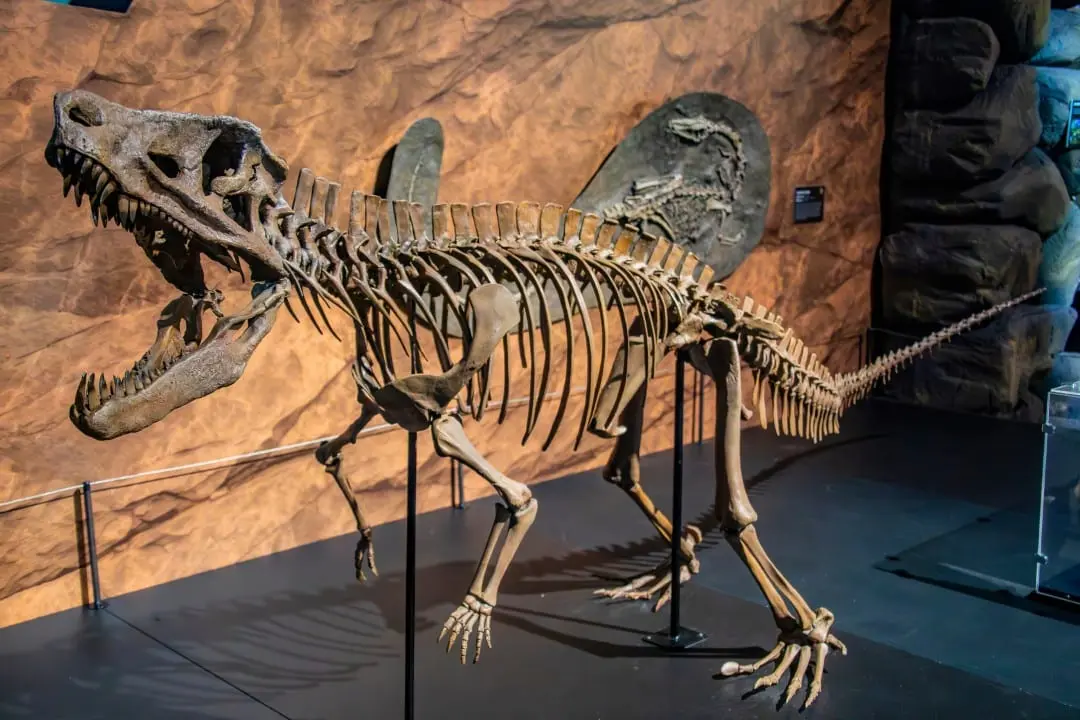
Among extant vertebrates, reproduction strategies vary widely. Birds and mammals generally produce few large offspring, while reptiles—including most dinosaurs—tend to produce many smaller offspring.
For a long time, researchers speculated that these distinctions could be related to different metabolic rates or brain size. However, previous studies focused on mammals and birds in isolation, making it difficult to identify evolutionary factors common to reproduction in all vertebrates.
By consolidating information from mammals, birds and reptiles into a single evolutionary framework, the new research establishes a consistent correlation between relative brain size and offspring size in these major groups of land vertebrates.
See Also

Learn how to identify intrusions on WhatsApp and avoid financial fraud

PlayStation 5 owners gain lifetime access to three great games

Russian Islam Makhachev dominates Ian Machado Garry and wins main fight at UFC 330
The finds also enrich understanding of spectacular dinosaur reproductive fossils, such as nesting oviraptorosaurs, which were discovered on museum expeditions in the Gobi Desert in the 1990s. Although these fossils were crucial in changing views on dinosaur reproduction, their relevance was often analyzed in isolation without a broader context.
On the same topic: Study reveals why there were no mouse-sized dinosaurs
“This work integrates these remarkable fossils into a much more comprehensive macroevolutionary perspective,” commented Roger Benson, study co-author and the Museum’s Macaulay Curator of Dinosaur Paleobiology. “The link between brain size and offspring size may have generated a cascade effect during the transition from dinosaurs to birds. If larger brains required larger offspring, and these, in turn, larger eggs, then other aspects of anatomy and behavior may have evolved as a consequence.”
Larger eggs, for example, imply the need for a wider pelvic canal for laying, more open and well-ventilated nests for incubation, and greater parental investment after the chicks are born. The study suggests that brain growth may have indirectly influenced the evolution of nesting behavior, pelvic structure and parental care in the lineage that gave rise to modern birds.
More on this story: Egg consumption reduces risk of Alzheimer’s by 27%, research shows
Scientists point out that some elements of reproductive biology are challenging to reconstruct in extinct animals. One of the biggest obstacles is estimating an animal’s annual reproductive frequency, a characteristic that rarely leaves clear evidence in the fossil record. To address this uncertainty, future work will investigate whether the same evolutionary patterns persist among living species that reproduce several times a year and will analyze additional physiological factors that may influence reproduction frequency.