The enigma of the 52 Hertz whale: Why does its song reveal a loneliness in the oceans? By Maria
7 min read
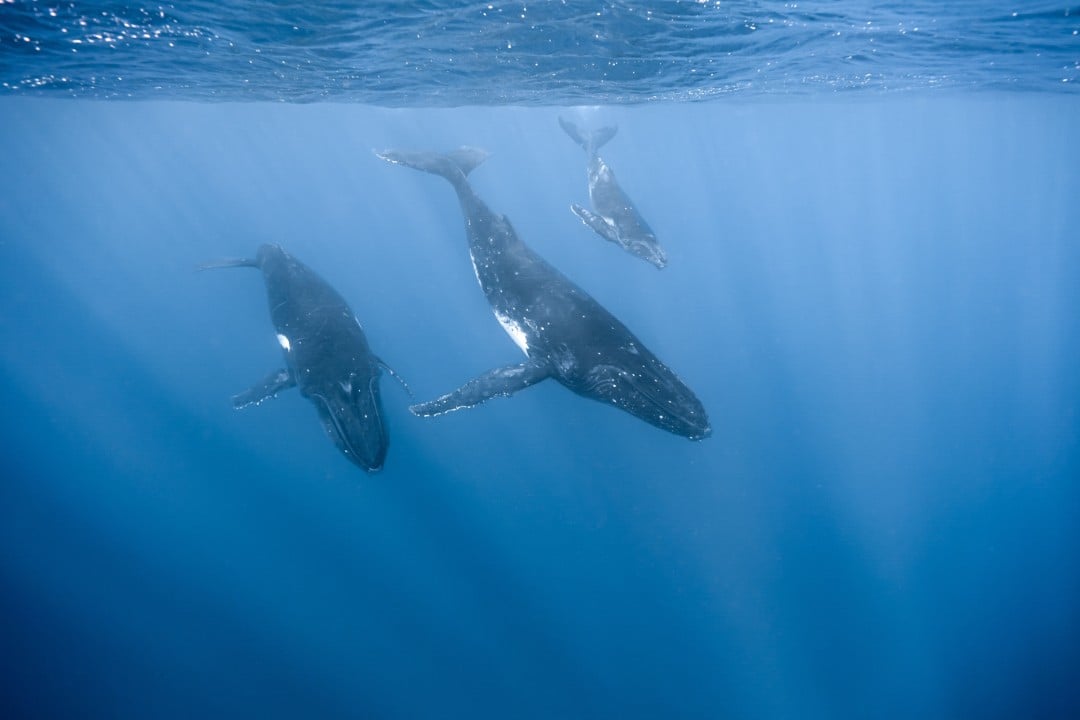 |
A peculiar sound, emitted by a mysterious whale, has captured the attention of scientists and the public for more than three decades, evoking debates about its nature and, above all, its possible isolation. Decades after the commotion generated by the story of the whale Timmy, stranded in 2026, another unique cetacean continues to roam the oceans, raising questions about its supposed loneliness. The discussion about the 52 hertz whale, a documented phenomenon, remains alive in the marine research scenario.
For more than 35 years, the enigmatic call of an unidentified cetacean has fueled the curiosity and research of oceanographers. Although their sound emissions are similar to those of blue whales and fin whales, the frequency of their song differs substantially, reaching 52 Hertz, a considerably higher level.
Therefore, the researchers hypothesize that the exclusive vocalization of this mammal could be the result of a cross between two different species of whales or indicate a physical anomaly, such as a deformity in the organ responsible for sound emission. In addition to the scientific aspect, the animal’s fate has deeply touched the popular imagination, which questions whether it would be the most isolated being in the oceans, never receiving a response to its calls. However, among experts, there is no definitive consensus on this perception of loneliness.
Marine mammals use a variety of sounds for vital functions such as hunting, navigation, attracting mates, and social interaction within their groups. While toothed whales predominantly communicate through clicks, baleen whales’ songs are notably more complex. Vocalizations can form complete musical sequences with repetitive patterns, depending on the species and group, and are even considered a form of language by researchers.
Sound propagation is a highly effective resource for underwater communication. In the air environment, the speed of sound is approximately 343 meters per second, varying according to atmospheric pressure and temperature. In water, due to the greater density of molecules, sound travels at more than 1484 meters per second, exceeding the speed in air by more than four times. Lower frequencies tend to propagate more efficiently in aquatic environments.

Pioneering the recording of underwater cetacean sounds
American oceanographer William A. Watkins was the scientist responsible for revealing the presence of the whale with its unmistakable song. Starting his career in 1958 as a research assistant at the Woods Hole Oceanographic Institute in Massachusetts, Watkins quickly rose through the ranks, becoming an associate researcher in 1963 and, later, a senior researcher from 1979 to 1996 at the same institution.
One of Watkins’ main areas of dedication was the study of whale vocalizations. To advance this field, he developed the first recording device capable of recording these complex sounds, paving the way for further investigation and popularizing these “songs” among the public. The relevance of their discoveries was such that the cetacean songs were included in the audio transmitters of the Voyager probes.
The collapse of the Iron Curtain represented an unexpected breakthrough for long-term whale research. During the Cold War period, the detection of enemy submarines gained strategic priority. Starting in the 1950s, the US Navy implemented a network of underwater microphones to systematically monitor certain ocean areas in order to locate Russian vessels.
Through the ultra-secret sound surveillance system (SOSUS), it was possible to identify suspicious noises from ships and their propellers. This wide listening network, however, was not limited to capturing the movement of vessels, but also recorded the diverse sounds of the natural marine environment. With the end of the Soviet Union and the advent of Perestroika, the American military made hydrophone stations public, making them available to the scientific community – a crucial opportunity that the team led by William A. Watkins was able to take full advantage of, providing a vast and unprecedented acoustic database for the study of the oceans.
Analysis of atypical frequency in relation to other baleen whales
The initial detection of the whale’s 52-hertz sounds occurred in 1989. Between 1992 and 2004, Watkins’ team employed the SOSUS infrastructure to map the migratory paths of this peculiar whale. In October 2004, a fundamental scientific work entitled “Twelve Years of Tracking 52 Hz Whale Sounds from a Single Source in the North Pacific” was published.
Under normal conditions, blue whales vocalize in a range of 15 to 20 Hertz, and fin whales emit calls around 20 Hertz. However, in the North Pacific region, close to the west coast of the United States, the hydrophones recorded significantly louder sounds, with a frequency of 52 Hertz, completely deviating from the expected pattern.
With its unique vocalization, the whale had a movement pattern mainly from north to south or west to east, covering between 30 and 70 kilometers daily. Their calls were unmistakably recognizable and distinct, but it was not possible to associate them with any known marine animal.
The Loneliness of the 52 Hertz Whale Debate
While the scientific world remains intrigued by the classification and origin of the animal that produces such sounds, the whale’s apparent fate resonates deeply with the public. Many identify with the idea of loneliness when making a call and receiving no response, which quickly earned the whale the reputation of being the loneliest on the planet.
The whale narrative, known as “52” or “Blue 52”, transcended the scientific universe and gained space in popular culture. His story, perceived as that of an isolated being, was explored in compositions by bands such as BTS and in children’s literary works. Additionally, the fictional short film “The Loneliest”, produced in the format of a mockumentary, portrays two researchers in search of the enigmatic 52-hertz cetacean.
In a more formal effort, a research team devoted themselves to the enigma of the “52” whale and launched a Kickstarter campaign in 2015. The goal was to fund the production of a documentary focused on the search for and eventual identification of the animal. The initial goal was to raise $300,000, a figure that was largely exceeded, with 3,833 supporters contributing a total of $405,937.
This initiative culminated in the release of “The Loneliest Whale in the World” in 2021, a documentary directed by Joshua Zeman. Although the team was unable to conclusively identify the animal, the search journey provided profound insights into the complex interaction between whales and humans. The whale, therefore, remains a mystery, and it is not even certain that other whales cannot, in fact, hear it.
Christopher Willes Clark, a scientist at Cornell University in Ithaca and responsible for recording the whale’s 52-hertz sound in 1993, disputed the idea that the animal lives in total isolation. In a statement, he emphasized that “the animal sings with many of the characteristics of a typical blue whale song. Blue whales, fin whales and humpback whales: all of these whales can hear this guy, they are not deaf. He is just strange.”
The main concern does not lie with the whale’s ability to communicate through its songs. After all, its presence has been detected for more than 35 years, and the frequency of its calls has decreased over time, indicative of its growth and, probably, its good health.
In reality, whales in every ocean face far more severe challenges every day. Thousands of boat propellers, intense noise from underwater work and detection by military sonars seriously compromise the health and lives of these animals. The memory of the case of the whale Timmy, who was weakened during a summer show, still persists in the collective memory. This growing noise pollution, one of the valuable elements that other news rarely delves into, represents an ongoing threat.
The intense soundscape of the oceans not only obscures whale songs, which under ideal conditions could travel thousands of kilometers without interference, but also creates significant stress for the animals. In addition to overfishing, overhunting, climate crisis-driven ocean warming, and impacts from ship collisions, underwater noise is emerging as a critical anthropogenic factor negatively affecting cetacean populations globally.
The question of the uniqueness of the whale is still unresolved. There is evidence of a second 52 hertz source, with records of similar sounds in two geographically distant locations in 2010. If the animal is healthy and its disappearance was not caused by unnatural factors, definitive identification may take some time, as blue whales, for example, can live for a hundred years or more.
Watkins, unfortunately, did not witness much of the cultural repercussions of his discovery. He died in October 2004, aged 78, shortly after the publication of the twelve-year study. However, his work left an immense legacy in research data on whales and other marine life. In recognition of his contribution, an online database containing recordings of whales and other marine animals was established in his honor.