Dark sky for more than 6 minutes: 2027 total solar eclipse will be the longest in the last hundred years
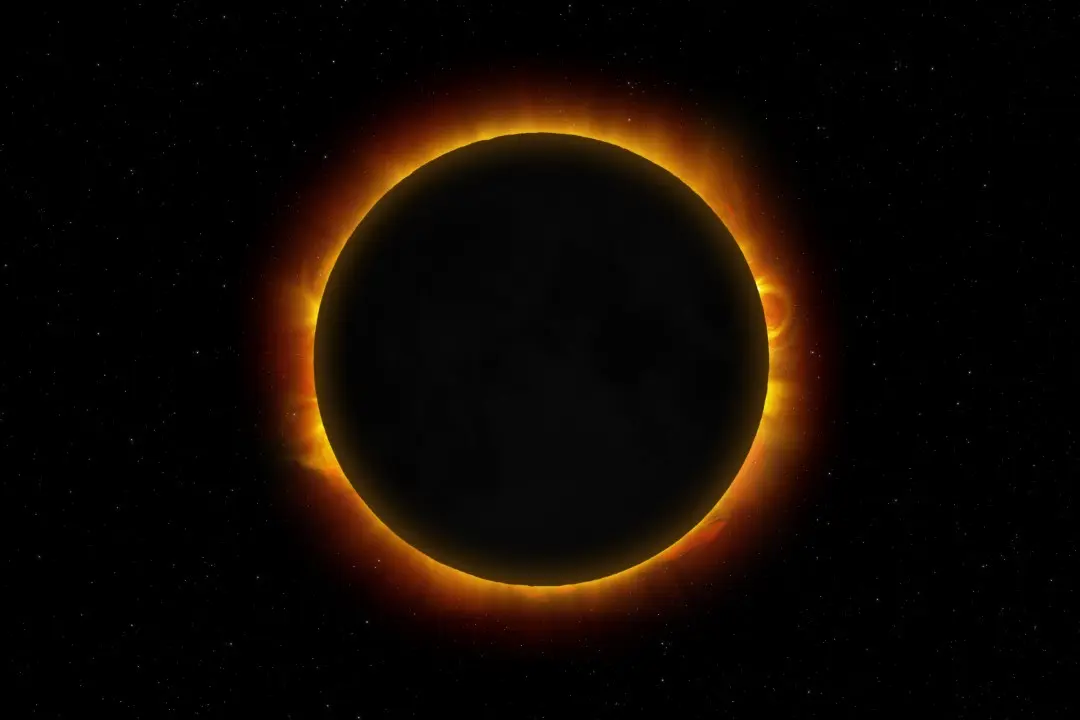
On a summer day, the scenario of the sky darkening completely, stars appearing and the temperature suddenly dropping, as if night arrived in the afternoon, is scheduled to occur inAugust 2, 2027. On this day, a total solar eclipse, which promises to be the most extensive of the century, will cross a portion of the globe.
The special alignment between the Moon and planet Earth in 2027
Scheduled for August 2, 2027, the total solar eclipse phenomenon promises to provide up to 6 minutes and 23 seconds of complete darkness. This spectacle will occur in a limited area of the Earth’s surface, representing the longest period of totality ever recorded on dry land during this century.
This unusual duration can be explained by the lunar trajectory. During the event, the Moon will be close to its perigee, which is the point at which it is closest to Earth. Consequently, the lunar disk will appear larger in the sky, resulting in a longer shadow and a prolonged period of darkness on the planet.
- Period of darkness: Totality can last up to 6 minutes and 23 seconds, making it the longest this century.
- Event date: The phenomenon will take place on August 2, 2027.
- Path of Shadow: Will cover regions of the Atlantic, Europe, North Africa and the Middle East.
- Rare occurrence: An event of similar magnitude is only expected for the year 2114.
- Main condition: The Moon’s proximity to Earth, at perigee, is crucial for long duration.
How the unique experience of viewing the eclipse can manifest itself
In the moments before total darkness, the ambient brightness begins to gradually decrease, the shadows become clearer and the ambient temperature may drop slightly. Animals, guided by the daily rhythm, tend to react as if dusk has arrived.
More on this story: The month of August will have two eclipses, with a lunar phenomenon visible throughout Brazil
Para aqueles que estiverem na área de abrangência da totalidade, este poderá ser um acontecimento memorável e sem igual. Since a solar eclipse of similar duration is only predicted for the year 2114, this generation has the chance to witness this celestial spectacle in person.
Understanding the visual spectacle of the solar corona visible to the naked eye
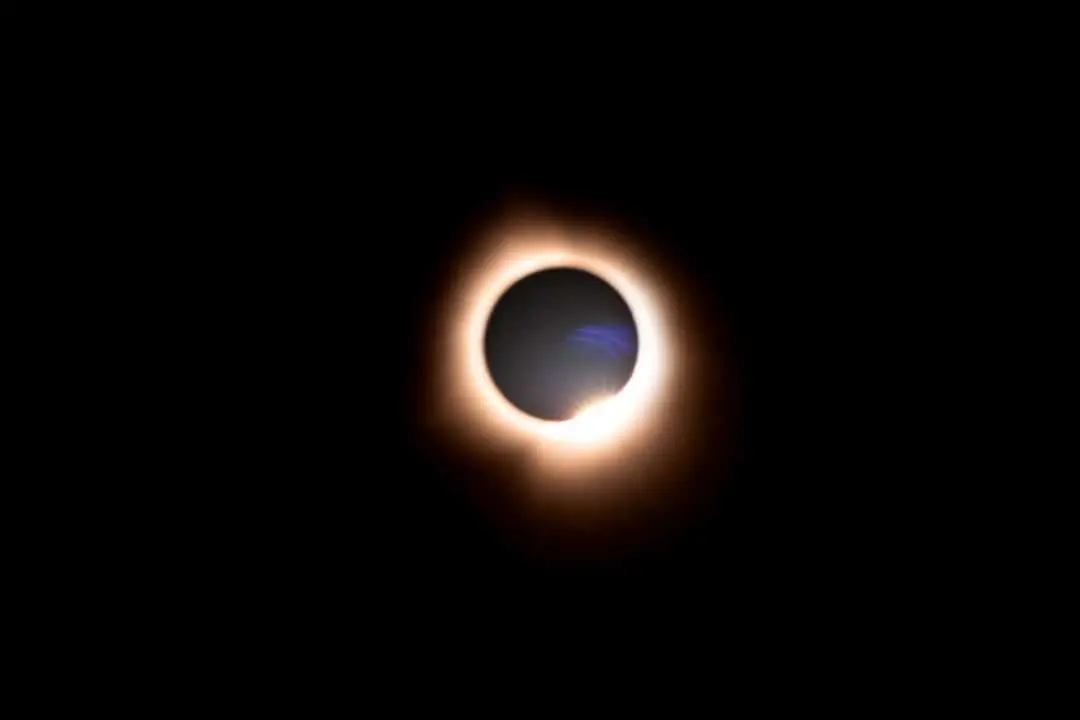
Just before complete darkness, the so-called Baily Pearls appear, which are luminous points that cross the valleys and irregular areas of the lunar surface. Logo depois, forma-se o Anel de Diamante, caracterizado por um brilho final que persiste por um curto período.
Details visible during complete darkness phase
Once the Sun is fully covered, the solar corona, which is the outermost layer of the solar atmosphere, becomes distinctly visible to the naked eye. It manifests itself as a bright, luminous halo around the Moon.
See Also

PSG withdraws from signing Zion Suzuki and Aston Villa makes new offer for goalkeeper

Motorola’s new foldable cell phone surpasses the weight of the iPhone 17 Pro Max and gets a discount

Libra: Yukari Ishii’s horoscope predicts brightness and negotiation phase from August 17th to 23rd
Simultaneously, brighter planets and more intense stars become visible in the sky, a phenomenon that is normally observed only during the night.
At the end of the phase of totality, the process reverses: the Diamond Ring and Baily’s Pearls reappear before daytime luminosity completely returns in a matter of a few minutes.
Safety recommendations for observing the solar eclipse
It is safe to observe the Sun directly without any type of protection only during the period of complete totality of the eclipse. However, in all other phases, including partial ones, it is essential to use special eclipse glasses, which are certified by the ISO 12312-2 standard.
Learn more: Total solar eclipse 2026: August 12 will be the biggest of the 21st century
It is important to emphasize that conventional sunglasses, photographic films or x-ray plates do not provide the necessary protection and should not be used as substitutes. For those who wish to photograph partial stages of the phenomenon, the camera must be equipped with a suitable solar filter on the lens.
The race for accommodation in Spain and Egypt before 2027
Renowned astronomer Fred Espenak, internationally recognized for his eclipse predictions, has already compiled maps and climate analyzes of numerous cities that are in the path of totality. In places such as the Basque Country, in Spain, and Egypt, considered highly recommended for observing the event, the search for hotel accommodation is already registering significant growth more than a year in advance.
The total solar eclipse of 2027 represents, for many, a unique opportunity to observe the solar corona without the need for instruments and experience the transformation of day into night in the middle of August. After this event, only in 2114 will the firmament present humanity with a spectacle of comparable intensity.