World’s largest electric plane completes maiden flight in the United States
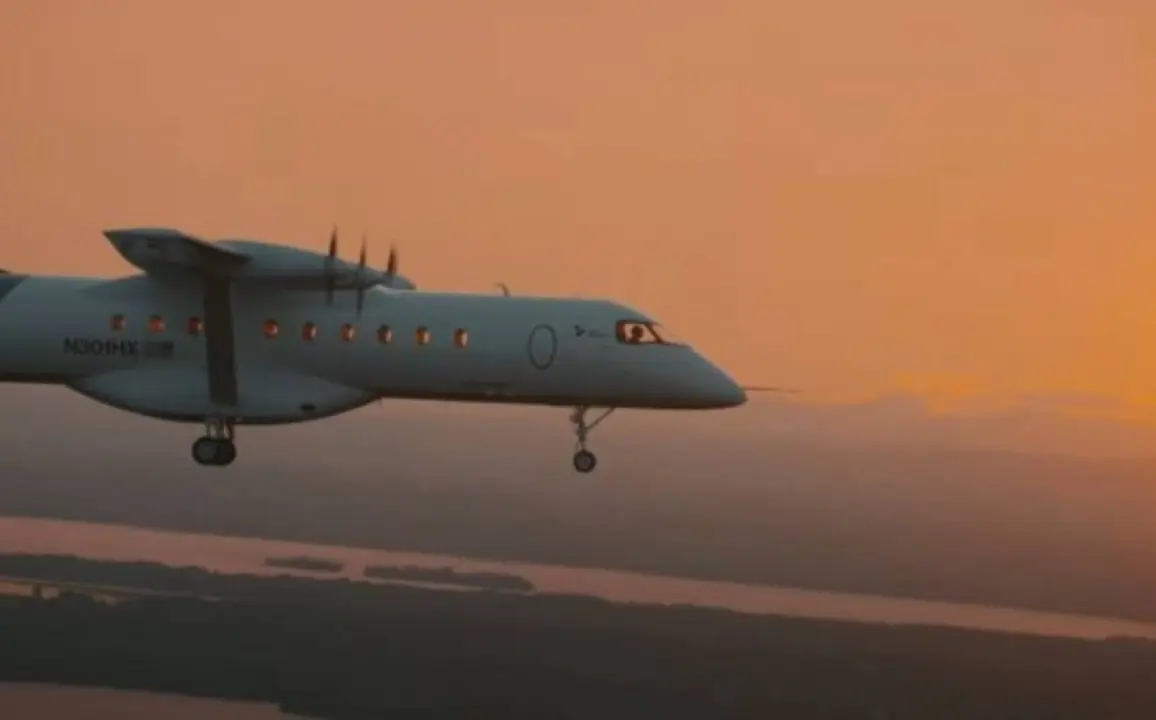
The commercial aviation industry reached a historic milestone with the completion of the first aerial test of the X1 model, developed by manufacturer Heart Aerospace. Currently recognized as the largest battery-powered aircraft on the planet, the equipment took off from the city of Plattsburgh, located in the state of New York, in the United States. During the operation carried out on August 12, 2026, the large aerial vehicle remained in the skies for almost half an hour, proving the technical viability of its colossal structure. With dimensions that impress the aerospace sector, the machine has a wingspan of 32 meters, is 23 meters long and weighs more than 11 tons at the time of takeoff.
American federal authorization makes unprecedented maneuvers in airspace possible
The entire practical procedure took place under the strict supervision of the United States Federal Aviation Administration, known by the acronym FAA, which issued a special certificate for the mission. The governing document allowed test pilots to run a full technical evaluation schedule. The routine included the ground movement on the runway, the initial elevation, several flight stability maneuvers and the final approach for landing. Industry experts point out that this official validation represents a definitive step towards the introduction of electric engines in passenger aviation.
More on this story: X1 prototype, the largest global electric plane, makes successful first flight in the US
During the 27 minutes it was operating over New York territory, the giant prototype demonstrated stable aerodynamic behavior. Telemetry records indicated that the aircraft reached a cruising altitude of 335 meters, equivalent to about 1,100 feet, maintaining lift exclusively through its high-density batteries.
On the same topic: Electric car batteries like Tesla Model 3 resist after 600 thousand kilometers driven
Insignificant spending on electricity challenges fossil fuel prices
One of the most surprising data revealed after landing concerns the energy efficiency of the propulsion system. The engineers responsible for the project confirmed that the set of engines consumed a minimum amount of electricity to complete the programmed route. The total financial expense to keep the 11-ton structure flying for almost half an hour was calculated at approximately US$5.
See Also

Absence of family and mother surprises at Cristiano Ronaldo’s wedding to Georgina Rodríguez in Portugal

Marvel Studios reveals cast of new X-Men at D23 with Adam Driver and Sadie Sink

Facebook co-founder Eduardo Saverin buys stake in Liverpool alongside Jeff Bezos
Along the way, the clean propulsion system generated power of more than 1 megawatt, using just US$5 in electrical charge. This extremely low operating value creates a direct contrast to the reality faced by traditional airlines, which rely on jet fuel. In the last year alone, petroleum derivatives registered an accumulated increase of 63% in the international market. If a conventional turboprop aircraft of the same size traveled the same route, the cost of fossil fuel would be dozens of times higher, in addition to generating a significant carbon footprint in the atmosphere.
Manufacturer leadership designs cheaper tickets and decentralized routes
The prospect of radically transforming the economics of air transport is the main driver behind investment in technology. Anders Forslund, founder and executive director of Heart Aerospace, believes that the success of the experimental model proves that electrification can drastically reduce logistics costs. The executive argues that the reduction in operating expenses will allow companies to offer more affordable tickets to end consumers, increasing the frequency and regularity of regional flights. Another direct benefit would be the reactivation of smaller airports closer to urban centers, as electric motors emit considerably less noise and zero local pollution.
Final project aims to transport dozens of passengers over the next decade
All the technology embarked and tested in the current test vehicle will serve as the structural basis for the launch of the ES-30, the Swedish company’s definitive product. It is a hybrid-electric propulsion aircraft designed specifically for regional routes, with internal capacity to comfortably accommodate 30 passengers. The market has already responded positively to the engineering proposal, attracting the attention of commercial aviation giants looking to renew their fleets.
Learn more: Billion-dollar debt leads chain of 21 shopping malls in the USA to bankruptcy for the second time
- United Airlines, through its chief financial officer Michael Leskinen, classified the technical advancement as a game-changer in improving the customer experience and ensuring the profitability of short routes.
- Air Canada, represented by executive John Di Bert, reinforced that the financial contribution to the program reflects the urgency of adopting modern tools to accelerate the global energy transition.
- JSX, an American operator of regional flights, is also among the corporations that have already expressed formal interest in purchasing to integrate the new model into their daily operations.
When it enters commercial operation, which is expected to happen in 2031, the definitive model promises to rewrite the sector’s cost sheets. The developers’ expectation is that the aircraft will reduce maintenance and operating expenses by more than 40% when compared to combustion-powered regional aircraft that dominate the current market. This significant savings derives from the absence of complex moving parts in electric motors, the stability of energy prices and the high level of safety provided by the redundancy of integrated systems.
Assembly line advances in California to begin new practical trials
The company’s industrial schedule follows an accelerated pace to meet the goals established with investors and regulatory bodies. Ben Stabler, the manufacturer’s technology director, highlighted that data collection during the mission in New York provided the necessary foundation to refine the security and navigation systems. According to the engineer, the lessons learned from the experimental platform are already being applied directly to the final design of the passenger aircraft and will serve as a template for future generations of electric planes.
Currently, manufacturing work has already begun at the company’s facilities located in Los Angeles, in the state of California. Workers and avionics specialists are focused on assembling the first pre-production unit of the ES-30 model. If the pace of development is maintained without interruptions in the supply chain, the company plans to put this new version in the skies for the first battery of practical tests in 2028, paving the way for final certification with aeronautical authorities.