

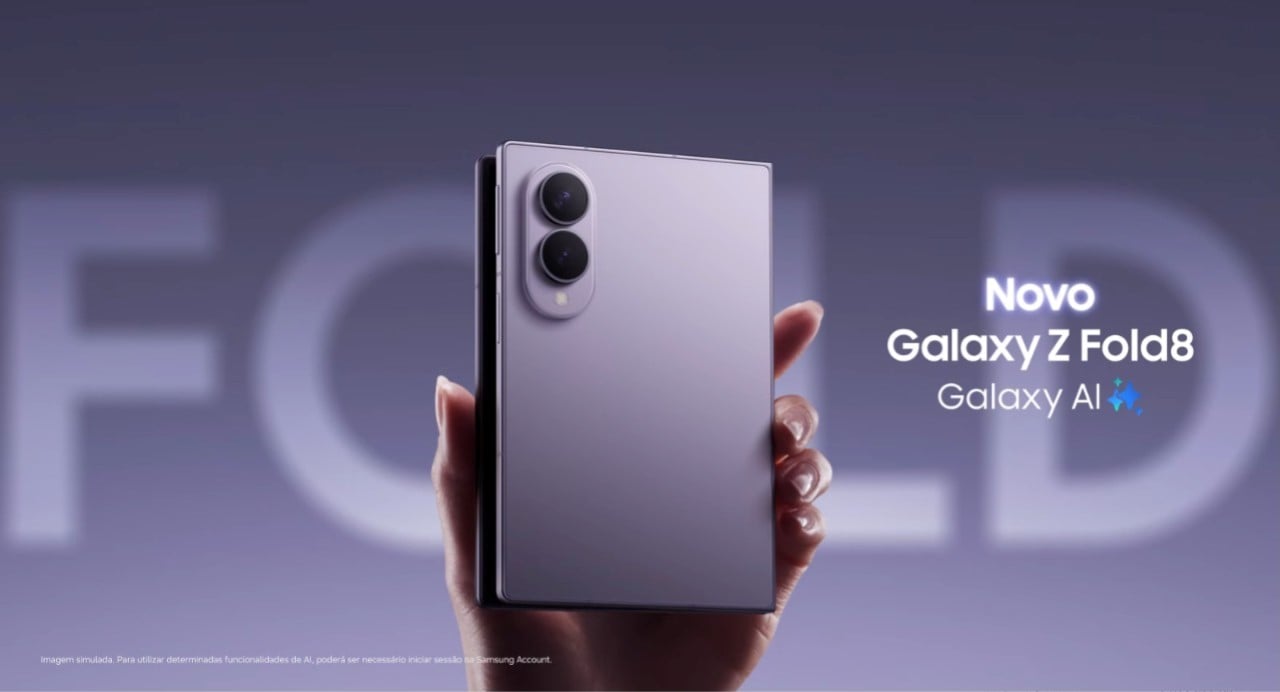
The South Korean giant made official, during an event held in the English capital on July 22, 2026, the new generation of its coveted flexible devices. The updated portfolio includes the Galaxy Z Fold8 Ultra, Galaxy Z Fold8 and Galaxy Z Flip8 models, which will be available in national retail stores from the first week of August, marking another step in the popularization of this electronics category.
Visual changes bring the new smartphone closer to a pocket format
The great protagonist of the international presentation drew attention for adopting unprecedented proportions in its physical construction. When keeping the equipment closed, the user notices a wider and flatter silhouette, closely resembling the exact dimensions and footprint of a traditional passport.
Strong rumors behind the scenes in Silicon Valley suggest that the main American competitor plans to introduce an identical geometry in its long-awaited flexible project later this calendar year. Major Asian brands, especially Huawei, already dominate this market share in China with devices that exploit this exact ergonomics, forcing the industry to adapt quickly.
Resized screens seek to improve the media consumption experience
When unfolded, the standard model’s internal display reaches 7.6 inches with a 4:3 aspect ratio, moving away from the more stretched 8-inch panel present in the premium variant. Brand executives explained that this geometric adjustment makes it easier to read documents and consume videos, making daily interaction much more fluid and natural for the eyes.
The commercial positioning of each version was well defined by the electronics manufacturer this season. While the Ultra edition focuses on corporate consumers who demand advanced mobile work tools, the clamshell option targets young audiences interested in fashion trends and visual customization.
Structure reinforced with noble metals and advances in energy storage
The two larger variants have gained a significant upgrade in their fall protection engineering. The housing that surrounds the flexible displays now uses titanium in its composition, a premium, high-resistance material that replaces the simpler metal alloys used in previous years.
This transition of raw materials guarantees superior protection against everyday impacts and extends the useful life of the device. Additionally, the new mechanical hinge virtually eliminates the crease mark in the center of the ultra-thin glass, solving one of the biggest complaints from early adopters of this technology.
On the other hand, the compact edition maintained its constructive base already consolidated in the market. The chassis of the smaller device is still made from aviation aluminum, ensuring lightness and comfort without increasing the final production cost of the line.
A crucial technological leap of this generation involves the replacement of old lithium-ion cells with modern silicon-carbon batteries. This unprecedented chemical change solves the chronic problem of internal volume, as old components required a lot of physical space and made phones excessively thick.
The adoption of this high-density energy matrix delivers a considerably longer charge duration throughout the day of intense use. At the same time, engineers managed to tune the chassis, resulting in parts that are easier to hold and carry in your pants pocket.
Expected arrival at Brazilian retail and available color palette
The distribution schedule for the national territory confirms the debut of the three phones for August 6th, accompanied by the Galaxy Watch Ultra2 and Galaxy Watch9 smart watches. So far, the Brazilian branch has not confirmed the official price list that will be charged in stores in the country.
To meet different style profiles, the company prepared exclusive finishing options for each member of the new product family:
- The top-of-the-line device, focused on maximum productivity, hits shelves in purple, white, black and dark green.
- The intermediate version offers a balanced look with lavender, white, black and pistachio green options.
- The foldable shell-shaped model brings vibrant appeal with pink, white, black and mint green finishes.
The current e-commerce scenario in Brazil already presents established competition in the folding screen segment. Recent surveys show that consumers find alternatives from different brands costing between R$4,000 and R$15,000, highlighting a high-value-added niche that is booming in the country.





